AI-Powered Pest Control: A Water Gun for Pigeons
As urban environments continue to grow, so does the need for effective wildlife management, particularly concerning common pests like pigeons. The integration of artificial intelligence (AI) into pest control strategies presents innovative solutions that promise efficiency and precision. One such approach employs AI-powered devices that can target and deter pigeons using non-lethal methods, such as water guns. However, the ethical implications of using AI in wildlife management must be carefully considered.
Understanding AI in Pest Control
AI technology has made significant strides in recent years, finding applications across various sectors, including agriculture, healthcare, and now pest control. The use of AI in wildlife management seeks to address several challenges:
- Precision Targeting: AI can analyze behavioral patterns of pests, allowing for more effective targeting without harming non-pest species.
- Data Analysis: Machine learning algorithms can process vast amounts of data to predict infestations and optimize control measures.
- Non-lethal Solutions: AI-powered devices can deploy humane methods, such as spraying water or using sound deterrents, to manage pest populations.
The Water Gun Approach
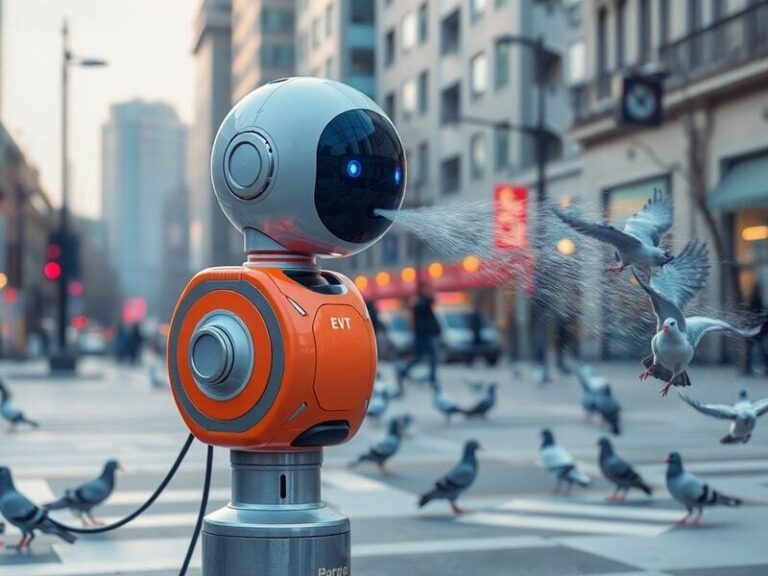
The concept of using a water gun to deter pigeons may sound simplistic, but it represents a shift towards humane and innovative pest control. These AI-driven systems can be designed to automatically identify pigeons through computer vision and respond by spraying water to encourage them to leave the area.
This method offers several advantages:
- Non-lethal: Unlike traditional pest control methods, which may involve traps or poisons, water guns provide a harmless alternative.
- Environmentally Friendly: Using water reduces the environmental impact associated with chemical pest control solutions.
- Reduced Human Intervention: Automated systems can operate independently, minimizing the need for human presence and intervention.
Ethical Implications
While the use of AI-powered pest control systems like water guns offers promising benefits, it also raises important ethical considerations:
- Animal Welfare: Even non-lethal methods must be assessed for their impact on animal welfare. The stress caused to pigeons by frequent water spraying could lead to unintended consequences.
- Ecological Balance: Over-reliance on technology to manage pest populations may disrupt local ecosystems. It’s essential to balance pest control with maintaining biodiversity.
- Surveillance and Privacy: AI systems often rely on continuous monitoring, which raises concerns about surveillance and privacy, particularly in urban areas.
Industry Implications
The integration of AI into pest control not only enhances the effectiveness of wildlife management but also opens new avenues for business and innovation:
- Market Growth: As cities grapple with pest problems, the demand for innovative pest control solutions is set to rise, potentially leading to significant market growth.
- Tech Development: Companies specializing in AI and robotics are likely to invest in research and development for more advanced pest control technologies.
- Collaboration Opportunities: Partnerships between tech companies and environmental organizations can lead to more effective and ethical pest management strategies.
Future Possibilities
Looking ahead, the future of AI-powered pest control holds exciting possibilities:
- Advanced AI Algorithms: Future systems could leverage deep learning to improve accuracy in identifying and managing various pest species.
- Integration with Smart Cities: AI pest control solutions could be integrated into smart city frameworks, utilizing data from various sources to manage urban wildlife more effectively.
- Global Applications: Lessons learned from urban pest control in one region could be adapted to address similar challenges in other parts of the world, promoting global wildlife management strategies.
In conclusion, the use of AI-powered systems like water guns for pigeon control represents a significant step forward in humane pest management. While the technology showcases innovative solutions, it is imperative to navigate the ethical landscape thoughtfully. By doing so, we can create a harmonious balance between urban living and wildlife preservation, ensuring that our approach to pest control is not only effective but also responsible.