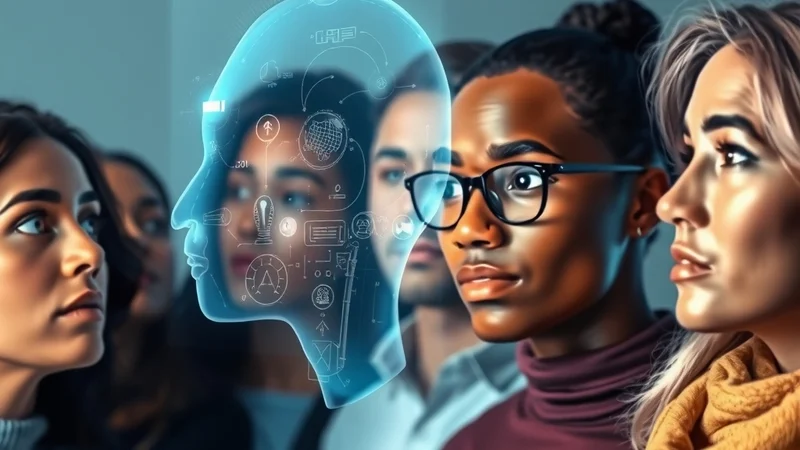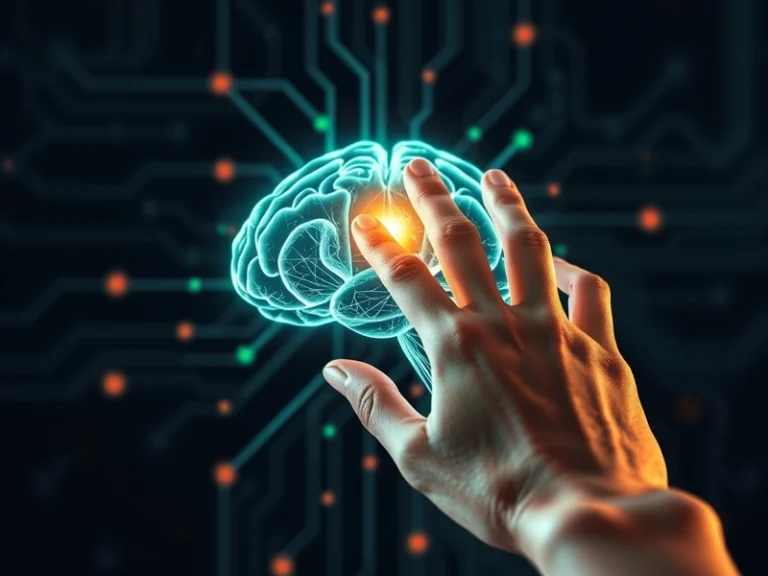
The field of artificial intelligence is seeing an accelerating trend toward developing systems capable of recognizing their own limitations and proactively seeking human intervention, moving beyond purely autonomous operation to embrace more collaborative paradigms.
This shift is driven by a critical need for AI systems to operate reliably and safely in complex, real-world environments where unforeseen circumstances, ambiguous data, or ethical dilemmas can arise. Rather than failing silently or making potentially harmful decisions, these emerging AI architectures are designed to signal uncertainty or critical junctures, enabling human operators to step in and provide guidance, context, or direct control.
The Imperative for Self-Awareness
The motivation for AI systems to “know when to ask for help” stems from several key areas:
- Safety: In high-stakes applications like autonomous vehicles or medical diagnosis, an AI’s misjudgment can have severe consequences. Requesting human review for edge cases or critical decisions acts as a vital safety net.
- Robustness: Real-world data often deviates from training data. AI systems trained on vast datasets can still encounter novel scenarios (out-of-distribution inputs) they were not designed to handle, necessitating human insight.
- Efficiency: While full autonomy might be the long-term goal for some tasks, a human-in-the-loop approach can often be more efficient in the short to medium term by allowing AI to handle routine tasks and offloading complex problems to human experts.
- Ethics and Trust: For sensitive applications, human oversight can ensure decisions align with ethical guidelines and build greater public trust in AI deployments. Explaining why an AI asked for help can also provide valuable transparency.
Mechanisms for Identifying Uncertainty
AI systems employ various techniques to gauge their own confidence and identify situations warranting human review:
- Uncertainty Quantification: Many modern machine learning models, particularly Bayesian neural networks or ensemble methods, can not only provide a prediction but also an estimate of their confidence in that prediction. A low confidence score can trigger a human review request.
- Out-of-Distribution (OOD) Detection: This involves identifying inputs that are significantly different from the data the model was trained on. If an autonomous vehicle encounters an object never seen before, or a medical diagnostic AI receives an image with highly unusual features, OOD detection flags it as requiring human assessment.
- Confidence Thresholds: Developers define specific probability or confidence thresholds. If a model’s predicted probability for its top choice falls below this threshold (e.g., less than 90% confident in a classification), it defers to a human.
- Anomaly Detection: Similar to OOD detection, anomaly detection algorithms flag data points that deviate significantly from expected patterns. This is crucial in areas like cybersecurity, industrial monitoring, and fraud detection, where unusual activity might indicate a problem beyond the AI’s standard operating parameters.
- Active Learning: In this paradigm, the AI itself selects data points for which it requires human labels, typically focusing on cases where it is most uncertain or where human input would yield the greatest improvement in its future performance. This is a common strategy in data annotation pipelines.
Applications Across Industries
This “human-in-the-loop” (HITL) approach is being integrated into a diverse range of applications:
- Autonomous Systems: Companies developing self-driving vehicles, such as Waymo and Cruise, employ remote human operators who can take control or provide guidance when the AI encounters complex intersections, unusual road conditions, or unexpected obstacles that fall outside its trained operational design domain. Similarly, drones used for inspections or deliveries may defer to human pilots in adverse weather or unforeseen airspace conflicts.
- Healthcare Diagnostics: AI systems assisting radiologists in identifying anomalies in medical images (e.g., X-rays, MRIs) are often designed to flag ambiguous cases or images with low confidence scores for a human specialist’s definitive diagnosis. This ensures that rare conditions or subtle findings are not overlooked.
- Content Moderation: Platforms like YouTube and Facebook utilize AI to automatically detect and remove harmful content. However, highly nuanced or borderline cases, such as satire, hate speech with complex context, or artistic expression, are routinely escalated to human moderators for review, acknowledging the AI’s limitations in understanding human subtleties.
- Customer Service: AI-powered chatbots and virtual assistants are highly effective for answering frequently asked questions and handling routine requests. When a customer’s query becomes too complex, emotionally charged, or requires specific account access, these systems are programmed to seamlessly hand off the conversation to a human agent, often providing the agent with a summary of the prior interaction.
- Industrial Automation: In manufacturing or logistics, AI-driven robots performing tasks like assembly or quality control may encounter unexpected variations in materials or equipment malfunctions. Systems are being developed to detect these anomalies and alert human technicians for intervention, preventing costly errors or downtime.
Challenges and Future Directions
While promising, the effective implementation of AI systems that know when to ask for help presents its own set of challenges. Defining the precise “when” is non-trivial; setting thresholds too low can lead to excessive human workload (alert fatigue), while setting them too high risks missed critical events. The interface for human-AI collaboration must also be intuitive, allowing humans to quickly understand the AI’s reasoning for asking for help and efficiently provide the necessary input.
Future research is focused on developing more sophisticated uncertainty estimation techniques, improving the interpretability of AI’s decision-making process to better inform human operators, and creating adaptive systems that can learn optimal intervention strategies over time. The goal is not merely to build AI that asks for help, but AI that asks for the *right* help, at the *right* time, in the *right* way, fostering a truly synergistic relationship between machine autonomy and human expertise.