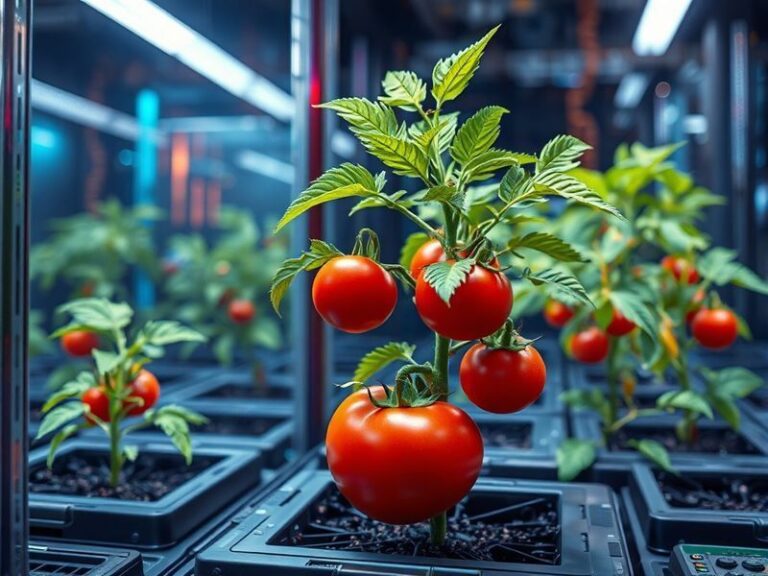
AI Takes Farming to New Heights: The Tomato Experiment
In a remarkable demonstration of artificial intelligence’s potential, a recent experiment showcased how an AI system managed the growth of a tomato plant entirely autonomously for 100 days. This groundbreaking endeavor not only highlights the capabilities of modern AI but also offers profound implications for the future of agriculture. By employing a combination of sensors, machine learning algorithms, and data analytics, the AI created a self-sustaining environment for the tomato plant, ensuring optimal growth conditions without any human intervention.
The Experiment: A Closer Look
The initiative began with the goal of exploring how AI can revolutionize traditional farming practices. The AI system was equipped with a variety of sensors to monitor critical growth parameters, including:
- Soil Moisture: The AI continuously assessed soil hydration levels.
- Temperature and Humidity: Environmental conditions were constantly monitored to maintain ideal growing conditions.
- Light Levels: The AI adjusted light exposure based on the plant’s growth stage.
- Nutrient Levels: It analyzed soil nutrients and administered fertilizers as needed.
Over the course of 100 days, the AI utilized its machine learning capabilities to adapt its strategies based on real-time data. This iterative learning process allowed it to optimize the growth conditions dynamically, making adjustments without human input.
Practical Insights from the Experiment
The outcomes of this AI-driven tomato experiment offer several practical insights into the future of farming:
- Resource Efficiency: The AI system demonstrated remarkable efficiency in resource utilization, using only what was necessary for the plant’s growth. This has significant implications for reducing waste in agriculture.
- Scalability: If scaled, AI systems could manage vast agricultural lands, optimizing growth across diverse crops and environments.
- Remote Monitoring: Farmers could potentially monitor their crops from anywhere in the world, receiving real-time updates and alerts about their fields.
- Data-Driven Decisions: The experiment underscored the importance of data analytics in agriculture, enabling more informed decision-making.
Industry Implications
The implications of AI in agriculture extend beyond just the tomato experiment. As the technology matures, we can expect to see:
- Increased Yield: AI’s ability to optimize growth conditions can lead to higher yields and better-quality produce.
- Labor Shortages Mitigation: With a growing labor shortage in agriculture, AI can fill the gap, allowing for greater efficiency with fewer hands.
- Climate Resilience: AI systems can help farmers adapt to changing climatic conditions, providing insights on how to modify practices to sustain crop health.
- Sustainable Practices: By optimizing inputs, AI can contribute to more sustainable agricultural practices, reducing the environmental footprint of farming.
Future Possibilities
Looking ahead, the potential applications of AI in agriculture are vast and varied. Some exciting possibilities include:
- Integration with Drones: Drones equipped with AI could monitor crops from above, providing data on growth health and pest management.
- Autonomous Farming Equipment: Self-driving tractors and harvesters could work alongside AI systems, performing tasks with precision and efficiency.
- Vertical Farming: AI will play a crucial role in urban agriculture, particularly in vertical farms where space is limited.
- Predictive Analytics: Using AI to predict market trends and consumer preferences can help farmers make better planting and marketing decisions.
The tomato experiment serves as a microcosm of what the agricultural industry can expect in the years to come. The integration of AI into farming practices offers the promise of a more sustainable, efficient, and productive agricultural landscape. As technology continues to evolve, the collaboration between AI and traditional farming will likely transform how we grow food, providing solutions that were once considered impossible.