Innovative AI tools are rapidly transforming how individuals approach daily tasks, offering significant advancements in streamlining processes across scheduling, studying, and content creation.
The proliferation of sophisticated artificial intelligence models, particularly large language models (LLMs) and generative AI, has moved these capabilities from theoretical concepts into practical applications accessible to a broad user base. These tools are not merely incremental improvements but represent a fundamental shift in how we interact with information and manage our time, promising enhanced efficiency and reduced cognitive load.
AI for Optimized Scheduling and Time Management
Manual scheduling, with its intricate dance of availability checks, email exchanges, and calendar conflicts, has long been a drain on productivity. AI-powered scheduling assistants are now stepping in to automate and optimize this process, freeing up valuable time for more critical tasks.
These tools leverage natural language processing (NLP) to understand scheduling requests and integrate directly with digital calendars like Google Calendar and Microsoft Outlook. They can:
- Find Optimal Meeting Times: By analyzing the availability of all attendees across multiple time zones, AI can quickly identify the best meeting slots, often considering preferences like avoiding early mornings or late evenings.
- Automate Invitations and Reminders: Once a time is set, the AI can send out calendar invitations, manage RSVPs, and dispatch reminders, ensuring all participants are informed.
- Protect Focus Time: Advanced tools can intelligently block out periods for deep work, rescheduling or declining less critical meetings that impinge on designated focus blocks. Some even learn user preferences and working patterns to proactively suggest ideal times for specific activities.
- Handle Rescheduling: When conflicts arise, AI can automatically suggest alternative times to all participants, minimizing manual back-and-forth.
Companies like Reclaim.ai and Clockwise exemplify this trend, using AI to not just find meeting times, but to actively optimize an individual’s or team’s calendar for productivity and well-being, distinguishing between “maker time” and “manager time” to allocate resources more effectively.
Transforming the Learning Experience with AI Tutors and Assistants
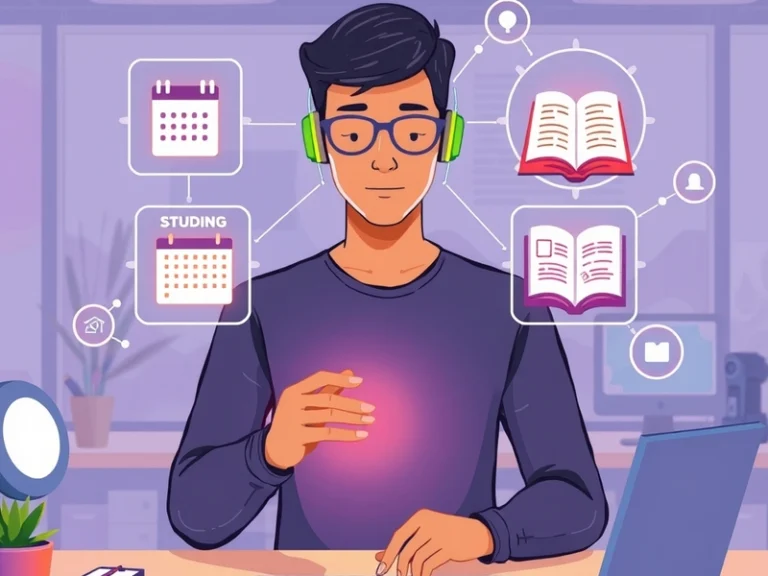
In education and personal development, AI is revolutionizing how individuals study, research, and assimilate new information. From personalized tutoring to content summarization, these tools are making learning more accessible, efficient, and tailored.
Key applications in studying include:
- Personalized Tutoring and Explanations: LLMs can act as always-available tutors, explaining complex concepts, answering questions, and providing detailed breakdowns of topics. Platforms like Khan Academy have integrated AI assistants, such as Khanmigo, to offer personalized learning paths and immediate feedback, mimicking a human tutor’s interaction.
- Content Summarization: AI tools can quickly distill long articles, research papers, or lecture notes into concise summaries, highlighting key points and main ideas. This capability is invaluable for quickly grasping the essence of large volumes of information without extensive reading.
- Flashcard and Quiz Generation: From uploaded notes or textbooks, AI can automatically generate flashcards, practice questions, and quizzes tailored to specific learning objectives, facilitating active recall and spaced repetition for better retention.
- Adaptive Learning Paths: Machine learning algorithms can analyze a student’s performance and learning style to adapt course material, recommend relevant resources, and adjust the pace of instruction, creating a truly personalized educational journey.
These AI-powered study aids empower learners to take a more active role in their education, addressing individual needs that traditional one-size-fits-all approaches often miss.
AI as a Catalyst for Content Creation
The realm of content creation, encompassing writing, image generation, and multimedia production, has seen some of the most dramatic shifts due to generative AI. These tools are not just assisting; they are fundamentally changing workflows and expanding creative possibilities for professionals and casual users alike.
Text Generation and Ideation
Large language models such as OpenAI’s ChatGPT, Google’s Gemini, and Anthropic’s Claude have become indispensable for writers, marketers, and researchers. They can:
- Generate Drafts: From blog posts and articles to marketing copy and email newsletters, AI can produce initial drafts, overcoming writer’s block and providing a structural foundation.
- Brainstorm Ideas: When faced with a creative challenge, AI can offer a multitude of ideas, headlines, and angles, serving as a powerful brainstorming partner.
- Refine and Edit: AI can suggest grammatical corrections, improve sentence structure, adjust tone, and even translate content, enhancing the overall quality of written material.
Image and Multimedia Generation
Generative AI models like Midjourney, DALL-E, and Stable Diffusion have democratized visual content creation. Users can generate unique images from simple text prompts, opening up new avenues for:
- Visual Storytelling: Creating custom illustrations, graphics, and concept art for presentations, websites, and social media without needing advanced design skills or extensive stock photo libraries.
- Marketing and Advertising: Rapidly generating diverse visual assets for campaigns, experimenting with different styles and themes efficiently.
Beyond static images, AI is also making inroads into video and audio editing. Tools like Descript use AI for transcription, enabling users to edit audio and video by simply editing text. They can also remove filler words, generate realistic voiceovers, and even create synthetic media based on existing content.
The integration of AI into these daily tasks is not merely about automation; it’s about augmentation. By handling the repetitive, time-consuming, or cognitively demanding aspects of scheduling, studying, and content creation, AI tools allow individuals to focus their unique human creativity, critical thinking, and strategic planning on higher-value activities. As these technologies continue to evolve, their impact on personal and professional productivity is poised to grow even further, redefining what’s possible in an increasingly digital world.