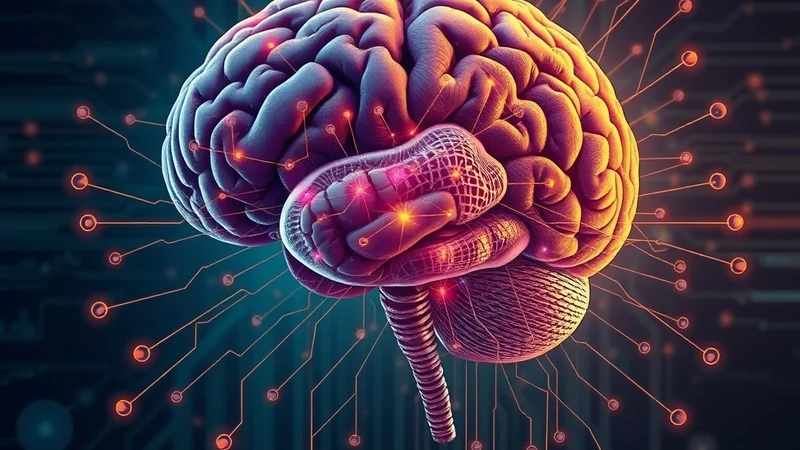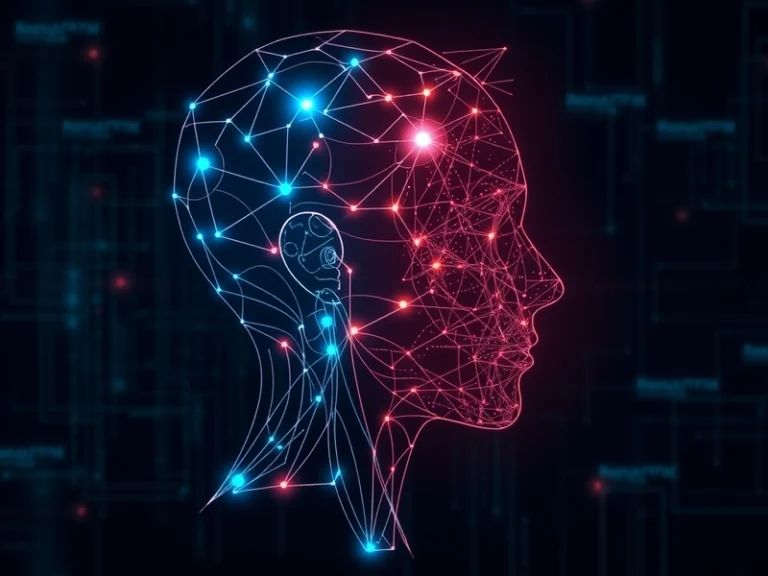
The increasing sophistication of artificial intelligence is enabling the compilation of highly detailed individual profiles, often termed “AI dossiers,” raising profound ethical and privacy concerns about the scope of surveillance and the potential for manipulation.
These AI-generated dossiers move far beyond traditional demographic data. They represent a dynamic, evolving composite of an individual’s behaviors, preferences, habits, vulnerabilities, and even inferred psychological states. Imagine a profile that not only knows your purchase history and browsing habits but also predicts your political leanings, assesses your financial stability based on your social media posts, or infers your health status from your activity patterns and search queries.
How AI Dossiers Are Constructed
The creation of such comprehensive profiles relies on the aggregation and analysis of vast, disparate datasets. AI systems act as sophisticated pattern recognition engines, drawing connections that would be impossible for humans to identify at scale. Key data sources include:
- Online Activity: Web browsing history, search queries, social media interactions (likes, shares, comments, content created), e-commerce transactions, app usage data, and location data from mobile devices.
- Offline Behavior: Data from smart home devices, IoT sensors, CCTV footage (with facial recognition and gait analysis capabilities), public records (e.g., property ownership, court documents), and even biometric data.
- Third-Party Data Brokers: Companies that specialize in collecting, packaging, and selling consumer data, often without direct individual consent for specific uses.
- Publicly Available Information: News articles, professional profiles (e.g., LinkedIn), and other data points accessible on the open web.
Machine learning techniques, including natural language processing (NLP) for textual data, computer vision for image and video analysis, and predictive analytics, are then employed to extract insights. Graph neural networks, for instance, can map relationships between individuals, organizations, and events, revealing social networks and influence patterns. Reinforcement learning models can even adapt and refine profiles over time as new data becomes available.
The Scope of Inferred Attributes
What makes AI dossiers particularly potent is their ability to infer attributes that are not explicitly stated. Through correlation and predictive modeling, AI can deduce highly sensitive information:
- Personality Traits: Based on language use, social media interactions, and engagement patterns.
- Emotional States and Vulnerabilities: Detected through vocal tone analysis, facial expressions in video, or sentiment analysis of written text.
- Health Conditions: Inferred from search queries related to symptoms, app usage for health tracking, or even purchasing habits (e.g., specific medications).
- Financial Stability and Risk: Beyond credit scores, AI can analyze spending patterns, loan applications, and even social connections to assess financial risk.
- Political and Religious Beliefs: Deduced from content consumption, social media engagement, and donations.
These inferences, while sometimes statistically accurate, can also be flawed, biased, or incomplete, leading to potentially harmful mischaracterizations.
Ethical and Privacy Concerns
The proliferation of AI-driven profiling capabilities brings a host of significant ethical and privacy challenges:
Lack of Transparency and Consent
Individuals are often unaware of the extent of data collection, the specific attributes being inferred about them, or how these dossiers are being used. Consent mechanisms are frequently opaque, buried in lengthy terms of service agreements that few read or understand. This lack of transparency undermines individual autonomy and the ability to make informed choices about personal data.
Bias and Discrimination
AI models are trained on historical data, which often reflects existing societal biases. If an AI dossier is used for critical decisions – such as loan applications, hiring, insurance premiums, or even criminal justice assessments – it can perpetuate and amplify discrimination against certain demographic groups. Flawed inferences about an individual’s risk or suitability can lead to unfair treatment, with little recourse for the affected person.
Security Risks and Misuse
Centralized repositories of highly detailed personal information become prime targets for cybercriminals. A data breach involving AI dossiers could expose an unprecedented level of sensitive personal detail, leading to identity theft, blackmail, or other forms of exploitation. Furthermore, such powerful profiling tools could be misused by governments or corporations for surveillance, political manipulation, or predatory marketing.
Erosion of Autonomy and Self-Determination
When AI systems can predict and even influence behavior based on detailed profiles, individuals may experience a subtle but pervasive erosion of their free will. Targeted advertising, political microtargeting, and personalized content feeds, driven by AI dossiers, can create echo chambers and reinforce existing biases, making it harder for individuals to encounter diverse perspectives or make truly independent decisions.
Navigating the Path Forward
Addressing the privacy implications of AI dossiers requires a multi-faceted approach. Regulatory frameworks like the European Union’s General Data Protection Regulation (GDPR) and California’s Consumer Privacy Act (CCPA) represent initial steps toward granting individuals more control over their data. However, these regulations often struggle to keep pace with the rapid advancements in AI technology.
Beyond regulation, there is a growing emphasis on developing privacy-preserving AI techniques, such as federated learning, differential privacy, and homomorphic encryption, which allow models to be trained on data without directly exposing sensitive information. Ethical AI design principles, focusing on fairness, accountability, and transparency, are also crucial for developers and deployers of AI systems.
Ultimately, the challenge lies in balancing the potential benefits of AI-driven personalization and efficiency with the fundamental right to privacy and the protection of individual autonomy. As AI’s ability to “know” us grows, so too must our collective efforts to ensure these powerful tools serve humanity ethically and responsibly.