Elon Musk has frequently articulated a vision for the coming decade defined by transformative artificial intelligence, particularly detailing its profound economic impacts and the widespread integration of advanced robotics.
Musk’s predictions often paint a picture of an economy radically reshaped by AI, where the traditional structures of labor and productivity are fundamentally altered. He has consistently suggested that AI will automate a significant portion of human tasks across various industries, leading to a future where human labor becomes largely optional. This perspective underpins his long-standing advocacy for Universal Basic Income (UBI), which he views as a necessary societal adaptation to an era of AI-driven abundance and potential job displacement.
The core of his economic outlook is that AI will drive productivity to unprecedented levels, creating immense wealth but also necessitating new mechanisms for its distribution. He posits that in a world where machines can perform most goods and services production more efficiently than humans, the societal value of human work will shift, and a basic income would provide for people’s needs, allowing them to pursue other endeavors.
Robotics and the Future of Labor
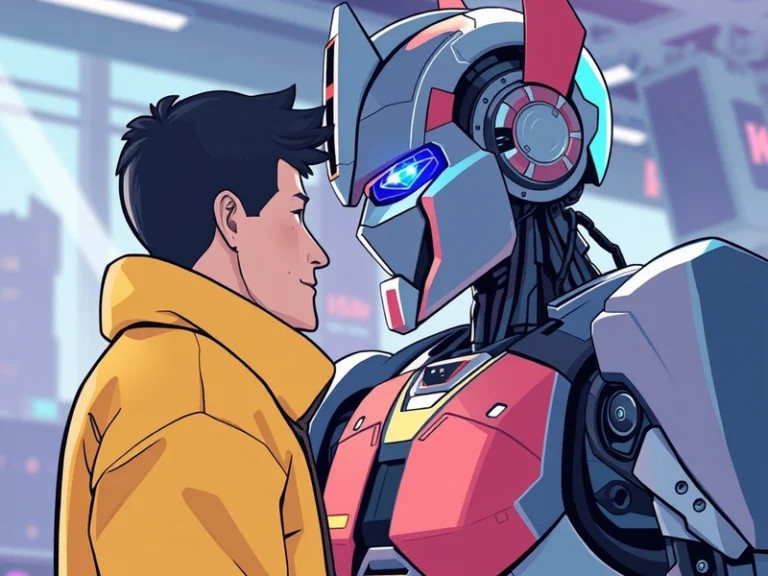
Central to Musk’s vision for the next decade is the proliferation of advanced humanoid robots, exemplified by Tesla’s Optimus. First unveiled as a concept in 2021 and later shown in prototype form, Optimus is intended to perform repetitive or dangerous tasks, eventually becoming a general-purpose humanoid robot capable of assisting in homes and workplaces.
Musk anticipates that Optimus, powered by advanced AI and drawing on Tesla’s expertise in real-world AI for self-driving cars, will evolve rapidly. He has described a future where millions of these robots could be deployed, addressing labor shortages and performing a wide array of physical tasks that humans currently undertake. This includes everything from factory work and logistics to domestic chores and elder care.
The development of Optimus is not merely about creating a physical automaton; it’s about developing an AI capable of understanding and navigating the complexities of the physical world. This involves:
- Perception: Utilizing cameras and other sensors to interpret surroundings, similar to Tesla’s Full Self-Driving system.
- Dexterity: Manipulating objects with increasing precision and adaptability.
- Learning: Continuously improving through real-world experience and data, potentially via fleet learning across multiple robots.
- Generalization: Applying learned skills to new, unseen environments and tasks.
Musk believes that the economic impact of such robots will be profound, not only by augmenting human capabilities but by fundamentally changing the cost and availability of labor. He envisions a future where the cost of goods and services produced by robots could drop dramatically, leading to an era of unprecedented material abundance.
xAI and the Pursuit of Understanding
Beyond Tesla’s robotics initiatives, Musk’s recent venture, xAI, further underscores his commitment to shaping the future of artificial intelligence. Launched in 2023, xAI’s stated mission is to “understand the true nature of the universe,” with a focus on developing advanced general AI systems. While broader than just economic or robotics predictions, xAI’s pursuit of sophisticated AI is integral to the capabilities Musk foresees for the next decade.
Musk has emphasized that xAI’s work is not just about building powerful AI but also about ensuring its safety and beneficial development, a concern he has voiced consistently throughout his career, including during his early involvement with OpenAI. He sees the development of highly capable AI as an existential pivot point for humanity, requiring careful stewardship.
Challenges and Realities
While Musk’s predictions are ambitious, the timeline and scale of the envisioned transformation face significant technical and societal hurdles. The development of truly general-purpose humanoid robots capable of navigating unstructured environments and performing complex tasks autonomously is an immense engineering challenge. Similarly, the societal shift required to implement UBI on a global or national scale, and to adapt to a world with drastically altered labor markets, presents unprecedented policy and ethical considerations.
Musk’s pronouncements serve as a powerful catalyst for discussion, pushing the boundaries of what is considered possible within the next ten years. His focus on the interplay between advanced AI, tangible robotics, and a transformed economy highlights a future that, while speculative in its exact timing and details, is increasingly being explored by researchers, policymakers, and technologists worldwide.