Andrej Karpathy, a prominent voice in the field of artificial intelligence, has recently suggested adopting a standardized writing format for prompts to significantly enhance the reliability and quality of AI model responses, dubbing the approach the “airplane manual trick.”
Karpathy, known for his work at Tesla AI and OpenAI, and for his insightful “State of GPT” presentations, frequently shares observations on the practical challenges and evolving best practices in AI development. His latest suggestion addresses a core issue in interacting with large language models (LLMs): the variability and occasional unreliability of their outputs, often stemming from ambiguous or inconsistent input.
The “airplane manual trick” draws an analogy to the highly structured, unambiguous, and precise documentation found in aviation. Just as an airplane manual leaves no room for misinterpretation when detailing procedures for operating complex machinery, Karpathy proposes that AI prompts should adopt a similar level of rigor. The underlying principle is that LLMs, despite their advanced capabilities, are pattern-matching engines. The clearer and more consistent the input patterns, the more reliable and predictable their output patterns will be.
The Challenge of Unstructured Prompting
For many users, interacting with LLMs often begins with conversational, free-form text. While this natural language interface is a marvel of modern AI, it introduces inherent ambiguities. Human language is rich with nuance, metaphor, and implied context, which can be difficult for an AI to consistently interpret, especially across different queries or complex tasks. This can lead to:
- Inconsistent Responses: The same query phrased slightly differently might yield vastly different results.
- Hallucinations: The model might confidently generate plausible-sounding but factually incorrect information.
- Difficulty in Debugging: When an AI output is unsatisfactory, pinpointing whether the issue lies with the model’s understanding or the prompt’s clarity can be challenging.
- Scalability Issues: Automating complex workflows with LLMs becomes difficult when prompt reliability is low.
Elements of the “Airplane Manual” Approach
While Karpathy’s specific recommendations are not a rigid, codified standard, the spirit of the “airplane manual trick” aligns with established prompt engineering techniques that emphasize structure and clarity. Key elements typically include:
- Explicit Role Assignment: Clearly defining the AI’s persona or role (e.g., “You are a senior software engineer,” “You are a legal assistant specializing in patent law”). This helps ground the model in a specific context and knowledge domain.
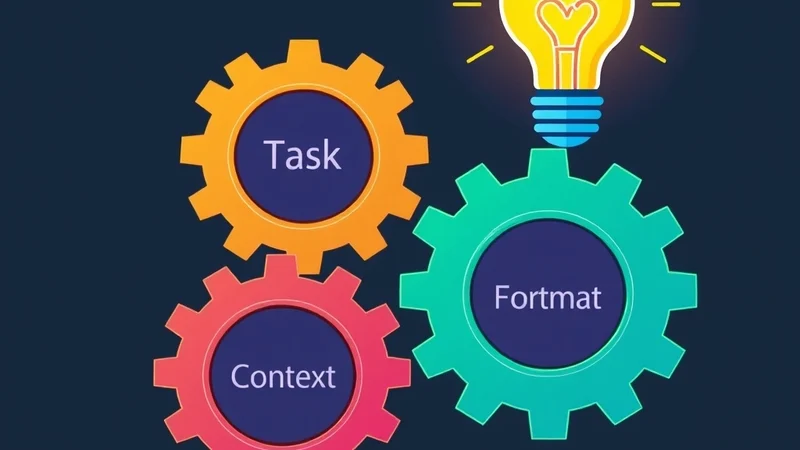
- Clear Task Definition: Stating the primary objective unequivocally, often beginning with an imperative verb (e.g., “Summarize the following text,” “Generate a Python function,” “Analyze the market trends”).
- Structured Input Sections: Using delimiters (like triple backticks
```, XML tags<text></text>, or specific headings) to separate different pieces of information within the prompt. This helps the AI parse distinct instructions, context, and data. - Output Format Specification: Explicitly requesting the desired output format (e.g., “Output the summary as a bulleted list,” “Provide the code in a JSON object,” “Respond in Markdown format”). This is crucial for integrating AI outputs into automated workflows.
- Constraints and Guardrails: Specifying limitations, negative constraints, or rules the AI must adhere to (e.g., “Do not use jargon,” “Limit the response to 200 words,” “Only use information provided in the input”).
- Step-by-Step Instructions: For complex tasks, breaking down the process into sequential steps allows the AI to follow a logical chain of thought, often leading to more accurate results.
- Few-Shot Examples: Providing one or more input-output examples to demonstrate the desired behavior. This is a powerful way to convey nuanced instructions that are difficult to articulate purely in natural language.
Benefits for AI Development and Application
Implementing a more standardized, structured prompting methodology offers several significant advantages for both AI researchers and practitioners:
- Enhanced Reliability: By reducing ambiguity, models are more likely to produce consistent and accurate results across multiple invocations.
- Improved Debuggability: When issues arise, the structured nature of the prompt makes it easier to identify whether the problem lies in the prompt’s instructions or the model’s interpretation.
- Greater Scalability: Standardized prompts are easier to generate programmatically and integrate into larger software systems, paving the way for more robust AI agents and autonomous applications.
- Reduced Hallucinations: Clearer instructions and constraints can help mitigate the tendency of LLMs to “fill in the blanks” with invented information.
- Faster Iteration: Developers can more quickly experiment with and refine prompts when the input structure is consistent.
Karpathy’s observation underscores a growing consensus within the AI community: while LLMs are powerful, their optimal performance often hinges on the quality and structure of the input they receive. As AI models become increasingly integral to complex systems, the move towards more rigorous, “airplane manual” style prompting is not just a best practice, but a critical step towards building more reliable, controllable, and deployable AI applications.
This emphasis on structured communication is likely to drive the development of new tooling and frameworks designed to assist prompt engineers in creating, validating, and managing these more formal prompt definitions, pushing the frontier of how humans and AI collaborate effectively.