Apple’s AI Glow-Up: A New Era for Siri
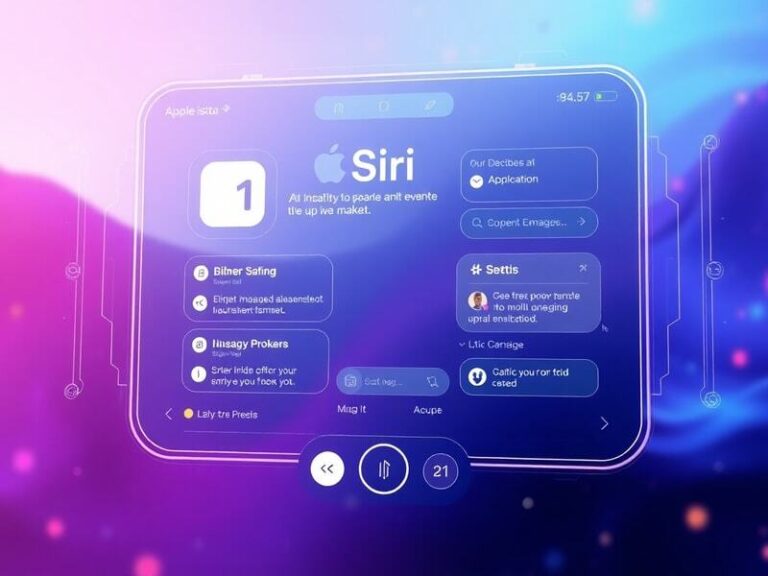
As artificial intelligence (AI) continues to evolve, companies are racing to enhance their virtual assistants, and Apple is no exception. The latest improvements to Siri promise to usher in a new era of smarter, more intuitive interactions. With the integration of advanced machine learning techniques and a focus on user experience, Siri is set to become not only more intelligent but also significantly more user-friendly. This article explores the enhancements that are reshaping Apple’s virtual assistant and what they mean for the tech industry and consumers alike.
1. Enhanced Natural Language Processing
One of the most significant advancements in Siri’s functionality is its improved natural language processing (NLP). This enhancement allows Siri to better understand context and nuances in user requests. As a result, users can expect:
- Contextual Awareness: Siri can remember previous interactions and use that information to provide more relevant responses.
- Conversational Engagement: The assistant can engage in a more natural dialogue, making it feel less robotic and more like a human conversation.
- Multi-Turn Dialogues: Users can ask follow-up questions without needing to repeat context, streamlining interactions.
These improvements are a direct result of advances in deep learning models, allowing Siri to interpret user intent with greater accuracy and respond accordingly.
2. Personalization and Adaptability
One of the most exciting aspects of Siri’s updates is its ability to learn from individual user behavior. This personalization transforms Siri from a generic assistant into a tailored experience for each user. Key features include:
- Customized Responses: Siri can adjust its communication style based on user preferences, whether they prefer concise answers or detailed explanations.
- Predictive Assistance: By analyzing past behavior, Siri can anticipate user needs and suggest actions before they are explicitly requested.
- Location-Based Services: Siri can provide contextually relevant information based on the user’s location, enhancing the utility of the assistant.
This level of personalization not only improves user satisfaction but also encourages users to rely on Siri for more tasks, thereby increasing engagement.
3. Integration with Third-Party Apps
Apple recognizes the importance of ecosystem integration. Siri’s improved capability to interact with third-party applications marks a significant step forward. This includes:
- Broader Compatibility: Siri can now control a wider range of apps, from productivity tools to home automation systems, simplifying user interactions.
- Task Automation: Users can create complex workflows by combining commands across multiple apps, increasing efficiency.
- Enhanced Smart Home Features: Siri can seamlessly integrate with IoT devices, allowing for complex home automation commands.
This integration not only enhances Siri’s utility but also strengthens Apple’s position in the competitive landscape by creating a more connected ecosystem.
4. Industry Implications
The advancements in Siri are not just about improving user experience; they carry broader implications for the tech industry:
- Competition with Other Assistants: As Siri becomes more capable, it will likely challenge other virtual assistants like Google Assistant and Amazon’s Alexa, resulting in a more competitive market.
- Data Privacy Considerations: With enhanced personalization comes the need for robust data privacy measures, as users become more concerned about how their data is used.
- Innovation in AI Standards: Apple’s focus on improving Siri could set new standards for what users expect from virtual assistants, pushing other companies to innovate.
As Apple enhances Siri, it will undoubtedly influence the direction of AI technology and virtual assistants as a whole.
5. Future Possibilities
The future of Siri looks promising, with exciting possibilities on the horizon:
- Emotional Intelligence: Future updates may include the ability to detect and respond to user emotions, creating a more empathetic interaction.
- Augmented Reality (AR) Integration: With Apple’s push into AR, Siri could play a role in AR applications, providing contextual information based on visual cues.
- Voice Cloning and Customization: Users may someday personalize Siri’s voice, making their interaction even more unique and personal.
These enhancements could redefine not only how we interact with Siri but also how we perceive and utilize virtual assistants in our daily lives.
Conclusion
Apple’s commitment to enhancing Siri marks a significant step toward more intelligent and user-friendly virtual assistants. By focusing on advanced NLP, personalization, and integration with third-party apps, Apple is not only improving user experience but also setting the stage for future innovations. As the tech landscape continues to evolve, the enhancements to Siri could redefine how we engage with AI and shape the future of technology.