The integration of artificial intelligence into everyday professional workflows is rapidly accelerating, fundamentally reshaping how individuals approach job searches and how developers build applications.
AI Revolutionizes the Job Search
For both job seekers and recruiters, AI tools are streamlining processes that were once labor-intensive and prone to human bias or oversight. The shift is towards more efficient matching, personalized guidance, and automated administrative tasks.
For Job Seekers: Crafting a Competitive Edge
Candidates are increasingly leveraging AI to navigate the competitive job market. Tools powered by large language models, such as those leveraging OpenAI’s GPT series, can now generate tailored resumes and cover letters based on specific job descriptions, optimizing them for keywords that Applicant Tracking Systems (ATS) typically scan for. Services like Resume.io or Kickresume often integrate such AI capabilities to assist users in crafting documents that stand out.
Beyond document creation, AI is also proving invaluable for interview preparation. Virtual interview platforms, some offered by companies like HireVue, use AI to analyze a candidate’s responses, tone, and even non-verbal cues, providing feedback on areas for improvement before a real interview. Furthermore, job platforms like LinkedIn and Indeed utilize sophisticated machine learning algorithms to recommend highly relevant positions based on a user’s profile, past applications, and browsing history, moving beyond simple keyword matching to understanding career trajectories and skill adjacencies.
For Recruiters: Efficiently Identifying Top Talent
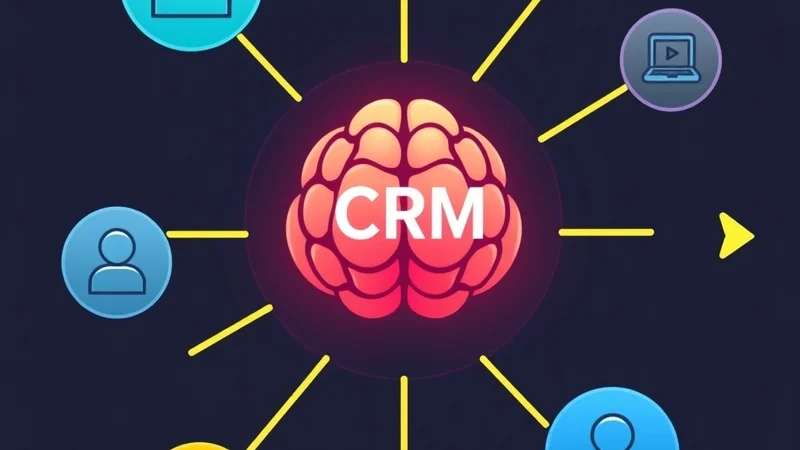
On the recruitment side, AI’s impact is equally profound. Applicant Tracking Systems (ATS) are now more intelligent, using natural language processing (NLP) to parse and rank resumes not just by keywords, but by semantic understanding of skills and experience. This significantly reduces the manual screening burden, allowing recruiters to focus on a more qualified pool of candidates. Companies like Workday and Oracle Talent Management integrate AI features into their enterprise HR platforms to enhance candidate sourcing and management.
AI also assists in automating initial candidate outreach, scheduling interviews, and even analyzing candidate sentiment from written communications. Some advanced tools can predict a candidate’s likelihood of accepting an offer or their potential for long-term retention based on various data points, offering a data-driven edge in talent acquisition. This shift allows recruiters to move from administrative tasks to more strategic engagement with promising candidates.
AI Accelerates App Development
The software development lifecycle, from initial concept to deployment and maintenance, is also experiencing a significant AI-driven transformation. Developers are finding AI to be a powerful co-pilot, enhancing productivity and enabling new capabilities.
From Concept to Code: AI as a Development Partner
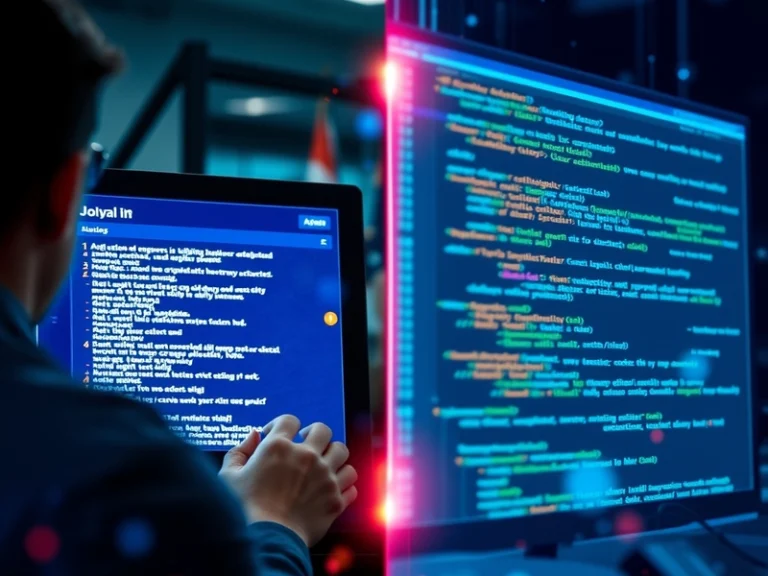
Perhaps the most visible application of AI in development is in code generation and autocompletion. Tools like GitHub Copilot, powered by OpenAI’s Codex model, can suggest entire lines or blocks of code in various programming languages, learning from billions of lines of public code. This accelerates development, reduces boilerplate code, and helps developers explore new APIs or syntax more quickly. Integrated Development Environments (IDEs) like Visual Studio Code are increasingly embedding similar AI-powered suggestions directly into the coding experience.
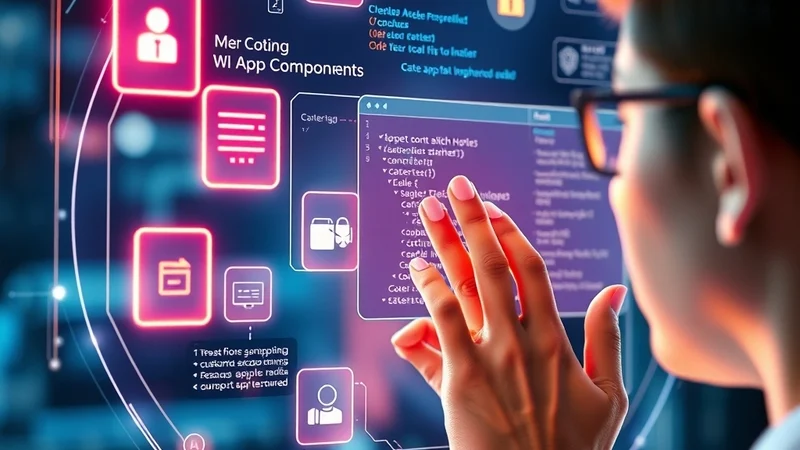
Furthermore, AI is enhancing low-code and no-code platforms. Products such as Microsoft Power Apps, with its AI Builder component, allow citizen developers to integrate AI capabilities like object detection, form processing, or prediction models into their applications with minimal to no traditional coding. This democratizes app development, enabling business users to create custom solutions tailored to their specific needs, often with intelligent features built-in.
Enhancing Design and Deployment
Beyond code generation, AI is aiding in other crucial stages of app development:
- Automated Testing and Debugging: AI-powered testing frameworks can generate test cases, identify potential bugs by analyzing code patterns, and even predict where errors are most likely to occur. This proactive approach helps catch issues earlier in the development cycle, reducing debugging time and improving software quality.
- UI/UX Assistance: AI tools can analyze user behavior data to suggest optimal UI layouts, predict user flows, and identify friction points in an application’s design. This leads to more intuitive and user-friendly interfaces, often informed by data rather than solely by designer intuition.
- AIOps for Performance and Monitoring: In the deployment phase, Artificial Intelligence for IT Operations (AIOps) platforms use machine learning to analyze vast amounts of operational data – logs, metrics, events. These systems can detect anomalies, predict outages, automate incident response, and optimize resource allocation, ensuring applications run efficiently and reliably in production environments. Companies like Dynatrace and Splunk offer AIOps solutions that leverage AI to provide insights and automation for complex IT infrastructures.
While these AI tools offer substantial benefits in efficiency and innovation, they also introduce new considerations. Questions around data privacy, potential biases embedded in AI models, and the evolving skill sets required for human workers in these fields remain pertinent. As AI continues to mature, its role will likely shift from being a mere assistant to a more integrated, intelligent partner across an ever-expanding array of professional tasks.