Ben Affleck has articulated a perspective on artificial intelligence in Hollywood that champions its capacity to enhance creative processes rather than merely replace human input.
This viewpoint emerges at a time when the entertainment industry is grappling with the profound implications of generative AI, a discussion particularly amplified during the 2023 WGA and SAG-AFTRA strikes. While widespread concerns about job displacement and intellectual property rights dominated headlines, Affleck’s reported insight suggests a focus on AI’s potential as a powerful tool to augment, rather than diminish, human artistry and efficiency.
For an individual like Affleck, whose career spans acting, directing, producing, and screenwriting, the practical applications of AI could present themselves not solely as an existential threat, but as powerful new instruments. His experience across various facets of filmmaking likely offers a vantage point from which to assess how AI can streamline laborious tasks, unlock new creative avenues, and ultimately free up human talent to concentrate on higher-order conceptual and emotional work.
AI as a Creative Catalyst in Production
The argument for AI as a creative enhancer often centers on its ability to handle repetitive, time-consuming, or technically complex tasks that traditionally consume significant resources and human effort. In film production, several areas stand out:
- Pre-Production Efficiencies: AI tools are already being explored for script analysis, offering insights into narrative structure, character arcs, and audience reception. They can also assist in generating concept art, storyboards, and even virtual scouting of locations, allowing filmmakers to visualize scenes and environments with unprecedented speed and detail before committing to physical production.
- Virtual Production and VFX: Technologies like virtual production, exemplified by shows such as Disney+’s The Mandalorian, rely heavily on sophisticated real-time rendering and AI-powered systems. These allow directors to shoot actors in front of dynamic digital environments, fostering immediate creative feedback and reducing the need for extensive green screen work and costly reshoots. AI also automates mundane visual effects tasks like rotoscoping, wire removal, and even generating realistic crowd simulations, empowering VFX artists to focus on artistic refinement rather than manual labor.
- Performance Enhancement and Digital Doubles: Advanced AI-driven deepfake technology, while often a source of ethical debate, has been utilized for de-aging or aging actors in films like Martin Scorsese’s The Irishman and James Mangold’s Indiana Jones and the Dial of Destiny. When applied responsibly and with performer consent, these tools can extend an actor’s range or allow for creative choices previously deemed impossible, potentially enhancing storytelling without replacing the original performance.
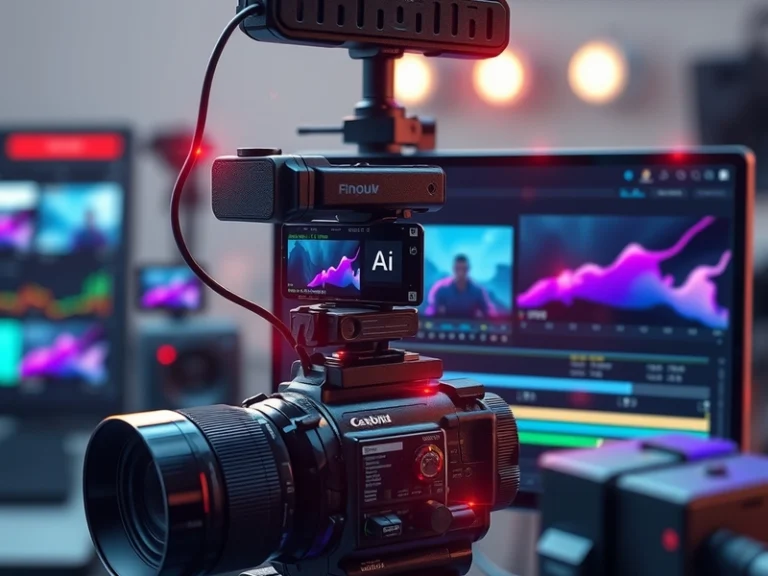
- Post-Production Acceleration: AI is increasingly integrated into editing suites for tasks like shot selection, color grading suggestions, and even generating preliminary cuts. For audio, AI can isolate voices, remove background noise, and even generate synthetic voice tracks for dubbing, significantly speeding up post-production workflows and allowing editors to iterate more rapidly on creative choices.
By offloading these tasks, AI could theoretically provide filmmakers with more time and resources to dedicate to character development, narrative complexity, and the nuanced human interactions that remain the bedrock of compelling storytelling. The vision is one where AI acts as an intelligent assistant, expanding the palette and precision of creative expression, rather than dictating it.
Navigating the Nuance of AI Adoption
Affleck’s perspective, as framed, highlights a crucial distinction: the difference between AI as a tool for augmentation versus a direct replacement for human creativity. This nuanced view acknowledges the valid concerns about AI’s potential to automate jobs while simultaneously recognizing its capacity to empower artists with new capabilities. It suggests that the industry’s focus should be on developing ethical frameworks and compensation models that allow creators to harness AI’s benefits without sacrificing their livelihoods or artistic control.
Ultimately, the successful integration of AI into Hollywood may hinge on leaders and creatives who can see beyond the immediate challenges to envision a future where technology serves as a powerful ally to human ingenuity. This requires not only understanding the technical capabilities of AI but also possessing a deep appreciation for the creative process itself, ensuring that AI remains a means to an end, rather than the end itself.