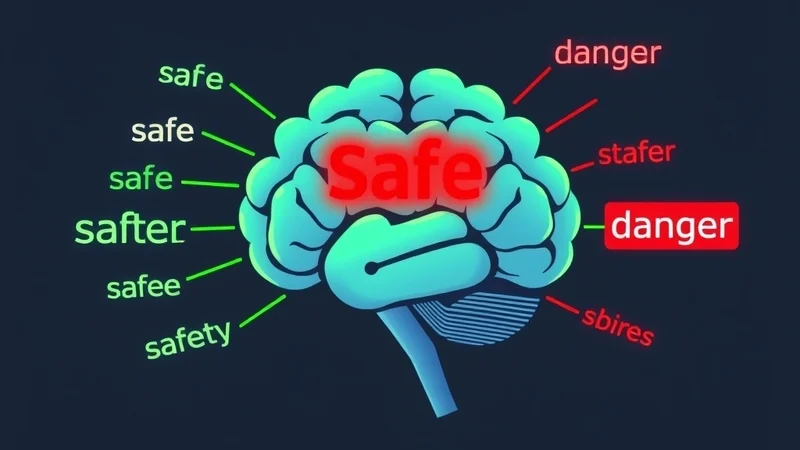
Recent research indicates that interacting with AI chatbots can subtly influence an individual’s priorities and values when faced with personal dilemmas, potentially shifting their decision-making process.
This phenomenon, observed across various studies investigating human-AI interaction, suggests that the way AI models like OpenAI’s ChatGPT or Google’s Gemini frame information, offer suggestions, and articulate reasoning can have a measurable, albeit often subconscious, impact on a user’s perspective. Unlike traditional information sources, conversational AI provides an interactive, adaptive dialogue that can feel more akin to consulting a trusted advisor, even when users are aware they are speaking to a machine.
How AI Influences Decision-Making
The subtle shifts in priorities and values are not necessarily the result of overt persuasion by the AI, but rather stem from several interconnected factors inherent in human-AI communication:
- Framing Effects: AI often presents information in a particular way, emphasizing certain aspects of a problem or solution while downplaying others. This framing can guide a user towards a specific interpretation or set of considerations, subtly altering their perceived importance of different factors in a dilemma. For instance, if an AI consistently highlights the financial implications of a career choice, a user might begin to prioritize economic stability over personal fulfillment, even if that wasn’t their initial primary value.
- Cognitive Offloading: Users may implicitly or explicitly offload some of their cognitive burden onto the AI. When grappling with complex decisions, individuals might rely on the AI to process information, identify potential outcomes, or even suggest optimal paths. This reliance can lead to a reduced critical evaluation of the AI’s output, making users more susceptible to its inherent biases or preferred modes of reasoning.
- Consistency and Authority: AI models are designed to be consistent in their responses and often present information with a degree of certainty that can be perceived as authoritative. While disclaimers are common, the sheer volume and coherence of AI-generated advice can foster a sense of trust, leading users to align their thinking more closely with the AI’s perspective.
- Lack of Emotional Nuance: AI chatbots lack genuine emotions and cannot fully grasp the complex, often irrational, emotional components of human dilemmas. Their advice tends to be purely logical or data-driven. Engaging with such an unemotional perspective can, over time, subtly encourage users to deprioritize emotional considerations in their own decision-making, favoring utility or efficiency.
- Reinforcement Learning from Human Feedback (RLHF) Loop: While RLHF aims to align AI models with human values, the training data itself reflects specific human perspectives. Furthermore, the feedback loop can inadvertently reinforce certain preferred outcomes or reasoning patterns that might not encompass the full spectrum of human values, which then get reflected in the AI’s responses to users.
Implications for Personal and Societal Values
The potential for AI to subtly shift personal values raises significant ethical and societal questions. If individuals increasingly turn to AI for guidance on complex life choices—from career paths and relationship advice to financial planning and ethical quandaries—the aggregate effect could be a normalization of certain value sets or decision-making heuristics that are implicitly promoted by the AI.
Consider a scenario where an individual is torn between a high-paying but demanding job and a lower-paying but more personally fulfilling role. An AI, if trained predominantly on data emphasizing economic success or efficiency, might inadvertently guide the user towards the former, subtly elevating financial gain as a priority over personal satisfaction. Similarly, in ethical dilemmas, the AI’s output could lean towards utilitarian outcomes, potentially diminishing the perceived importance of individual rights or deontological principles, depending on its training.
This does not imply malicious intent from AI developers or the models themselves. Rather, it highlights the profound impact of design choices, training data, and the inherent limitations of current AI architectures in fully grasping the nuanced, often contradictory, nature of human values and priorities.
Mitigating the Influence
Recognizing this subtle influence is the first step towards mitigation. Several approaches are being explored by researchers and developers:
- Enhanced Transparency: Making the underlying models and their potential biases more transparent to users could empower individuals to critically evaluate the AI’s advice. This includes clearer communication about how AI models are trained and what data sources inform their responses.
- Value-Aligned AI Development: Ongoing research focuses on developing AI systems that are more explicitly aligned with a broader range of human values, potentially allowing users to specify their own value hierarchies for the AI to consider.
- User Education: Educating users about the cognitive biases that can make them susceptible to AI influence, and encouraging a more critical and reflective approach to AI-generated advice, is crucial. Major AI providers already include disclaimers, urging users to verify information and not to treat AI as a substitute for professional advice.
- Diversity in AI Perspectives: Ensuring that AI models are trained on diverse datasets that reflect a wide spectrum of human experiences, cultures, and value systems can help prevent the inadvertent promotion of a narrow set of priorities.
As AI chatbots become more sophisticated and integrated into daily life, understanding their subtle impact on personal decision-making is paramount. It underscores the need for continued interdisciplinary research in human-computer interaction, cognitive psychology, and AI ethics to ensure these powerful tools augment human agency rather than inadvertently reshape it.