Claude Sonnet 5: The Most Agentic AI Yet
In the rapidly evolving landscape of artificial intelligence, Claude Sonnet 5 emerges as a groundbreaking tool, redefining what we understand about AI’s capabilities in planning and executing tasks. Developed by Anthropic, Claude Sonnet 5 is not just another iteration in the line of chatbots; it represents a significant leap towards more agentic AI. This article delves into its capabilities, practical applications, industry implications, and future possibilities.
Understanding Agentic AI
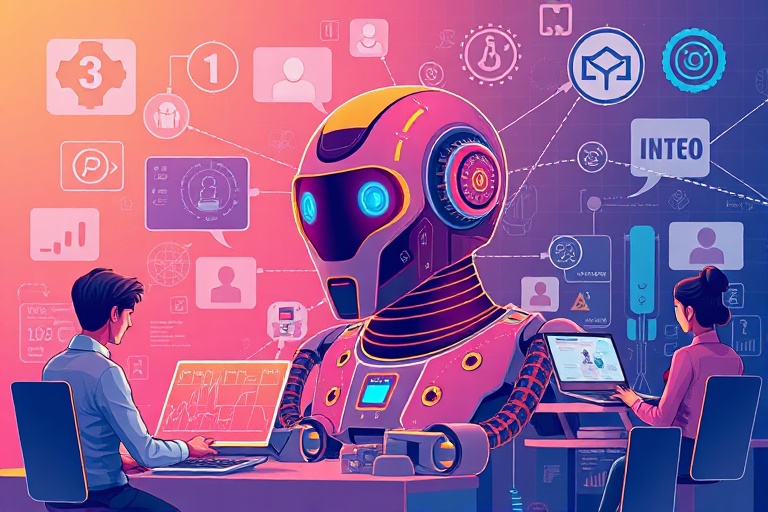
Before diving into the specifics of Claude Sonnet 5, it’s essential to clarify the concept of agentic AI. Agentic AI refers to systems that can autonomously make decisions, plan actions, and execute tasks without human intervention, thereby functioning with a level of independence similar to a human agent. Claude Sonnet 5 epitomizes this by integrating advanced machine learning techniques that enhance its decision-making abilities.
Capabilities of Claude Sonnet 5
Claude Sonnet 5 showcases a plethora of capabilities that set it apart from its predecessors and competitors. Here are some of the key features:
- Advanced Natural Language Processing (NLP): Claude Sonnet 5 excels in understanding and generating human-like responses, making interactions seamless and intuitive.
- Contextual Awareness: The AI can maintain context over extended conversations, allowing for more coherent and relevant responses.
- Task Planning: It can break down complex tasks into manageable steps, enabling efficient execution.
- Learning from Feedback: Claude Sonnet 5 continuously improves its performance by learning from user feedback, adapting to new challenges dynamically.
- Integration Capabilities: The AI can integrate with various software tools and platforms, enhancing its utility in different environments.
Practical Insights
The practical implications of Claude Sonnet 5 are vast, offering significant advantages across various industries:
- Customer Service: Businesses can deploy Claude Sonnet 5 as a virtual assistant to handle customer queries efficiently, reducing the workload on human agents while improving response times.
- Project Management: The AI can assist teams in planning projects by outlining tasks, setting deadlines, and even predicting potential roadblocks.
- Content Creation: Writers and marketers can leverage Claude Sonnet 5 to generate ideas, create drafts, and refine content, significantly enhancing productivity.
- Data Analysis: The AI can analyze vast amounts of data to identify trends, helping businesses make informed decisions based on actionable insights.
Industry Implications
The introduction of Claude Sonnet 5 has profound implications for several industries:
- Healthcare: In the medical sector, the AI can assist in diagnosing conditions by analyzing patient data and suggesting treatment plans, thereby augmenting the capabilities of healthcare professionals.
- Finance: Financial institutions can utilize Claude Sonnet 5 for risk assessment and fraud detection, significantly enhancing security measures and operational efficiency.
- Education: Educational platforms can employ the AI to provide personalized tutoring experiences, adapting to the learning pace and style of individual students.
- Logistics: In logistics, Claude Sonnet 5 can optimize supply chain management by predicting demand and streamlining operations.
Future Possibilities
As we look ahead, the potential trajectories for Claude Sonnet 5 and similar agentic AI systems are both exciting and challenging:
- Increased Autonomy: Future iterations may possess greater autonomy, allowing them to take on more complex tasks without human oversight.
- Ethical Considerations: As AI becomes more agentic, ethical implications regarding accountability and decision-making will need to be addressed rigorously.
- Cross-Industry Applications: The adaptability of Claude Sonnet 5 could lead to innovative applications across diverse fields, fostering interdisciplinary collaboration.
- Enhanced Personalization: With improved data integration capabilities, AI could offer hyper-personalized experiences tailored to individual user preferences.
Conclusion
Claude Sonnet 5 stands at the forefront of AI innovation, embodying the qualities of agentic AI that can reshape how we interact with technology. Its capabilities in planning and executing tasks present numerous opportunities across various industries, promising a future where AI is not just a tool but an integral partner in decision-making processes. As we embrace these advancements, it is crucial to navigate the ethical landscape thoughtfully, ensuring that the benefits of such technologies are harnessed responsibly.