Large language models (LLMs) like Anthropic’s Claude are increasingly demonstrating sophisticated capabilities in generative art, not through direct pixel synthesis, but by producing the underlying code that renders complex visual compositions from mathematical concepts.
While much of the recent public discourse around AI art has centered on diffusion models such as Stability AI’s Stable Diffusion or Midjourney, which generate images directly from natural language prompts, another powerful paradigm is gaining traction. This approach leverages LLMs to act as algorithmic collaborators, translating abstract artistic or mathematical directives into executable programming instructions. The resulting code then generates the artwork, often pixel by pixel, based on precise mathematical rules and iterative processes.
The Algorithmic Canvas: From Concept to Code
The concept of art generated from code, often termed “generative art” or “algorists,” predates the current wave of LLMs by decades. Artists and programmers have long used languages like Processing, p5.js, or GLSL shaders to explore mathematical functions, fractals, cellular automata, and other algorithmic patterns as visual forms. What LLMs like Claude introduce is a significant shift in accessibility and creative iteration:
- Natural Language Interface: Users can describe complex visual ideas, mathematical functions, or algorithmic behaviors in plain English. Claude interprets these prompts and translates them into functional code.
- Code Generation: The LLM generates the actual programming script (e.g., in Python with libraries like Pillow or Matplotlib, or JavaScript for p5.js, or even pseudo-code for more specialized environments) that, when executed, draws the image.
- Mathematical Translation: Claude can be prompted to implement specific mathematical concepts. For instance, a user might ask for “a visualization of the Mandelbrot set,” “a pattern based on Perlin noise,” or “a cellular automaton simulation that generates abstract forms.” The model then writes the code to compute these mathematical functions and map their outputs to pixel values or geometric arrangements.
This process transforms the LLM from merely a text generator or an image-to-image transformer into a sophisticated programming assistant for visual artists. It democratizes access to code-based art for individuals who may not have deep programming expertise, allowing them to experiment with algorithmic aesthetics through conversational interaction.
The Pixel-by-Pixel Journey
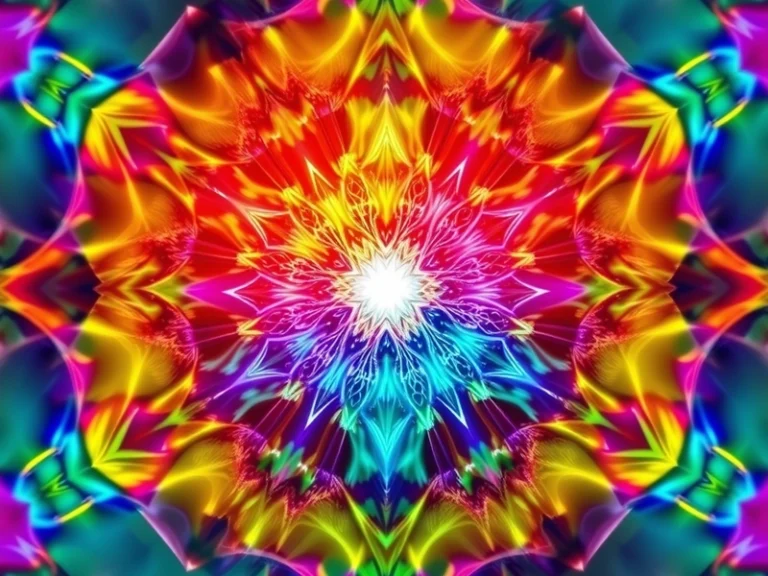
The “pixel-by-pixel” aspect of this method is crucial. Unlike diffusion models that learn to synthesize images from latent spaces, the art generated via code often builds an image from fundamental components. Each pixel’s color, brightness, or even its very existence might be determined by a mathematical function applied to its coordinates, or by iterative rules governing its neighbors. Consider the steps:
- Prompting the AI: An artist might input a prompt such as: “Generate a Python script using the Pillow library to create an image that visualizes a fractal pattern resembling a Julia set, with varying color gradients based on the escape time algorithm.”
- Code Generation: Claude would then generate a Python script. This script would define an image canvas, iterate through each pixel’s (x, y) coordinates, apply the Julia set iteration formula, determine the number of iterations required for the point to escape (or converge), and map that iteration count to a specific color from a gradient.
- Execution: The generated Python script is run in a local or cloud environment. The script executes the mathematical calculations for every single pixel, setting its color value based on the algorithm’s output.
- Output: A high-resolution image file (e.g., PNG, JPG) is produced, representing the direct visual manifestation of the mathematical code.
This method offers a distinct kind of artistic control and reproducibility. Artists can examine the generated code, understand the underlying logic, and even modify parameters to explore variations or refine their vision. The art becomes a direct output of an algorithm, rather than an interpretation of a prompt through a pre-trained visual model.
Implications for Art and Technology
The ability of LLMs like Claude to generate art from pure code opens several intriguing avenues:
- Exploring Abstract Concepts: It provides a powerful tool for visualizing complex mathematical, scientific, or philosophical concepts that are difficult to represent visually otherwise.
- New Forms of Collaboration: Artists can collaborate with the AI at an algorithmic level, guiding the creation of code that manifests their ideas, rather than just describing desired visual outcomes.
- Educational Value: It offers an interactive way to learn about programming, mathematics, and generative art principles by seeing immediate visual results from code.
- Reproducibility and Parameterization: Since the art is code-based, it is inherently reproducible, and its characteristics can be precisely controlled and varied through algorithmic parameters.
While the direct image generation capabilities of diffusion models are undeniably impactful, the code-based approach championed by LLMs like Claude represents a deeper engagement with the computational nature of art. It positions the AI not just as a creator of images, but as a sophisticated tool for crafting the very instructions that define visual reality, pixel by pixel, from the ground up.