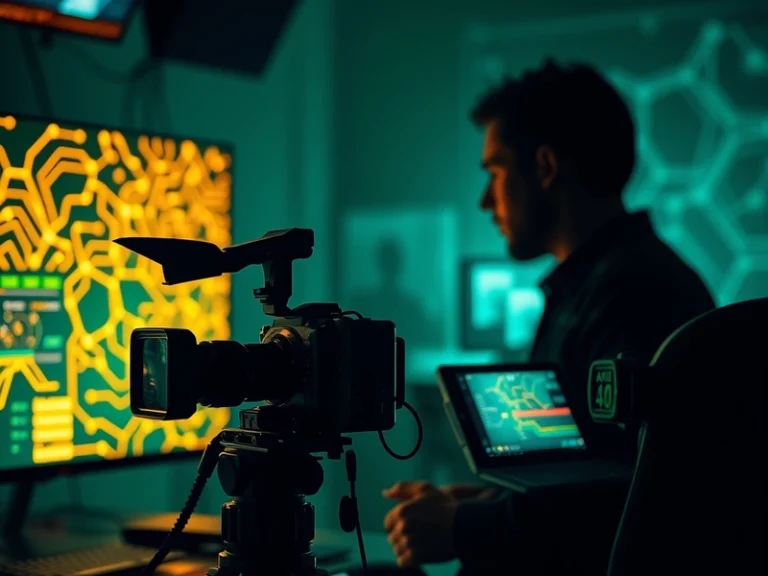
The notion of acclaimed director Danny Boyle integrating artificial intelligence into his filmmaking process highlights a broader, ongoing transformation within the cinema industry, where AI tools are rapidly reshaping everything from script development to visual effects. While specific details of Boyle’s projects leveraging AI remain under wraps, the trend reflects a significant shift across Hollywood, as creators explore how these technologies can enhance storytelling, streamline production, and push visual boundaries.
Boyle, known for his dynamic visual style, innovative narratives, and willingness to embrace new cinematic techniques in films like Trainspotting, Slumdog Millionaire, and 28 Days Later, represents a class of filmmakers who are often at the forefront of technological adoption. For a director whose work frequently demands a high degree of visual intensity and narrative precision, AI offers a new palette of tools that can accelerate iterative processes and unlock previously unimaginable creative avenues.
AI’s Expanding Footprint in Pre-Production
Before cameras even roll, AI is making significant inroads into the pre-production phase. This stage, traditionally labor-intensive, benefits from AI’s capacity for rapid ideation and analysis:
- Script Analysis and Development: AI models can analyze screenplays for pacing, character arcs, dialogue patterns, and even predict audience reception based on vast datasets of successful films. While not replacing human writers, these tools can offer data-driven insights, highlight potential plot holes, or suggest alternative narrative pathways.
- Concept Art and Storyboarding: Generative AI, exemplified by platforms that create images from text prompts, allows concept artists to rapidly iterate on visual ideas. Directors and production designers can explore countless variations of sets, costumes, and creature designs in minutes, significantly accelerating the visual development process and allowing for more informed decisions earlier on.
- Virtual Location Scouting: AI-powered tools can analyze geographical data and existing image libraries to suggest suitable filming locations based on specific aesthetic or logistical requirements, reducing the need for extensive physical travel in the initial scouting phases.
Transforming Visual Effects and Post-Production
Perhaps the most visible and impactful application of AI in cinema currently resides within visual effects (VFX) and post-production. This is an area where Boyle’s visually rich films could particularly benefit:
- Automated VFX Tasks: AI can automate mundane yet time-consuming tasks like rotoscoping (isolating subjects from backgrounds), wire removal, and object tracking. This frees up human artists to focus on more complex, creative aspects of VFX.
- Digital Humans and De-aging: Advanced neural networks are capable of generating highly realistic digital doubles and performing convincing de-aging or age progression on actors. These techniques, seen in various blockbuster films, offer new possibilities for casting and storytelling across different timelines without compromising visual authenticity.
- Environment Generation: From creating vast, photorealistic landscapes to populating crowd scenes, generative AI can significantly reduce the manual effort involved in building complex digital environments. Artists can guide AI models to produce detailed textures, foliage, or architectural elements that integrate seamlessly with live-action footage.
- Editing Assistance: AI-powered editing tools can analyze footage, identify key moments, and even suggest cuts based on narrative flow or emotional beats. While human editors retain ultimate creative control, these tools can provide efficiency gains, particularly in projects with extensive raw footage.
- Voice Synthesis and Sound Design: AI can generate realistic voiceovers, synthesize new sound effects, or even adapt existing audio to match visual cues, offering greater flexibility and efficiency in the sound design process.
The Interplay of Artistry and Algorithm
The integration of AI into filmmaking, particularly by directors like Danny Boyle, is not about replacing human creativity but augmenting it. Boyle’s films are characterized by their raw energy, emotional depth, and often a gritty realism, even amidst fantastical elements. AI tools, in this context, serve as sophisticated assistants that can help achieve a director’s vision more efficiently or enable visual feats that were previously cost-prohibitive or technically impossible.
However, the rapid adoption of AI also raises important discussions within the industry concerning intellectual property, the ethical use of digital likenesses, and the evolving roles of human artists. As AI technologies continue to mature, the challenge for filmmakers will be to harness their power responsibly, ensuring they serve the story and the artistic vision, rather than dictating it.