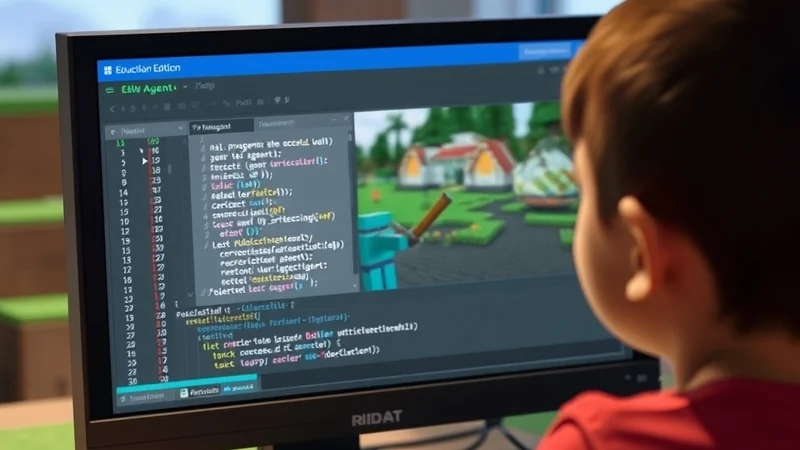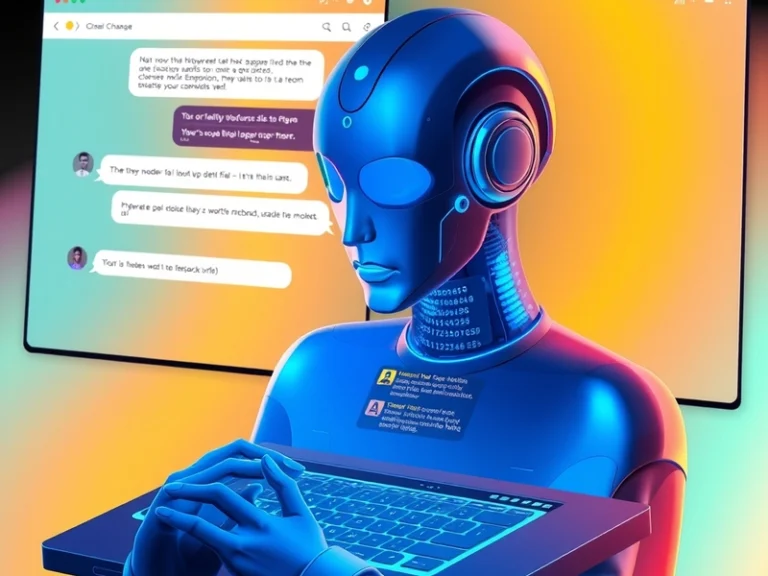
The field of AI development is witnessing a significant evolution with the emergence of innovative tools that empower users to create functional applications directly from natural language conversations with artificial intelligence. This capability represents a substantial leap beyond traditional coding and even existing low-code/no-code paradigms, democratizing app development by allowing individuals to articulate their software needs conversationally rather than through explicit code or visual builders.
The Shift to Conversational App Creation
Historically, software development has required specialized programming knowledge, followed by the rise of low-code and no-code platforms that abstracted away some of the complexity through visual interfaces. The latest progression introduces an even more intuitive layer: natural language. Users can now describe the application they envision – its purpose, features, and desired behavior – in plain English (or other natural languages), and the AI interprets these instructions to generate the underlying code and infrastructure.
This paradigm shift is primarily driven by the advancements in large language models (LLMs) such as OpenAI’s GPT series, Google’s Gemini, and Anthropic’s Claude models. These sophisticated models possess an unparalleled understanding of human language, coupled with a growing proficiency in generating coherent and functional code across various programming languages and frameworks. The process often involves an iterative dialogue:
- Initial Prompt: A user describes the desired application, for instance, “Create a simple web application that allows users to track their daily expenses, categorize them, and view a summary.”
- AI Interpretation and Scaffolding: The AI processes this request, understanding the core components required (user interface, database interaction, categorization logic, summary generation). It then generates initial code or a project structure.
- Iterative Refinement: The user reviews the AI’s output and provides feedback, asking for modifications (“Add a date picker for expense entry,” “Make the summary a bar chart,” “Ensure data is stored securely”). The AI incorporates these changes, refining the application’s functionality and interface.
- Deployment Assistance: Many of these emerging tools also offer assistance in deploying the generated application, connecting to cloud services, or providing export options for further development.
Under the Hood: How AI Builds Apps from Chat
The ability to translate abstract ideas into concrete software relies on several advanced AI capabilities working in concert:
At its core, the system leverages highly capable LLMs that have been trained on vast datasets of text and code. This training enables them to not only understand the nuances of natural language but also to generate syntactically correct and semantically meaningful code in languages like Python, JavaScript, HTML, CSS, and even SQL for database interactions.
Beyond simple code generation, these tools often incorporate principles of “agentic AI.” This means the AI isn’t just a passive code generator; it can act as an intelligent agent capable of:
- Planning: Breaking down a complex app request into smaller, manageable sub-tasks (e.g., design UI, create database schema, implement backend API, build frontend components).
- Execution: Generating code for each sub-task and, in some cases, running preliminary tests or simulations to verify functionality.
- Reflection and Correction: Evaluating its own output against the user’s intent and making adjustments based on feedback or identified errors. This feedback loop is crucial for building robust applications.
- Tool Use: Integrating with external tools and APIs, such as front-end frameworks (React, Vue), backend services (Node.js, Flask), database systems (PostgreSQL, MongoDB), and cloud platforms (AWS, Azure, Google Cloud).
The interaction often takes place within a specialized conversational interface that maintains context, allowing for a natural, back-and-forth dialogue as the application takes shape. This persistent context enables the AI to remember previous instructions and modifications, leading to a cohesive development process.
Implications and Future Outlook
The implications of this technology are far-reaching. For non-developers, it lowers the barrier to entry significantly, allowing entrepreneurs, small business owners, and power users to rapidly prototype and even deploy custom solutions without needing to hire a development team or learn complex programming languages. This could spark a new wave of innovation, as ideas can move from concept to functional prototype with unprecedented speed.
For experienced developers, these tools can act as powerful accelerators, automating repetitive coding tasks, generating boilerplate code, or even suggesting architectural patterns. Instead of spending time on mundane coding, developers can focus on higher-level design, complex logic, optimization, and integrating sophisticated features that require a deeper human touch.
However, challenges remain. The complexity of applications that can be reliably generated through chat is still limited. Ensuring security, scalability, and performance for enterprise-grade applications will likely still require significant human oversight and expertise. Debugging complex issues in AI-generated code can also be challenging, and the intellectual property implications of AI-generated software are still being explored.
Despite these challenges, the trajectory is clear: AI is becoming an increasingly integral partner in the software development lifecycle. As LLMs become more sophisticated and agentic capabilities advance, the line between describing an idea and having a functional application will continue to blur, ushering in an era where software creation is more accessible and agile than ever before.