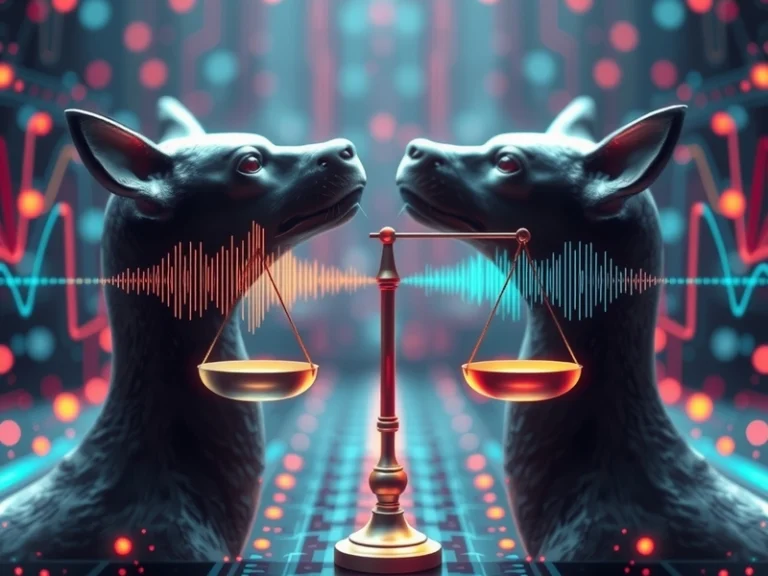
The application of artificial intelligence to decipher animal vocalizations is rapidly advancing, prompting researchers and ethicists to closely examine the profound responsibilities that arise from this nascent ability to understand non-human communication.
For decades, scientists have studied animal sounds through bioacoustics, meticulously recording and analyzing patterns in whale songs, bat echolocation calls, bird melodies, and even the alarm calls of prairie dogs. However, the sheer volume and complexity of this data often limited comprehensive interpretation. Modern AI, particularly machine learning and deep learning algorithms, has provided a powerful new lens. By training models on vast datasets of animal sounds, correlated with observed behaviors or environmental contexts, AI systems can identify subtle patterns, predict behavioral responses, and even distinguish individual animals or specific messages within a species’ repertoire with unprecedented accuracy.
This technological leap holds immense promise. For conservationists, understanding distress calls or mating signals can inform more effective protection strategies for endangered species. For animal welfare advocates, identifying signs of pain, stress, or contentment could revolutionize husbandry practices in zoos, farms, and research facilities. Beyond practical applications, the ability to peer into the communicative lives of other species offers an unparalleled opportunity to deepen our scientific understanding of animal cognition, social structures, and ecological roles.
Ethical Frontiers Emerge
As AI’s capabilities in this domain mature, the ethical considerations are becoming increasingly complex and urgent. The potential for understanding animal “language” forces a re-evaluation of our relationship with the natural world and the moral obligations we hold toward other sentient beings. Researchers are grappling with questions that span from fundamental philosophical debates to immediate practical dilemmas.
- The Challenge of Interpretation and Anthropomorphism: While AI can identify patterns, attributing human-like meaning or emotion to animal signals remains a significant risk. Misinterpreting a complex animal communication as a simple “request” or “complaint” could lead to inappropriate interventions or policies, potentially harming the animals we intend to help. The line between scientific deduction and anthropomorphic projection is fine and requires rigorous interdisciplinary scrutiny.
- Questions of Consent and Privacy: If we can eavesdrop on animal conversations, do these non-human subjects have a right to privacy? Can an animal “consent” to having its vocalizations recorded, analyzed, and potentially used to influence its behavior or environment? These questions challenge established ethical frameworks, which are primarily designed for human research subjects.
- Potential for Exploitation or Manipulation: A deeper understanding of animal communication could, in theory, be used for purposes detrimental to animals. Imagine systems designed to manipulate animal behavior for commercial gain, agricultural efficiency, or even military applications. The ethical imperative is to ensure that this knowledge is used exclusively for animal welfare, conservation, and respectful scientific inquiry.
- The Dilemma of Intervention: If AI reveals that a group of animals is expressing distress, fear, or complex social conflict, what is our responsibility to intervene? Where do we draw the line between observation and interference in natural processes? And what if our intervention, however well-intentioned, inadvertently disrupts ecological balance or social hierarchies within a species?
- Implications for Animal Legal Status and Rights: Historically, the inability of animals to communicate with humans in a mutually intelligible way has been a factor in their legal classification as property rather than subjects with rights. If AI truly bridges this communication gap, even partially, it could reignite debates about animal personhood, legal standing, and the expansion of animal rights, potentially reshaping legal systems globally.
Navigating the New Landscape
Addressing these ethical challenges requires a collaborative approach involving AI developers, biologists, ethicists, legal scholars, and conservationists. Frameworks are being proposed that emphasize caution, transparency, and a deep respect for the intrinsic value of animal life. This includes developing AI models with built-in interpretability to avoid black-box decision-making, establishing clear ethical guidelines for data collection and usage, and fostering public education to manage expectations and prevent misinterpretations.
The journey into understanding animal communication through AI is not merely a scientific endeavor; it is a profound ethical one. It compels humanity to confront its role in the biosphere and redefine its responsibilities towards the myriad species with whom we share this planet. As AI continues to unlock the secrets of the natural world, the imperative for thoughtful, ethical engagement will only grow stronger, demanding that our technological prowess be matched by our moral wisdom.