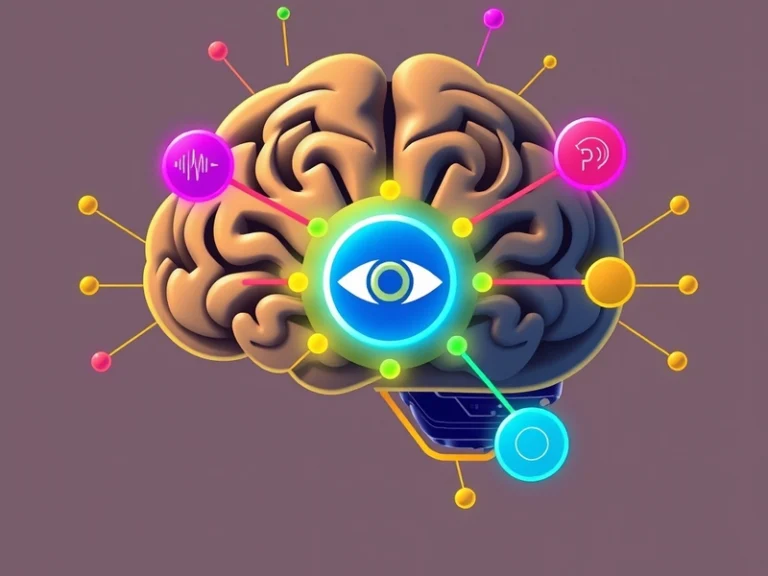
Google continues to advance its Gemini family of multimodal AI models, with ongoing development reportedly exploring enhanced reasoning capabilities. These advancements, often discussed in the context of various iterations, including a version referred to as “Gemini 3.8 Live,” underscore Google’s commitment to building AI that can understand and interact with the world more intuitively, particularly through sophisticated voice reasoning and visual grounding.
The evolution of models like Gemini is characterized by a drive towards more human-like comprehension, moving beyond simple pattern matching to genuine understanding and interaction across diverse data types. Voice reasoning and visual grounding represent critical frontiers in this journey, enabling AI to process and interpret information from spoken language and visual inputs with unprecedented accuracy and contextual awareness.
Voice Reasoning: Beyond Transcription to Understanding
Voice reasoning in AI extends far beyond mere speech-to-text transcription. It involves the model’s ability to not only accurately convert spoken words into text but also to comprehend the underlying intent, emotional tone, linguistic nuances, and contextual implications of the audio input. This capability allows an AI to engage in more natural, dynamic, and empathetic conversations, adapting its responses based on a deeper understanding of the user’s vocal expressions and spoken content.
For a model to exhibit true voice reasoning, it must integrate several complex AI components:
- Acoustic Analysis: Processing pitch, timbre, rhythm, and volume to infer emotional states or emphasis.
- Semantic Comprehension: Understanding the meaning of words and sentences in context, including idioms, metaphors, and domain-specific jargon.
- Pragmatic Interpretation: Deciphering the user’s goals, assumptions, and implications that are not explicitly stated but are conveyed through speech.
- Multimodal Context: Combining voice input with other available information, such as visual cues or prior conversational history, to form a more complete understanding.
The practical implications of advanced voice reasoning are substantial. Imagine virtual assistants that can discern frustration in your voice and proactively offer troubleshooting steps, or educational platforms that adapt teaching methods based on a student’s vocalized confusion. This capability is pivotal for creating AI systems that are not just responsive, but genuinely perceptive and helpful across a wider range of real-world scenarios.
Visual Grounding: Connecting Language to the Seen World
Visual grounding refers to an AI model’s capacity to connect abstract linguistic concepts and descriptions to specific elements within an image or video. It’s the ability to “see” what’s being talked about, understanding spatial relationships, object attributes, and actions depicted in visual data based on natural language queries or statements. This is crucial for enabling AI to interpret visual information in a way that aligns with human understanding and to generate responses that are visually coherent and contextually relevant.
Achieving robust visual grounding requires models to:
- Object Recognition and Localization: Accurately identifying and pinpointing objects within a visual scene.
- Attribute Recognition: Understanding properties like color, size, shape, and material of identified objects.
- Relational Understanding: Interpreting how objects relate to each other spatially (e.g., “the cup on the table,” “the person standing next to the car”) and semantically.
- Action Recognition: Identifying and understanding actions and events occurring in images or video clips.
- Cross-Modal Alignment: Bridging the gap between linguistic descriptions and their corresponding visual representations, allowing for precise referencing.
The applications for sophisticated visual grounding are vast, ranging from enhanced image search and content creation tools to more capable robotics and autonomous systems. For instance, an AI with strong visual grounding could accurately answer questions about complex diagrams, describe the contents of a photograph with rich detail, or follow intricate instructions involving physical objects in a real-world environment.
The Synergy of Multimodality
The true power of these advancements, whether in a version like “Gemini 3.8 Live” or future iterations, lies in their synergy. When voice reasoning and visual grounding are integrated within a single multimodal framework, AI models can achieve a more holistic understanding of human input and the surrounding environment. A user could point to an object on a screen and ask a nuanced question about it, expecting the AI to process both the visual cue and the spoken query simultaneously to provide an accurate, contextually aware response. This convergence moves AI closer to mimicking human cognitive processes, where sight and sound are constantly interpreted together to form a coherent understanding of reality.
Google’s continued investment in the Gemini family of models, focusing on these sophisticated reasoning capabilities, signals a clear direction for the future of AI: systems that are not just intelligent, but truly intuitive, making interactions with technology more seamless, productive, and natural.