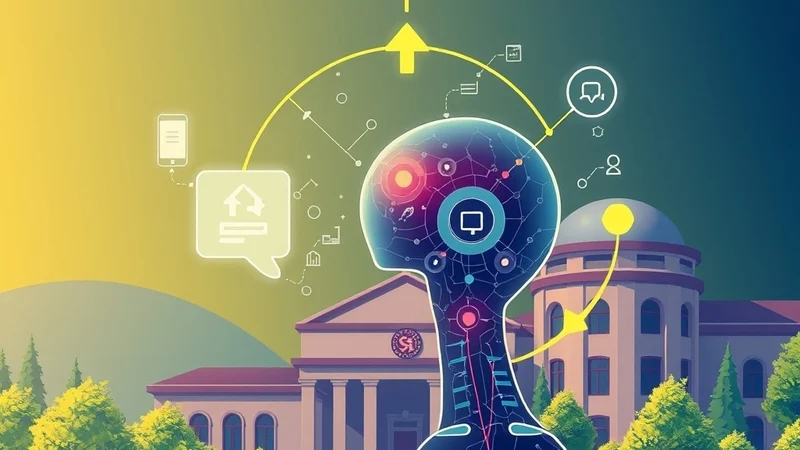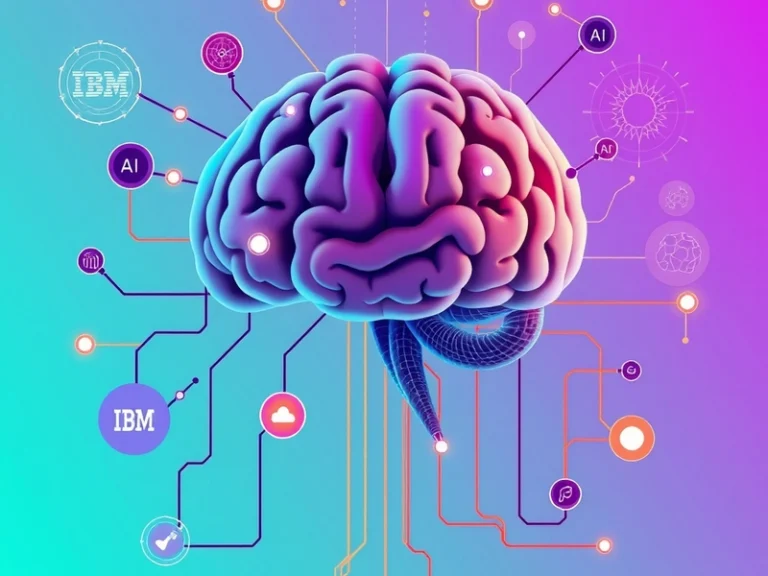
IBM continues to champion an innovative approach to demystifying artificial intelligence by drawing profound analogies with the human body, aiming to simplify its intricate concepts for a broader audience and foster a deeper, more intuitive understanding of AI systems.
This method leverages humanity’s innate familiarity with biological processes to bridge the conceptual gap between complex AI algorithms and human comprehension. Rather than relying solely on abstract mathematical or computational terms, IBM’s strategy often translates AI functionalities into relatable biological functions, making the underlying mechanisms more accessible to both technical practitioners and business leaders.
The Brain as a Blueprint: From Neurons to Neural Networks
Perhaps the most direct and foundational analogy between AI and the human body lies in the very architecture of artificial neural networks. These computational models, central to modern deep learning, are explicitly inspired by the structure and function of biological neurons and their synaptic connections in the brain.
- Neurons: In AI, an artificial neuron (or node) receives input, processes it, and transmits an output, mimicking the dendrites, cell body, and axon of a biological neuron.
- Synapses and Weights: The connections between artificial neurons carry ‘weights’ that determine the strength and influence of one neuron’s output on another, analogous to the varying strengths of synaptic connections in the brain.
- Learning: Just as biological brains learn by adjusting synaptic strengths through experience (plasticity), neural networks learn by iteratively adjusting these weights during training, optimizing their performance on specific tasks.
IBM has a long history of exploring this biological inspiration, notably with its work on neuromorphic computing. Projects like the IBM TrueNorth chip, unveiled in 2014, represented a significant step towards hardware designed to mimic the brain’s architecture and energy efficiency. TrueNorth featured 4096 neurosynaptic cores, containing a million programmable neurons and 256 million programmable synapses, demonstrating a novel approach to low-power, event-driven computation directly inspired by biological neural systems.
Beyond Structure: Cognitive Functions and IBM Watson
The analogy extends beyond the mere architecture of neural networks to encompass higher-level cognitive functions. IBM’s pioneering work with Watson, for instance, has frequently been described in terms of human-like cognitive abilities, even if the underlying mechanisms are purely computational.
Watson, a cognitive computing system, was designed to understand natural language, process vast amounts of unstructured data, and generate hypotheses or recommendations. These capabilities are often mapped to human cognitive processes:
- Understanding Language: Watson’s natural language processing (NLP) capabilities are likened to the human ability to comprehend context, nuance, and intent in spoken or written language.
- Reasoning and Hypothesis Generation: Its ability to weigh evidence, evaluate alternatives, and form conclusions mirrors human reasoning and problem-solving processes. In domains like healthcare, Watson for Oncology aimed to assist clinicians by sifting through medical literature and patient data to suggest treatment options, analogous to a human expert’s diagnostic process.
- Learning from Experience: Watson’s machine learning components allow it to improve its performance over time by ingesting new data and feedback, much like a human gains expertise through continuous learning and experience.
This framing helps stakeholders grasp the practical applications of AI in areas like customer service, scientific discovery, and healthcare, by presenting AI as an augmentative intelligence that complements human capabilities rather than simply automating tasks.
The Value Proposition of Biological Analogies
Employing analogies from the human body offers several distinct advantages in the discourse surrounding AI:
- Demystification: AI, with its complex algorithms and statistical underpinnings, can seem opaque. Biological analogies provide intuitive hooks, making concepts like “learning,” “memory,” and “perception” more relatable for non-specialists.
- Intuition Building: For developers and researchers, thinking about AI systems in biological terms can foster new perspectives and inspire novel architectural designs or learning paradigms, moving beyond purely mathematical abstractions.
- Guiding Principles for AI Design: The human body serves as an exemplar of robustness, adaptability, and energy efficiency. By drawing parallels, AI developers can be prompted to consider these qualities in their designs, aiming for systems that are more resilient and sustainable.
- Ethical and Societal Framing: Discussing AI in human-centric terms can also facilitate conversations around AI ethics, responsibility, and its role in society, helping to align AI development with human values and societal needs.
Acknowledging the Limitations
While powerful, biological analogies are not without their limitations. It is crucial to remember that AI systems, even those inspired by biology, are fundamentally different from living organisms.
- Oversimplification: Analogies can sometimes oversimplify the intricate biological processes they reference, potentially leading to misconceptions about the true complexity of either AI or biology.
- Anthropomorphism: Describing AI in human-like terms risks anthropomorphism, attributing consciousness, emotion, or intent to machines that do not possess them. This can inflate expectations or generate unwarranted fears about AI.
- Fundamental Differences: The learning mechanisms, energy consumption, and error modes of AI systems differ significantly from biological systems. For example, neural networks can suffer from “catastrophic forgetting,” a phenomenon not typically observed in biological brains.
IBM’s approach, therefore, often involves a careful balance: using analogies to build initial understanding and intuition, while also emphasizing the distinct computational nature of AI and the specific engineering challenges involved. The goal is to leverage the power of metaphor without misleading about the underlying technological reality.
By continuing to articulate complex AI concepts through the lens of the human body, IBM contributes to a broader public and professional understanding of artificial intelligence, making it less of a black box and more of an intelligible, powerful tool for progress.