Researchers at MIT have developed an AI-driven method to identify senescent cells, often referred to as “zombie cells,” directly within tissue samples without causing their destruction, marking a significant advancement in aging and disease research.
Senescent cells are a critical focus in biomedical science. These cells have ceased dividing but remain metabolically active, secreting a complex mix of inflammatory molecules, proteases, and growth factors known as the Senescence-Associated Secretory Phenotype (SASP). While senescence plays a role in wound healing and tumor suppression, the accumulation of senescent cells with age is strongly implicated in chronic inflammation, tissue dysfunction, and the progression of numerous age-related diseases, including certain cancers, cardiovascular conditions, neurodegenerative disorders, and metabolic diseases. The ability to accurately and efficiently identify these cells is paramount for understanding their biology and for developing and testing senolytic drugs, which aim to selectively eliminate senescent cells.
Traditional methods for detecting senescent cells often present considerable challenges. Many common techniques rely on biochemical markers that require cells to be fixed or lysed, effectively destroying the sample or rendering it unsuitable for further live analysis. For instance, the detection of senescence-associated beta-galactosidase (SA-β-gal) activity involves a staining process that typically necessitates cell fixation. Similarly, immunohistochemical staining for markers like p16INK4a or p21WAF1/Cip1, or the assessment of lamin B1 loss, also involves destructive processing. These limitations mean that researchers often cannot observe the same cells over time, track their responses to interventions, or conduct multi-modal analyses on intact tissue architecture, thereby restricting the depth of biological insights that can be gained.
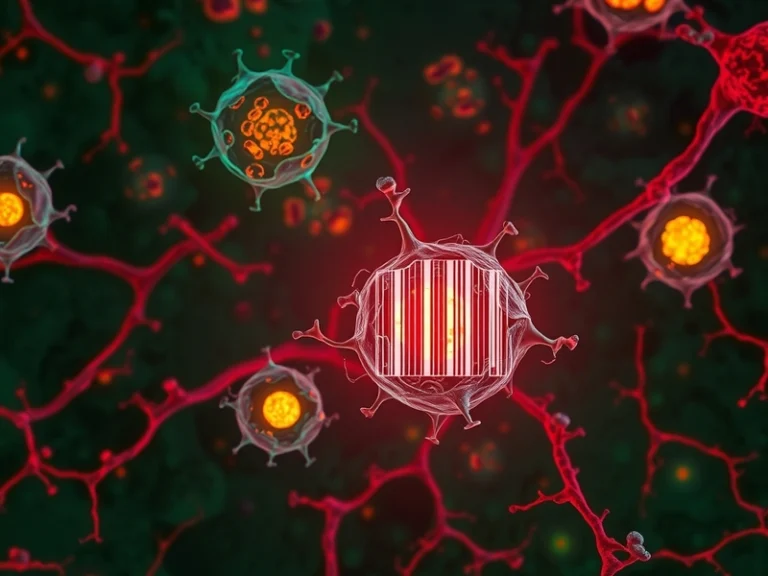
The MIT researchers’ innovation addresses these limitations by leveraging artificial intelligence to create what they term “AI-powered barcodes.” While the precise details of the methodology are specific to their research, the general principle involves training advanced machine learning models, likely deep learning architectures such as convolutional neural networks (CNNs), to recognize subtle, complex patterns in non-invasively acquired data from cells. This data is typically derived from various imaging modalities that do not require destructive staining or fixation. The “barcode” refers to a unique, AI-derived signature or feature set that distinguishes senescent cells from their non-senescent counterparts based on their morphological characteristics, spatial context, or inherent optical properties.
By analyzing these intricate patterns, the AI system can effectively “read” the state of a cell without physical intervention. This non-destructive capability is transformative, as it allows for the preservation of valuable tissue samples and enables longitudinal studies where the same cells or tissue regions can be monitored repeatedly. This overcomes a major bottleneck in senescence research, facilitating a more dynamic understanding of cellular aging and disease progression.
The advantages of this AI-driven, non-destructive approach are multifaceted:
- Preservation of Samples: Critical for rare or precious tissue samples, allowing for multiple analyses and future studies on the same material.
- Longitudinal Studies: Enables tracking of senescent cell dynamics in real-time or over extended periods, providing insights into their emergence, persistence, and response to therapeutic interventions.
- Multi-Modal Analysis: The identified cells can subsequently be subjected to other non-destructive or even destructive analyses (like single-cell sequencing) with prior knowledge of their senescent status, providing richer datasets.
- High Throughput and Automation: AI can rapidly process vast amounts of imaging data, accelerating research workflows and reducing the need for laborious manual analysis.
- Objectivity and Precision: AI algorithms can identify subtle patterns beyond human perception, leading to more objective and consistent identification of senescent cells.
- Drug Discovery Acceleration: Offers a more efficient platform for screening potential senolytic compounds by non-destructively assessing their ability to reduce senescent cell burden in cellular or tissue models.
This development from MIT holds profound implications for the fields of aging research, drug discovery, and potentially clinical diagnostics. By enabling a clearer, more dynamic view of senescent cell populations, researchers can gain deeper insights into the mechanisms driving aging and age-related diseases. This could accelerate the development of targeted therapies, not only for eliminating existing senescent cells but also for preventing their formation or mitigating their harmful effects. While still in the research phase, such technologies lay the groundwork for future precision medicine approaches, where the identification and targeting of senescent cells could become a personalized strategy for promoting health and extending healthy lifespan.