Multilingual Capabilities in AI Voice Assistants: A Look at How Claude is Expanding Its Voice Mode to Support Multiple Languages
In the rapidly evolving landscape of artificial intelligence, voice assistants have become a cornerstone of user interaction. With the increasing globalization of technology, the ability to communicate in multiple languages is more crucial than ever. Among the many players in this field, Claude has made headlines recently for expanding its voice mode to support a variety of languages. This article explores the significance of multilingual capabilities in AI voice assistants, focusing on Claude’s recent innovations and their potential implications for the industry.
The Importance of Multilingual Capabilities
As businesses and consumers become more interconnected, the demand for multilingual support in AI technologies has surged. This need is driven by several factors:
- Global Market Reach: Companies operating in various countries need to communicate effectively with diverse customer bases.
- User Experience: Personalized interactions in native languages lead to better user satisfaction and engagement.
- Competitiveness: Firms offering multilingual support are often more attractive to potential clients in different regions.
Claude’s Multilingual Expansion
Claude, developed by Anthropic, is an AI voice assistant that has been gaining traction in the tech community. The recent expansion of its voice mode to support multiple languages is a strategic move aligning with current market needs. This enhancement is not just about translating words; it involves a comprehensive understanding of context, dialects, and cultural nuances.
Key Features of Claude’s Multilingual Voice Mode
- Natural Language Processing: Claude utilizes advanced NLP techniques to ensure that users receive responses that are not only accurate but also contextually relevant.
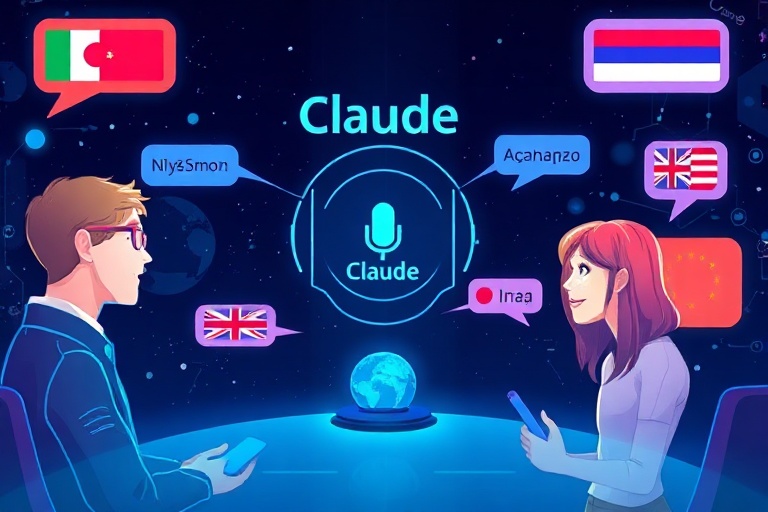
- Real-Time Translation: The voice assistant can translate conversations in real time, making it easier for users to communicate across language barriers.
- Accent and Dialect Recognition: Claude’s ability to recognize different accents and dialects enhances its usability in diverse regions.
- Cultural Sensitivity: The AI is programmed to understand cultural references and idioms, ensuring more relatable interactions.
Industry Implications
The implications of Claude’s multilingual capabilities extend far beyond just enhanced user experience. Here are some potential industry impacts:
- Enterprise Adaptation: Businesses can adopt Claude to improve customer service operations, enabling them to interact with clients in their preferred language.
- Education and Learning: Educational institutions can utilize Claude for language learning applications, providing students with a more immersive experience.
- Global Collaboration: Teams from different linguistic backgrounds can collaborate more effectively, breaking down communication barriers.
Future Possibilities
The future of multilingual AI voice assistants like Claude looks promising. As technology continues to evolve, several possibilities emerge:
- Expanded Language Support: Future updates may include support for even more languages, potentially reaching over 100 languages.
- Integration with Other Technologies: Claude could integrate with augmented reality (AR) and virtual reality (VR), offering multilingual interactions in immersive environments.
- AI Ethics and Bias Mitigation: Ongoing research into AI ethics will likely lead to better handling of biases in language processing, ensuring fairness and equity across languages.
- Personalization: Enhanced machine learning algorithms could allow Claude to learn user preferences over time, providing tailored experiences based on linguistic habits.
Conclusion
The expansion of Claude’s multilingual capabilities marks a significant step forward in the realm of AI voice assistants. By embracing language diversity, Claude not only caters to a global audience but also sets a precedent for other AI technologies. As the demand for multilingual support continues to grow, it is essential for AI developers to prioritize this feature, ensuring that technological advancements are accessible to everyone, regardless of language. Looking ahead, the future holds exciting possibilities for AI voice assistants, paving the way for more inclusive and dynamic interactions.