OpenAI is actively supporting research and initiatives aimed at mitigating the potential for job displacement stemming from advanced artificial intelligence, a commitment underscored by its engagement with various grant-making and collaborative efforts focused on the societal impact of AI. This proactive stance reflects a growing recognition within the AI community that the rapid advancement of models like GPT-4 necessitates a concurrent effort to understand and prepare for their broader economic implications.
OpenAI’s Proactive Stance on AI’s Economic Impact
OpenAI, at the forefront of developing powerful large language models and other AI technologies, has consistently articulated a mission to ensure that artificial general intelligence (AGI) benefits all of humanity. This mission naturally extends to addressing the potential downsides, including significant shifts in the labor market. Public statements from OpenAI CEO Sam Altman and other leaders have frequently highlighted job displacement as a serious concern, often discussing potential solutions like universal basic income (UBI) as part of a future AI-driven economy.
This anticipatory governance approach is not merely philosophical; it manifests in concrete efforts to fund and foster research into the economic effects of AI. While specific, dedicated “job displacement grant programs” might not always be standalone initiatives, OpenAI’s broader grants for AI safety, alignment, and societal impact often encompass research into labor market dynamics, policy interventions, and educational reforms necessary to adapt to an AI-transformed world. For instance, OpenAI’s own research, such as the March 2023 paper “GPTs are GPTs: An Early Look at the Labor Market Impact of Large Language Models,” directly analyzes the potential exposure of various occupations to language model capabilities, demonstrating their internal focus on this issue.
Key Areas of Research and Initiative Support
OpenAI’s support for initiatives addressing job displacement typically spans several critical domains:
- Economic Modeling and Impact Assessment: Funding research to develop more accurate models for predicting which jobs and industries will be most affected by AI, the timeline of these changes, and the scale of economic disruption. This includes studies on productivity gains, new job creation, and the distribution of economic benefits.
- Workforce Adaptation and Reskilling: Supporting programs and research focused on effective strategies for reskilling and upskilling the existing workforce. This can involve investigating new educational paradigms, developing AI-powered learning tools, and identifying pathways for workers to transition into AI-augmented roles or entirely new professions.
- Policy and Social Safety Nets: Collaborating with policy think tanks and academic institutions to explore potential governmental responses. This includes research into robust social safety nets, such as UBI, expanded unemployment benefits, and public works programs, designed to support individuals during periods of transition and ensure a more equitable distribution of AI’s benefits.
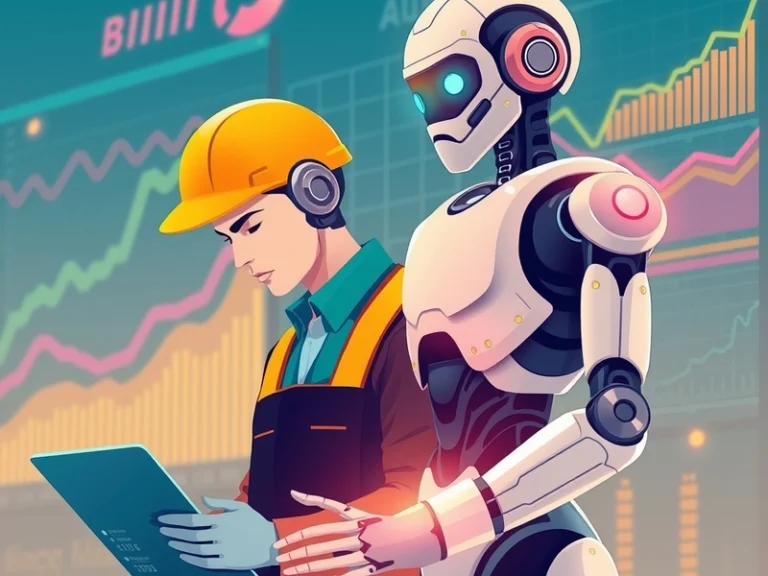
- Human-AI Collaboration and Augmentation: Investing in research and development that focuses on designing AI systems not merely to replace human labor, but to augment human capabilities, making workers more productive and efficient. This includes exploring human-in-the-loop systems and tools that empower individuals rather than displacing them.
- Ethical AI Development: Ensuring that the development of AI itself incorporates considerations for its societal and economic impact from the outset. This involves funding research into “value alignment” and “fairness” in AI systems, aiming to mitigate biases and ensure equitable outcomes as AI becomes more pervasive in employment decisions and economic structures.
Challenges and the Path Forward
Addressing AI-driven job displacement is a monumental challenge, marked by significant uncertainties regarding the pace and nature of technological change. Critics sometimes question whether the developers of powerful AI systems can adequately mitigate the very disruptions their technologies create. However, OpenAI’s sustained engagement reflects a growing consensus that the architects of advanced AI have a crucial role to play in preparing society for its impact.
The company’s support for external research, often through collaborations with academic institutions like Stanford University’s Institute for Human-Centered AI (HAI) or organizations like the Partnership on AI, indicates a recognition that this challenge requires a multi-stakeholder approach. By funding diverse perspectives and rigorous analysis, OpenAI aims to contribute to a comprehensive understanding of AI’s economic effects and to foster innovative solutions.
As AI capabilities continue to expand, the need for well-grounded research and proactive initiatives to manage its societal transition will only intensify. OpenAI’s commitment to supporting these efforts, whether through direct grants, collaborative projects, or internal research, positions it as a significant contributor to the ongoing global dialogue about ensuring a beneficial future with artificial intelligence.