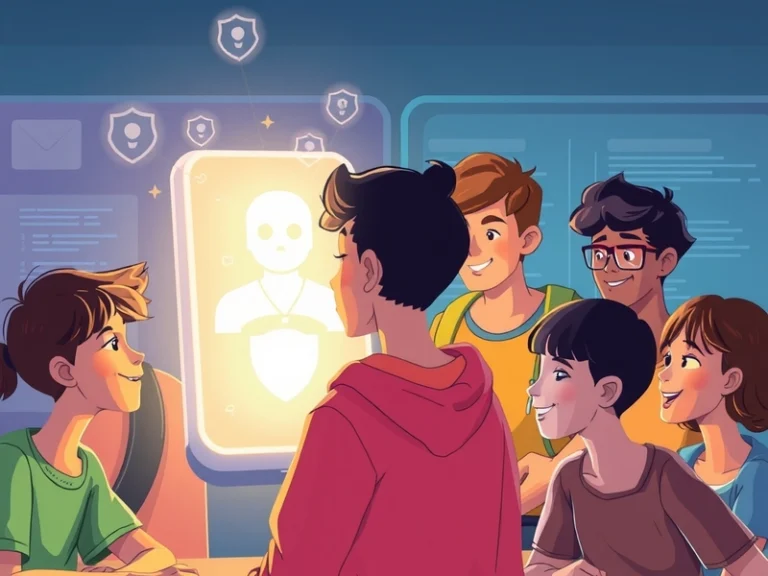
OpenAI is actively refining ChatGPT to cater to younger audiences, with a particular focus on enhancing its utility and safety for teenagers in educational and personal development contexts. This initiative reflects a growing recognition within the AI community that general-purpose AI models, while powerful, require specialized considerations when deployed for a demographic still navigating critical stages of learning and personal growth.
The decision to specifically target teens acknowledges their unique position as early adopters of technology and their prevalent use of digital tools for both academic and social purposes. Unlike adult users, teenagers often require more structured guidance, robust safety protocols, and interfaces designed with their cognitive development and learning styles in mind. OpenAI’s approach appears to center on making ChatGPT a valuable, yet controlled, resource for this demographic.
ChatGPT as a Learning Companion
For teenagers, ChatGPT holds significant potential as an educational tool. It can act as a personalized tutor, offering explanations of complex subjects, assisting with problem-solving, and providing immediate feedback. Imagine a student struggling with a calculus concept or needing clarification on a historical event; ChatGPT can offer accessible explanations, break down problems into manageable steps, or even suggest related topics for deeper exploration. This accessibility can democratize learning, offering supplementary support outside of traditional classroom hours.
Specific applications for teen learning could include:
- Homework Assistance: Explaining concepts in math, science, or literature, rather than simply providing answers. The emphasis would be on understanding the underlying principles.
- Language Learning: Practicing conversational skills, translating phrases, or understanding grammatical nuances in various languages.
- Creative Writing and Brainstorming: Generating ideas for essays, stories, or projects, helping to overcome writer’s block and explore different perspectives.
- Coding Support: Assisting with debugging simple code, explaining programming concepts, or suggesting approaches for small projects.
- Career Exploration: Providing information about different professions, necessary skills, and educational paths, helping teens envision their future.
The goal is not to replace human educators but to augment their efforts, offering an on-demand resource that can adapt to a student’s individual pace and curiosity. However, this potential comes with a clear need for robust safeguards.
Prioritizing Safety and Ethical Use
Catering to a younger demographic necessitates a stringent focus on safety, privacy, and ethical considerations. OpenAI, like other developers of publicly accessible AI, faces the challenge of filtering inappropriate content, preventing misuse, and educating users on responsible interaction with AI. For teens, these considerations are amplified due to their vulnerability and developing critical thinking skills.
Key areas of focus likely include:
- Enhanced Content Moderation: Implementing more aggressive filtering mechanisms to prevent exposure to harmful, explicit, or age-inappropriate content. This goes beyond standard moderation to actively anticipate and mitigate risks specific to younger users.
- Privacy Protection: Ensuring that personal data collected from teen users is handled with the utmost care, adhering to strict privacy regulations, and providing clear, age-appropriate explanations of data usage policies.
- Combating Misinformation and Bias: Developing features and user education to help teens critically evaluate AI-generated information, recognizing potential biases or inaccuracies, and understanding the importance of cross-referencing sources.
- Preventing Over-Reliance and Plagiarism: Guiding teens on how to use ChatGPT as a tool for learning and idea generation, rather than a means to bypass genuine effort. This includes emphasizing citation practices and promoting original thought.
- Promoting Digital Literacy: Integrating guidance within the platform or through accompanying educational materials that teach teens about the capabilities and limitations of AI, fostering a responsible and informed approach to technology.
These safeguards are not merely technical; they require a pedagogical approach to encourage healthy digital habits and critical engagement with AI outputs. OpenAI has a track record of discussing and implementing safety measures in its products, and this focus is expected to be even more pronounced for a teen-centric version of ChatGPT.
User Experience and Future Outlook
Beyond content and safety, the user experience for teenagers also plays a crucial role. This could involve simplified interfaces, clearer instructions, and perhaps even gamified elements to make learning more engaging. The language used in prompts and responses might be adapted to be more accessible and less formal, aligning with how teens naturally communicate.
The development of a ChatGPT tailored for teens is an iterative process. It will likely involve continuous feedback from educators, parents, and the teenagers themselves to refine features and address emerging challenges. As AI technology evolves, so too will the methods for integrating it responsibly into the lives of younger generations. This focused effort by OpenAI signals a significant step towards making advanced AI not just accessible, but genuinely beneficial and safe for the next wave of digital natives.