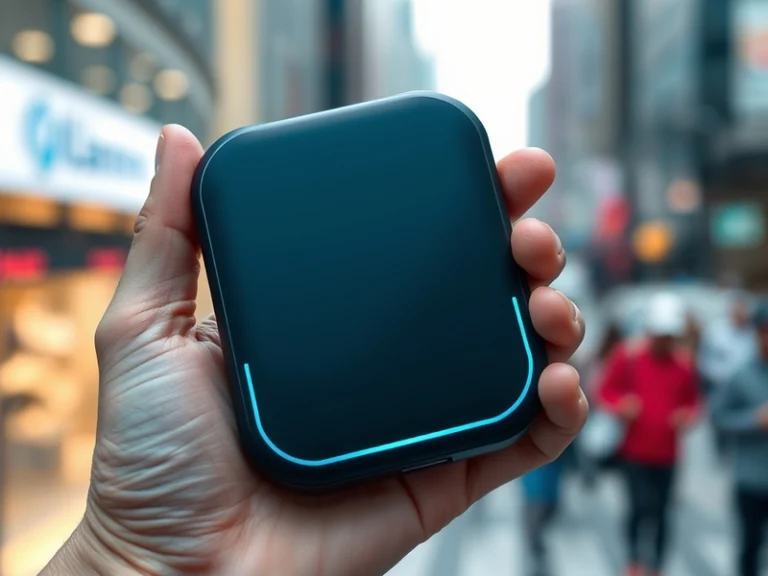
A new category of device, dubbed the “Pocket Computer for AI Agents,” has been introduced, designed to facilitate seamless task management and support the continuous operation of autonomous AI agents.
This development signifies a growing trend towards dedicated hardware tailored for the burgeoning field of AI agents. Unlike general-purpose smartphones or laptops, these pocket computers are conceptualized as specialized platforms optimized for the unique demands of AI agent execution, including persistent operation, context awareness, and efficient local processing.
The Rise of AI Agents and the Need for Dedicated Hardware
The past year has seen a significant acceleration in the capabilities and ambitions of AI agents. These autonomous software entities are designed to perceive their environment, make decisions, and take actions to achieve specific goals, often without constant human intervention. From automating complex workflows to managing personal schedules and interacting with digital services, their potential applications are vast. However, their full realization has often been constrained by the limitations of existing computing paradigms:
- Dependency on Cloud Infrastructure: Many sophisticated agents rely heavily on cloud-based large language models (LLMs) and computational resources, leading to latency, privacy concerns, and continuous connectivity requirements.
- Intermittent Operation: Agents typically run on desktop computers or servers, meaning their operation is often tied to a single location or requires a continuous power supply and internet connection.
- Lack of Physical Context: While agents can access digital information, integrating them seamlessly with the physical world – understanding immediate surroundings, interacting with local devices, or performing tasks on the go – remains a challenge for purely software-based solutions.
The “Pocket Computer for AI Agents” aims to address these limitations by providing a dedicated, portable, and always-on platform. The vision is for agents to become truly pervasive, operating alongside users in their daily lives, much like a personal assistant that is always present and ready to act.
Envisioned Capabilities and Features
While specific technical details remain under wraps for this new category, a device designed for AI agent operations would likely prioritize several key capabilities:
- Dedicated AI Processing Units: To efficiently handle inference and potentially some on-device fine-tuning for AI models, these devices would likely integrate specialized neural processing units (NPUs) or other AI accelerators. This would enable faster decision-making and reduced reliance on constant cloud communication.
- Low-Power, Persistent Operation: Given the “pocket computer” form factor, exceptional battery life would be critical to allow agents to run continuously throughout the day without frequent recharging. This necessitates highly optimized hardware and software stacks.
- Rich Sensor Integration: To provide agents with comprehensive context, these devices would likely incorporate an array of sensors, including cameras, microphones, accelerometers, gyroscopes, GPS, and potentially environmental sensors. This allows agents to understand their physical surroundings, user activities, and location.
- Robust Local Storage and Memory: Agents often need to maintain long-term memory, store contextual information, and cache model parameters. Ample local storage and RAM would be essential for efficient, context-aware operation.
- Secure Enclaves for Data and Models: Given the sensitive nature of personal data and proprietary AI models, hardware-level security features would be paramount to protect information processed and stored on the device.
- Seamless Task Management Interface: The promise of “seamless task management” suggests an intuitive interface, potentially voice- or gesture-controlled, allowing users to delegate tasks to agents, monitor their progress, and intervene when necessary. This interface would need to bridge the gap between human intent and agent autonomy.
- Connectivity Options: While emphasizing local processing, these devices would still require robust Wi-Fi, cellular, and Bluetooth capabilities to interact with cloud services when necessary, connect to other smart devices, and communicate with peripherals.
Potential Impact and Applications
The emergence of such a device could catalyze a new wave of AI applications:
- Personalized, Proactive Assistants: Imagine an agent that proactively manages your schedule, anticipates your needs based on your real-time context (location, activity, conversations), and interacts with smart home devices without explicit commands.
- Enhanced Field Operations: For professionals in logistics, maintenance, or healthcare, an on-device agent could provide real-time information, automate data entry, and offer context-aware assistance directly in the field.
- Ambient Computing Environments: These devices could act as central hubs for orchestrating local IoT devices and services, creating more responsive and intelligent environments without constant cloud dependency.
- Democratization of Advanced AI: By enabling powerful AI agents to run locally and persistently, it could lower the barrier to entry for developing and deploying sophisticated AI solutions for a wider range of users and businesses.
Challenges Ahead
While promising, bringing such a device to widespread adoption faces significant hurdles. Balancing processing power with thermal management, battery life, and a pocketable form factor will be a primary engineering challenge. Developing a robust, secure, and user-friendly operating system and developer ecosystem for these agent-centric devices will also be critical. Furthermore, addressing privacy concerns and ensuring user control over autonomous agents will be crucial for public trust and acceptance.
This new category of “Pocket Computer for AI Agents” represents a tangible step towards a future where AI is not just a cloud service but an omnipresent, intelligent companion integrated into the fabric of daily life. Its success will hinge on its ability to deliver on the promise of persistent, context-aware, and seamlessly managed AI agent operations.