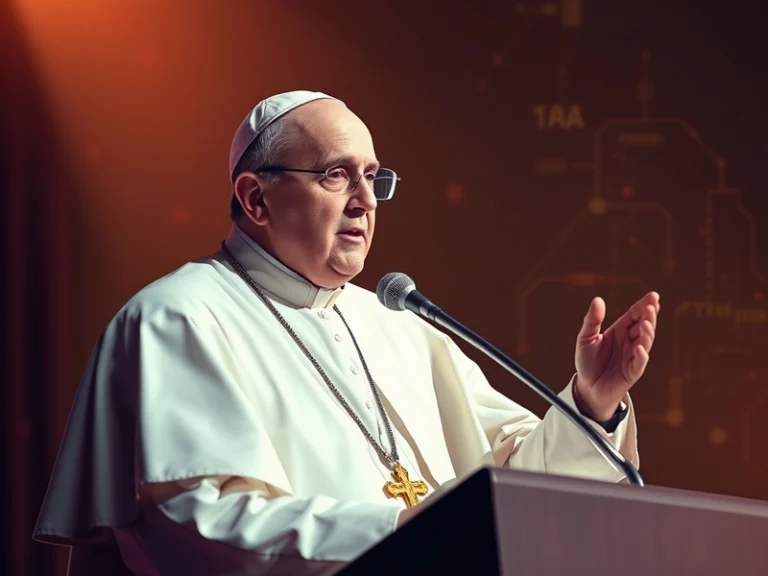
Pope Francis has consistently emphasized the ethical imperative in the development and deployment of artificial intelligence, most recently drawing attention to the pervasive issue of algorithmic bias and its profound implications for determining visibility and influence within society.
The pontiff’s ongoing engagement with AI ethics is not new; it extends from his broader calls for technology to serve humanity and foster a more inclusive world. His concerns echo those of AI ethicists globally, who highlight how algorithms, often perceived as neutral, can inadvertently perpetuate or even amplify existing societal inequalities. These systems, designed to make decisions, filter information, or recommend content, increasingly shape who is seen, who is heard, and who gains access to opportunities.
Understanding Algorithmic Bias
Algorithmic bias arises when AI systems produce unfair or discriminatory outcomes. This bias typically originates from several sources:
- Biased Training Data: If the data used to train an AI model reflects historical or societal prejudices (e.g., underrepresentation of certain demographic groups, skewed historical outcomes), the model will learn and replicate those biases. For instance, an algorithm trained on predominantly male-centric data might struggle to accurately process or represent women.
- Flawed Design Choices: The assumptions made by developers, the features selected, or the metrics optimized during an algorithm’s creation can introduce bias. An algorithm designed to maximize engagement might inadvertently promote sensational or divisive content.
- Lack of Diverse Development Teams: Homogeneous development teams may overlook potential biases that affect different user groups, leading to blind spots in testing and deployment.
The consequences of such bias are far-reaching, particularly when these algorithms govern access to critical societal resources and information.
Algorithms as Gatekeepers of Visibility and Influence
In the digital age, algorithms act as powerful gatekeepers, determining what information reaches us, who gets prioritized, and whose voices are amplified. This has direct implications for visibility and influence:
Information Access and Social Amplification
Search engines and social media platforms rely on complex algorithms to rank results, curate news feeds, and suggest connections. These systems can:
- Create Filter Bubbles and Echo Chambers: By showing users content similar to what they’ve previously engaged with, algorithms can inadvertently limit exposure to diverse viewpoints, reinforcing existing beliefs and potentially hindering informed public discourse.
- Impact News Consumption: The algorithmic prioritization of certain news sources or topics can shape public perception, potentially leading to the marginalization of less popular but critically important information.
- Influence Social Standing: On platforms where visibility translates to influence, algorithmic decisions on who gets “promoted” or “recommended” can determine an individual’s or group’s reach and impact.
Economic and Social Opportunity
Beyond information, algorithms increasingly mediate access to economic and social opportunities:
- Hiring and Recruitment: AI-powered tools used for resume screening or candidate assessment can exhibit bias against certain demographic groups if trained on historical hiring data that reflects past discrimination. This can limit access to employment.
- Credit Scoring and Lending: Algorithms used to assess creditworthiness can perpetuate historical biases in lending practices, potentially disadvantaging communities that have historically faced systemic barriers to financial services.
- Judicial Systems: Predictive policing algorithms or tools used for risk assessment in sentencing can disproportionately impact minority groups, leading to unfair outcomes in the justice system.
When these systems operate without adequate oversight or ethical considerations, they risk solidifying existing power structures and deepening societal divides.
The Vatican’s Proactive Stance: The Rome Call for AI Ethics
The Vatican has not merely issued abstract warnings but has actively engaged with stakeholders to promote ethical AI development. A significant initiative in this regard is the Rome Call for AI Ethics, first signed in February 2020. This document, initiated by the Pontifical Academy for Life, brought together leaders from technology, government, and academia, including executives from Microsoft and IBM, to commit to principles for ethical AI.
The Rome Call advocates for “Algor-ethics,” emphasizing six key principles for AI development:
- Transparency: AI systems should be explainable.
- Inclusion: AI should consider the needs of all human beings.
- Responsibility: Those who design and deploy AI must be accountable.
- Impartiality: AI should avoid discrimination.
- Reliability: AI systems should be robust and accurate.
- Security and Privacy: AI should protect user data and systems from harm.
This initiative underscores a practical approach to addressing algorithmic bias and other ethical challenges, pushing for concrete commitments from major industry players.
The Significance of a Moral Authority
The Pope’s intervention in the AI ethics discussion elevates these complex technical issues to a broader moral and humanitarian plane. His voice helps to:
- Broaden Awareness: Bring discussions typically confined to academic or tech circles to a global audience, including policymakers and the general public.
- Emphasize Human Dignity: Frame AI ethics not just as a matter of technical fairness but as a fundamental question of human dignity and social justice.
- Encourage Interdisciplinary Dialogue: Promote collaboration between technologists, ethicists, policymakers, and faith leaders to develop holistic solutions.
Addressing algorithmic bias is a multifaceted challenge, requiring ongoing vigilance, robust regulatory frameworks, and a commitment to human-centered design. The Vatican’s consistent push for “Algor-ethics” serves as a powerful reminder that as AI continues to shape our world, its development must be guided by a profound respect for human values and the common good.