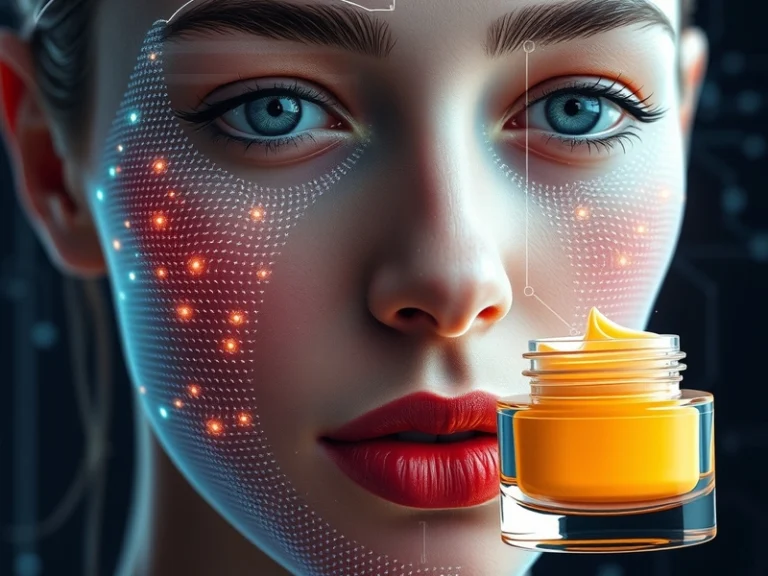
The discussion around AI-driven initiatives, exemplified by concepts like “Rubedo,” is intensifying within the cosmetic science sector, focusing on the development of skincare solutions that potentially reverse the visible and cellular hallmarks of skin aging.
The promise of AI in this domain lies in its ability to process vast, complex datasets far beyond human capacity, accelerating the discovery of novel compounds and the optimization of formulations. Traditional skincare research often relies on iterative, labor-intensive experimentation. AI, conversely, can analyze genomic, proteomic, metabolomic, and clinical trial data to identify patterns and predict the efficacy of ingredients against specific aging mechanisms.
AI-Driven Ingredient Discovery and Formulation
At the core of AI’s potential in anti-aging skincare is its capability to revolutionize the identification and synthesis of active ingredients. This process typically involves several key stages:
- Data Mining and Pattern Recognition: AI algorithms, particularly machine learning models, can sift through databases of existing compounds, natural extracts, and pharmaceutical agents. They identify molecules with properties known to combat aging factors such as oxidative stress, inflammation, collagen degradation, or cellular senescence. For instance, a convolutional neural network (CNN) might analyze chemical structures and relate them to observed biological effects on skin cells.
- Predictive Modeling for Efficacy and Safety: Before costly laboratory synthesis and testing, AI models can predict how a novel compound might interact with skin cells, its potential for penetration, stability, and absorption, and any potential adverse reactions. This significantly narrows down the pool of candidates, allowing researchers to focus resources on the most promising leads. Techniques like Quantitative Structure-Activity Relationships (QSAR) are enhanced by AI to model these predictions with greater accuracy.
- Formulation Optimization: Beyond individual ingredients, AI can optimize the entire formulation of a cream or serum. This involves balancing active ingredients with excipients to ensure stability, bioavailability, texture, and sensory appeal. Genetic algorithms or reinforcement learning can explore thousands of combinations to find the optimal ratios for desired outcomes, such as enhanced penetration of an anti-oxidant or improved delivery of a peptide.
Companies like Givaudan and BASF have already integrated AI into their R&D processes for fragrance and cosmetic ingredient development, demonstrating the practical application of these technologies in related fields. The extension to highly targeted anti-aging formulations represents a natural progression.
Targeting the Mechanisms of Skin Aging
The concept of “reversing” skin aging is ambitious, but AI provides tools to precisely target the multifaceted biological processes that contribute to it. Skin aging is not a single phenomenon but a complex interplay of:
- Collagen and Elastin Degradation: AI can identify compounds that stimulate collagen synthesis (e.g., certain peptides or growth factors) or inhibit collagenase enzymes.
- Oxidative Stress: By analyzing molecular structures, AI can pinpoint potent antioxidants that neutralize free radicals, protecting cellular components from damage.
- Inflammation (Inflammaging): Chronic low-grade inflammation contributes significantly to aging. AI can help discover anti-inflammatory agents that soothe the skin and prevent inflammatory damage.
- Cellular Senescence: “Zombie cells” that cease dividing but remain metabolically active and secrete pro-inflammatory factors are a key target. AI may assist in identifying senolytics or senomorphics that selectively remove or modulate these cells.
- Glycation: The binding of sugars to proteins, leading to Advanced Glycation End-products (AGEs), stiffens collagen and elastin. AI can search for anti-glycation agents.
By leveraging computational biology and cheminformatics, AI can simulate molecular interactions at an unprecedented scale, offering insights into which compounds might best intervene in these processes to restore skin to a more youthful state.
Personalization and Predictive Analytics
Another significant frontier for AI in skincare is hyper-personalization. While not directly “reversing” aging, personalized formulations can dramatically improve outcomes for individuals. AI can analyze various data points specific to an individual:
- Genomic Data: Understanding an individual’s genetic predispositions to certain aging markers (e.g., collagen breakdown rates, antioxidant capacity).
- Lifestyle Factors: Diet, sun exposure, pollution levels, and stress, often gathered via questionnaires or wearable tech.
- Skin Analysis: High-resolution imaging, spectroscopy, and other sensors can assess hydration levels, elasticity, pigmentation, and wrinkle depth.
AI algorithms can then synthesize this information to recommend or even custom-formulate products with precise concentrations of active ingredients tailored to an individual’s unique skin needs and aging profile. This moves beyond generic “anti-aging” creams to highly specific, dynamic solutions that adapt as the individual’s skin condition changes.
Challenges and the Path Forward
Despite the immense potential, the development of truly age-reversing creams through AI faces substantial challenges. The complexity of human skin biology, the variability between individuals, and the long-term nature of aging processes mean that robust clinical validation remains paramount. Claims of “reversal” require rigorous, peer-reviewed scientific evidence, often involving extensive clinical trials that track biomarkers and visible improvements over prolonged periods.
Furthermore, the ethical considerations of data privacy, particularly with genomic and personal health data, must be carefully navigated. Transparency in AI models and the explainability of their recommendations will also be crucial for consumer trust and regulatory approval.
As AI continues to mature, its role in accelerating discovery, optimizing formulations, and personalizing skincare will undoubtedly grow. While the term “Rubedo” might represent a future vision, the underlying AI technologies are already beginning to reshape how we approach the challenge of skin aging, moving towards more targeted, evidence-based, and potentially transformative solutions.