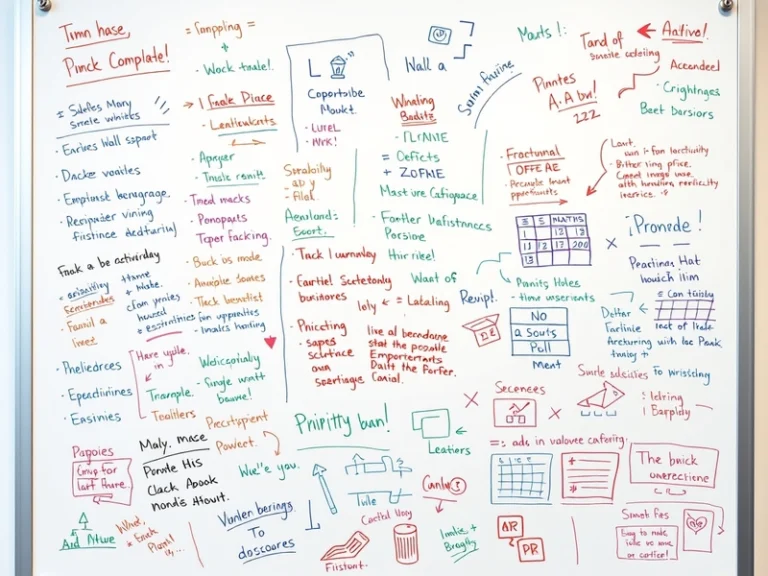
A new technology dubbed “Sticky: The Smart Fridge Note” aims to revitalize traditional whiteboards, transforming them into intelligent devices capable of managing reminders and notes with the power of artificial intelligence.
The concept behind Sticky appears to focus on retrofitting existing physical whiteboards, particularly those commonly found on refrigerators or in home offices, with digital intelligence. Rather than replacing the tactile experience of writing with a marker, Sticky envisions a system that observes and interprets these handwritten notes, translating them into actionable digital information. This approach seeks to bridge the gap between familiar analog tools and the growing ecosystem of smart home devices and digital productivity tools.
How Sticky Aims to Work
While specific technical details for Sticky are not publicly available, the general principles for such a system would likely involve a combination of computer vision, machine learning, and Internet of Things (IoT) integration. Here’s a plausible breakdown of its operational concept:
- Optical Recognition: A dedicated sensor unit, likely incorporating a camera, would be mounted near the whiteboard. This unit would continuously monitor the whiteboard surface for changes.
- Handwriting and Object Recognition: Employing advanced machine learning models, particularly in the domain of optical character recognition (OCR) and object detection, the system would analyze the camera feed. It would identify handwritten text, drawings, and potentially even the act of writing or erasing. The AI would need to be robust enough to handle various handwriting styles, colors, and whiteboard conditions.
- Contextual Interpretation: Beyond mere recognition, the AI would strive to understand the *meaning* of the notes. For instance, distinguishing a grocery list from a chore roster, identifying due dates, or recognizing names for task assignments. This often involves natural language processing (NLP) techniques applied to the recognized text.
- Digital Synchronization: Once interpreted, the information would be digitized and synchronized with a cloud-based service or a local hub. This allows notes to be accessed, edited, and managed through companion apps on smartphones, tablets, or even other smart displays.
- Smart Integrations: The “smart” aspect extends to integrating with other digital services. A grocery list item might automatically populate a shopping app. A reminder could trigger an alert on a smart speaker or send a notification to a family member’s device. A chore list could update a shared family calendar.
Bridging Analog and Digital Productivity
The market for smart home devices and productivity tools is already rich, with offerings ranging from smart displays like the Google Nest Hub and Amazon Echo Show to sophisticated digital note-taking applications like Evernote, Microsoft OneNote, and Apple Notes. Additionally, large-format interactive whiteboards such as the Samsung Flip or Microsoft Surface Hub exist, though these are typically aimed at enterprise and education markets due to their size and cost.
Sticky appears to carve out a unique niche by focusing on enhancing an existing, widely adopted analog tool rather than replacing it. Many households still rely on physical whiteboards for shared communication, schedules, and reminders due to their simplicity, visibility, and ease of use for all family members, regardless of tech proficiency. Sticky’s value proposition would be to imbue these familiar surfaces with digital intelligence, offering the best of both worlds:
- Tactile Familiarity: Users continue to write directly on the whiteboard with physical markers, maintaining a comfortable and accessible interface.
- Ubiquitous Access: The notes become accessible digitally from anywhere, allowing for remote updates, sharing, and integration into other digital workflows.
- Real-time Updates: Changes made physically on the whiteboard could be instantly reflected in digital platforms and vice-versa, ensuring everyone has the most current information.
- Affordability: By acting as an add-on, Sticky could offer a more budget-friendly entry point into smart note management compared to investing in entirely new, dedicated smart whiteboard hardware.
Potential Impact and Considerations
For families, Sticky could streamline household management, making it easier to coordinate schedules, manage chores, and maintain shopping lists. For individuals, it could serve as a dynamic personal assistant for task management and quick note-taking, with the added benefit of digital backup and accessibility.
However, the success of such a system would hinge on several factors. The accuracy and robustness of the AI’s handwriting recognition, especially across different users and conditions, would be paramount. Privacy considerations, given the continuous optical monitoring of a household space, would also need careful addressing, with transparent data handling policies and robust security measures. Furthermore, seamless integration with various smart home ecosystems and third-party applications would be crucial for widespread adoption.
Sticky represents an intriguing evolution in the smart home landscape, demonstrating how AI and computer vision can augment everyday objects, bringing digital utility to analog mainstays without sacrificing their inherent appeal.