TAAFT has introduced its new AI-powered video generator, TAAFT Video Generator, aiming to streamline the process of transforming conceptual ideas into visual narratives for a broad range of users. The platform enters a rapidly evolving field, promising to leverage advanced artificial intelligence to make video creation more accessible and efficient.
The Rise of Generative Video
The landscape of AI-driven content creation has seen explosive growth in recent years, with generative models now capable of producing convincing images, audio, and increasingly, video. What began with short, often abstract clips has quickly progressed to tools capable of generating more coherent, longer-form, and stylistically diverse video content. Companies like RunwayML have been at the forefront with tools such as Gen-1 and Gen-2, allowing users to generate video from text, images, or existing video clips. OpenAI’s Sora, demonstrated in early 2024, showcased unprecedented capabilities in generating highly realistic and complex scenes up to a minute long from text prompts, further pushing the boundaries of what’s possible. Similarly, Google’s Lumiere research project and platforms like Pika Labs have demonstrated sophisticated control over video generation, including character consistency and motion.
This rapid advancement signifies a shift toward democratizing video production, moving it beyond the confines of specialized software and extensive technical expertise. AI video generators aim to empower marketers, educators, content creators, and even casual users to produce high-quality visual stories without the need for traditional filming equipment, actors, or complex editing suites.
TAAFT Video Generator: A New Tool for Creative Expression
TAAFT Video Generator positions itself within this dynamic environment, focusing on the core promise of translating user ideas directly into video. While specific feature sets often vary between platforms, the general capabilities of such a tool typically encompass:
- Text-to-Video Generation: Users can describe a scene, action, or narrative through natural language prompts, and the AI synthesizes the corresponding video. This allows for rapid prototyping and ideation, turning written concepts into visual drafts almost instantly.
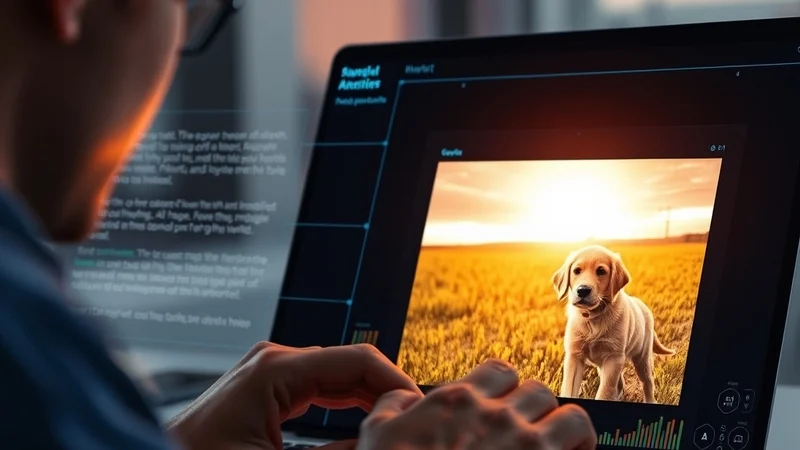
- Image-to-Video Transformation: The ability to animate still images or create video sequences that incorporate specific visual assets provided by the user. This can range from bringing a character design to life to generating variations of a photographic scene.
- Style Transfer and Customization: Many advanced generators allow users to specify artistic styles, moods, or even reference existing video aesthetics. TAAFT Video Generator likely offers controls for elements such as resolution, aspect ratio, camera movement, and character appearance, enabling a degree of creative direction over the AI’s output.
- Iterative Refinement: The process often involves generating initial drafts and then refining them through subsequent prompts or parameter adjustments, allowing users to guide the AI towards their desired outcome.
The target audience for tools like TAAFT Video Generator is broad, including digital marketers seeking quick campaign assets, social media influencers needing a constant stream of engaging content, small businesses creating explainer videos, and even independent filmmakers looking for tools to visualize storyboards or generate B-roll footage efficiently. The promise is to significantly reduce the time, cost, and technical barriers traditionally associated with video production.
Underlying Technologies and Their Promise
The capabilities of TAAFT Video Generator, like its contemporaries, are rooted in sophisticated machine learning architectures. Most modern AI video generators leverage variations of generative adversarial networks (GANs) or, more commonly, diffusion models.
Diffusion models, in particular, have shown remarkable success in generating high-quality, diverse, and controllable images and video. These models learn to progressively denoise a random signal (like static) into a coherent image or video frame, guided by a text prompt or other input. The process involves training on vast datasets of video and corresponding text descriptions, enabling the AI to understand the relationships between language, visual elements, motion, and temporal consistency.
The integration of large language models (LLMs) often enhances the prompt engineering aspect, allowing the AI to better interpret complex or nuanced natural language instructions, translating them into detailed visual specifications for the generative component. This synergy aims to bridge the gap between human intent and machine execution, making the creative process more intuitive.
Navigating the Challenges of AI Video
Despite rapid progress, AI video generation still faces significant challenges that platforms like TAAFT must continuously address. These include:
- Coherence and Consistency: Maintaining consistent character appearance, object attributes, and environmental details across longer video sequences remains a complex task. Ensuring logical continuity of action and narrative flow is also an active area of research.
- Photorealism and Fidelity: While impressive, achieving truly indistinguishable photorealism, especially for human subjects and complex physics interactions, is an ongoing pursuit. Subtle artifacts, unnatural movements, or uncanny valley effects can still appear.
- Control and Specificity: Providing users with granular control over every aspect of a generated video, from precise camera angles to specific emotional expressions, is challenging. Balancing creative freedom with ease of use is key.
- Computational Demands: Generating high-resolution, long-duration video is computationally intensive, requiring significant processing power and memory, which can impact generation speed and cost.
- Ethical Considerations: The rise of highly realistic AI-generated video also brings ethical concerns, particularly regarding deepfakes, misinformation, and intellectual property. Responsible development and deployment, including watermarking or detection mechanisms, are crucial.
Impact and Outlook
The introduction of TAAFT Video Generator signifies the continued momentum in the AI creative tools sector. As these platforms mature, they hold the potential to profoundly alter workflows in advertising, entertainment, education, and personal content creation. By lowering the barrier to entry for video production, TAAFT Video Generator aims to empower a new generation of creators and enable existing professionals to prototype ideas, iterate rapidly, and scale their content output in ways previously unimaginable. The long-term success of such tools will depend on their ability to deliver increasingly higher quality, greater control, and seamless integration into existing creative pipelines, all while navigating the evolving technical and ethical landscape of generative AI.