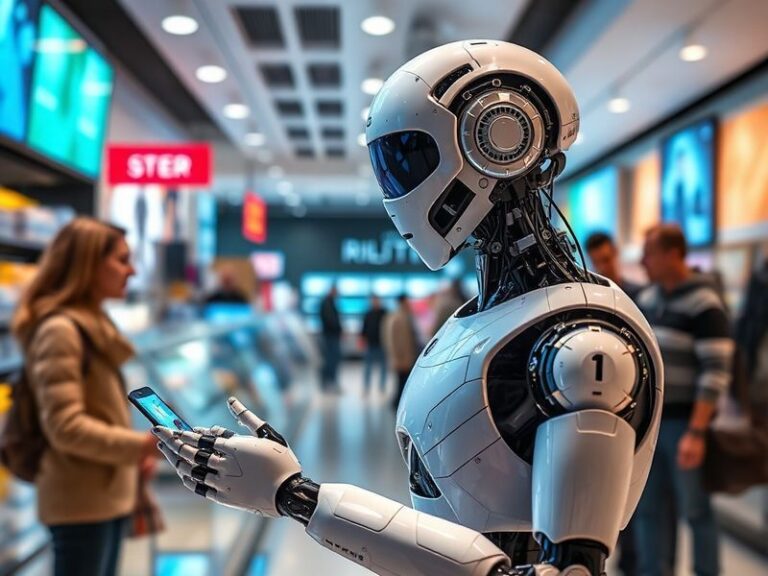
The Rise of AI Humanoids in Service Industries
As technology continues to evolve at a rapid pace, the service industries are witnessing an unprecedented shift with the emergence of AI humanoids—lifelike robots designed to interact with humans in a variety of settings. These advancements are not only transforming customer service but also reshaping the job market. In this article, we will explore the impact of AI humanoids on the job market, customer service, and the implications for future industries.
Understanding AI Humanoids
AI humanoids are robots that possess human-like features and behaviors, often equipped with advanced artificial intelligence (AI) systems. They can perform various functions, including:
- Engaging with customers through conversation
- Performing routine tasks like check-ins and transactions
- Providing information and guidance in retail and hospitality environments
- Assisting in healthcare settings, such as monitoring patients
These robots are designed to enhance customer experiences while streamlining operations in service-oriented sectors. As they become more sophisticated, the question arises: what will be the impact on the job market and existing service roles?
Impact on the Job Market
With the integration of AI humanoids into service industries, there are both opportunities and challenges for the workforce. Here are some of the key implications:
- Job Displacement: Certain roles may become obsolete as humanoids take over repetitive and low-skill tasks. For instance, jobs in areas such as cashiering, front desk operations, and customer support could see a reduction in demand.
- Job Transformation: While some jobs may disappear, others will evolve. Employees may need to adapt to working alongside AI, focusing on higher-value tasks that require emotional intelligence and complex problem-solving skills.
- New Job Creation: The rise of AI humanoids can lead to the creation of new roles in programming, maintenance, and supervision of these robots. Furthermore, industries will require professionals to design, implement, and manage AI systems.
Ultimately, the dynamics of the job market will depend on how quickly companies adapt to this technology and the existing workforce’s ability to reskill and upskill.
Enhancing Customer Service
AI humanoids are revolutionizing the customer service experience in several ways:
- 24/7 Availability: Unlike human employees, AI humanoids can operate around the clock. This means businesses can provide continuous service, enhancing customer satisfaction.
- Consistency: AI humanoids deliver consistent service without the variability that can occur with human employees. This reliability can improve brand perception and customer loyalty.
- Personalization: Equipped with data analytics capabilities, humanoids can tailor services to individual customer preferences, creating a more personalized experience.
- Cost Efficiency: By automating routine tasks, businesses can reduce operational costs, allowing them to allocate resources to more complex and value-generating activities.
However, the integration of humanoids into customer service also raises ethical considerations. There is a fine line between leveraging technology to improve service and ensuring that human interaction remains a valued aspect of the customer experience.
Future Possibilities
Looking ahead, the future of AI humanoids in service industries is promising yet uncertain. Here are some potential developments:
- Advancements in AI: As AI technology continues to improve, humanoids will become more adept at understanding and responding to human emotions and behaviors, making them even more effective in service roles.
- Integration with IoT: AI humanoids may work in synergy with the Internet of Things (IoT), allowing for seamless communication between devices, enhancing the customer experience further.
- Expansion into New Industries: Beyond traditional service sectors, humanoids may find applications in education, entertainment, and even domestic environments, expanding their reach and impact.
- Regulatory Frameworks: As humanoids become more prevalent, there will be a need for new regulations to address ethical concerns, data privacy, and the implications of human-robot interactions.
In conclusion, the rise of AI humanoids in service industries presents a complex interplay of opportunities and challenges. While they can enhance customer service and operational efficiency, careful consideration must be given to the implications for the workforce and ethical considerations. As we navigate this transformative era, it is crucial for businesses, employees, and policymakers to collaborate and shape a future where technology and humanity coexist harmoniously.