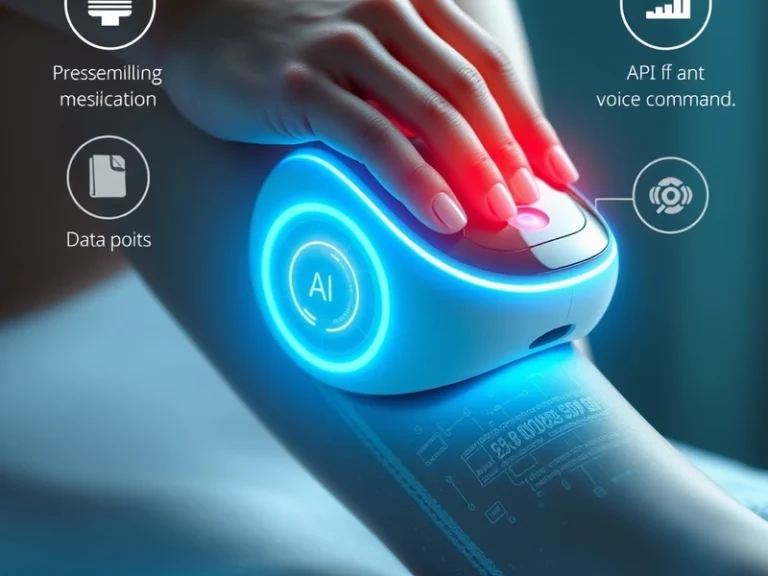
A new AI-powered massage device, Therabot, is being introduced to the market, promising personalized treatment based on real-time user feedback to target areas of discomfort with greater precision.
The concept behind Therabot centers on moving beyond pre-programmed routines or manual adjustments common in existing massage devices. Instead, it aims to create an adaptive experience where the device learns and responds to an individual’s specific needs, much like a skilled human masseuse would, but with the consistency and repeatability of automation. The core differentiator lies in its ability to interpret qualitative user input and translate it into actionable adjustments for its massage mechanisms.
The AI Under the Hood: Interpreting Discomfort
For Therabot to personalize treatment, it must integrate several AI and sensor technologies. While specific architectural details are not public, the underlying principles likely involve:
- Natural Language Processing (NLP): To understand user feedback. When a user says, “my left hamstring feels tight” or “the pressure on my lower back is too much,” the device needs to parse these statements, identify body parts, intensity levels, and desired changes. This could involve speech-to-text conversion followed by semantic analysis to extract key entities and sentiments.
- Sensor Fusion: The device would likely incorporate various sensors to gather data beyond explicit user commands. This could include pressure sensors to monitor contact force, accelerometers to track movement, and potentially even thermal sensors to detect localized heat, which can be indicative of inflammation or muscle strain.
- Reinforcement Learning or Adaptive Algorithms: To refine its massage techniques over time. As users provide feedback, the system learns which adjustments (e.g., increasing pressure, changing rhythm, focusing on a specific area) lead to improved user satisfaction. This iterative process allows the device to build a personalized profile for each user, optimizing future sessions.
- Robotics and Actuation Control: The physical massage elements (e.g., rollers, percussive heads, airbags) must be precisely controlled. AI models would translate the personalized treatment plan into specific movements, speeds, and forces for these actuators, ensuring the massage is delivered as intended.
This combination allows Therabot to move from a general therapeutic approach to one that dynamically adapts its routine during a session and learns from past interactions to improve subsequent ones.
User Interaction and the Feedback Loop
The effectiveness of Therabot hinges on a seamless feedback loop. Users would likely interact with the device through a combination of voice commands, a dedicated mobile application, or integrated physical controls. For instance:
- Initial Setup: Users might describe their general preferences, common areas of tension, or specific conditions they wish to address.
- Real-time Adjustments: During a massage session, users could vocalize immediate feedback, such as “a little higher on my shoulder” or “less intense on my calf.” The NLP component would process this, and the AI would direct the physical components to adjust accordingly.
- Post-Session Review: After a session, the device or its companion app might prompt for overall satisfaction and specific areas of improvement, feeding this data back into the learning model for future personalization.
This continuous stream of data, both explicit (user commands) and implicit (sensor readings), is what allows Therabot to build a comprehensive understanding of an individual’s needs and preferences, moving beyond a one-size-fits-all approach.
Beyond Generic Relief: The Promise of Personalization
The market for personal wellness devices has seen significant growth, with a wide array of massage chairs, handheld percussive devices, and robotic massage solutions available. However, many of these devices offer pre-set programs or require manual intervention to adjust intensity and focus. The introduction of an AI-powered device like Therabot addresses a key limitation:
- Targeted Relief: Generic massages might hit some pressure points but miss others critical to an individual’s specific pain. AI-driven personalization aims to pinpoint and address these areas with greater accuracy.
- Adaptive Sessions: Pain and tension can shift. A device that can adapt its routine mid-session based on user input offers a more dynamic and effective experience than static programs.
- Improved Efficacy: By tailoring the treatment to individual biomechanics and pain profiles, the device could potentially offer more effective relief for muscle soreness, stiffness, and general discomfort.
- Convenience and Accessibility: Bringing a personalized massage experience into the home could offer a convenient alternative to professional massage therapy, especially for routine maintenance or immediate relief.
This shift reflects a broader trend in consumer health technology, where AI is increasingly leveraged to move from generalized solutions to highly individualized care, whether in fitness trackers, smart health monitors, or therapeutic devices.
Market Landscape and AI’s Role in Wellness
The wellness technology sector is ripe for AI innovation. Companies like Hyperice and Therabody have popularized percussive massage devices, while robotic massage chairs from brands like Osaki and Panasonic offer comprehensive bodywork. Therabot enters this space by attempting to bridge the gap between the targeted intensity of handheld devices and the comprehensive coverage of larger robotic systems, all while adding a layer of intelligent personalization.
AI’s integration into wellness extends beyond massage. From algorithms that tailor workout plans based on performance data to smart scales that track body composition and provide dietary recommendations, the industry is moving towards proactive, data-driven approaches to personal health. Therabot represents a tangible application of this trend, applying sophisticated computational techniques to a physical therapeutic process.
Considerations for Intelligent Massage Devices
As with any AI-driven personal health device, several considerations come to the forefront:
- Data Privacy: Collecting detailed user feedback on pain and physical discomfort raises questions about data storage, security, and how this sensitive health information is utilized. Clear policies and robust encryption would be essential.
- Accuracy and Safety: The AI’s interpretation of user feedback must be accurate to ensure effective and safe treatment. Misinterpreting a request for “more pressure” could lead to discomfort or injury. Rigorous testing and validation would be crucial.
- User Expectations: While AI can personalize, it’s important to manage user expectations. Such a device is a tool for relief and wellness, not a substitute for professional medical diagnosis or treatment for chronic conditions.
- Cost and Accessibility: Devices leveraging advanced AI and robotics often come at a premium. Balancing sophisticated technology with affordability will be a key factor in broader market adoption.
The introduction of Therabot signifies another step in the evolution of consumer wellness technology, demonstrating how AI can enable more intuitive, responsive, and ultimately more effective personal care solutions. By allowing users to communicate directly with the device about their pain, Therabot aims to deliver a massage experience tailored precisely to individual needs.