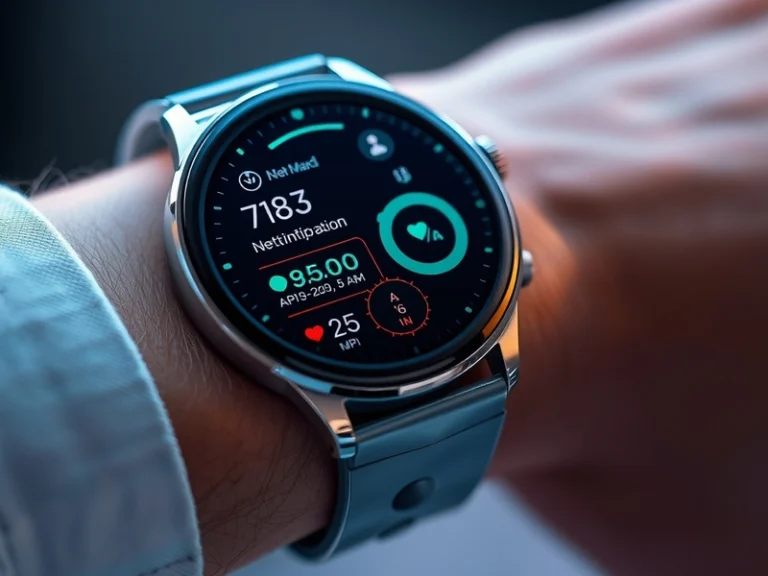
The latest advancements in wearable technology are bringing smartwatches closer to true independence from smartphones, leveraging sophisticated on-device AI and robust cellular connectivity to deliver a comprehensive, untethered experience directly from the wrist. This evolution is redefining the role of smartwatches, moving them beyond mere phone companions to powerful, standalone intelligent agents.
Google, with its Pixel Watch line, stands as a prominent player in this ongoing transformation. While specific future models are always subject to anticipation, the underlying technological trends clearly indicate a concerted effort to enhance the autonomy and intelligence of wrist-worn devices. The core promise lies in empowering users to leave their smartphones behind for increasingly longer periods, confident that essential communications, health monitoring, and smart assistance remain readily accessible.
Untethered Freedom: The Connectivity Core
Central to the smartwatch’s journey toward independence is advanced connectivity. Modern smartwatches increasingly integrate eSIM technology, allowing them to connect directly to cellular networks without needing a physical SIM card or a paired smartphone within range. This capability unlocks a suite of phone-free functions:
- Voice Calls and Messaging: Users can make and receive calls and texts directly from their wrist, maintaining essential communication channels during a run, at the gym, or when simply opting for a lighter carry.
- Streaming and Navigation: Accessing music streaming services or utilizing turn-by-turn navigation through Google Maps becomes possible without a phone, enhancing convenience during commutes or outdoor activities.
- Mobile Payments: Services like Google Wallet are already well-established on smartwatches, enabling secure contactless payments directly from the wrist, further reducing the need to carry a wallet or phone.
This robust connectivity backbone transforms the smartwatch from a passive notification receiver into an active communication and utility hub, capable of handling a significant portion of daily digital interactions independently.
AI on the Wrist: Intelligent Features
Beyond connectivity, the integration of on-device artificial intelligence is the critical factor elevating smartwatches from smart accessories to truly intelligent companions. Edge AI processing allows complex algorithms to run directly on the watch, offering faster responses, enhanced privacy, and reduced reliance on cloud processing.
Proactive Health and Fitness Insights
AI plays a pivotal role in transforming raw biometric data into actionable health insights. Smartwatches already gather a wealth of data through sensors:
- Heart rate monitoring and ECG for cardiovascular health.
- SpO2 (blood oxygen saturation) tracking.
- Sleep pattern analysis.
- Skin temperature sensing.
With on-device AI, this data can be analyzed in real-time to detect subtle changes or anomalies, provide personalized coaching during workouts, or even offer proactive alerts based on a user’s unique physiological patterns. Instead of merely presenting numbers, AI helps smartwatches understand and interpret the significance of those numbers for individual well-being.
Contextual Awareness and Assistance
AI also enhances the smartwatch’s ability to act as a truly smart assistant. Improvements in natural language processing and machine learning allow for more intuitive interactions with voice assistants like Google Assistant. On-device processing means:
- Faster Query Responses: Commands and questions are processed more quickly, even in environments with limited connectivity.
- Intelligent Notifications: AI can prioritize and summarize notifications, presenting only the most relevant information at the most opportune time, reducing digital fatigue.
- Predictive Scheduling: Based on learned routines, location data, and calendar entries, the watch could proactively suggest actions or provide timely reminders, such as optimizing a route for an upcoming appointment or suggesting a break based on activity levels.
Personalization and Adaptability
The ultimate goal for AI in smartwatches is to create a deeply personalized experience. Through continuous learning, the device can adapt its interface, features, and recommendations to individual user habits, preferences, and even emotional states. This means a watch that not only tracks but also understands and anticipates a user’s needs throughout the day, becoming a more intuitive and indispensable tool.
The Engine Room: Enabling Technologies
Achieving this level of independence and intelligence requires significant technological advancements under the hood. Specialized, low-power processors designed for edge AI inference are essential to handle complex machine learning models efficiently. Google’s own Tensor architecture, known for its focus on AI processing, illustrates the industry’s direction toward integrating dedicated silicon for these tasks, even in compact form factors.
Furthermore, the underlying operating system, such as Wear OS, must be optimized to seamlessly integrate these AI capabilities with robust connectivity and a user-friendly interface. Efficient power management algorithms are also crucial, as running advanced AI models and maintaining constant cellular connections on a small battery presents a considerable engineering challenge. Battery life remains a key area of focus for continued innovation in this space.
As these technologies mature, the vision of a truly autonomous, intelligent personal assistant residing on the wrist moves closer to reality, promising a future where our most personal computing device is also our most liberated.