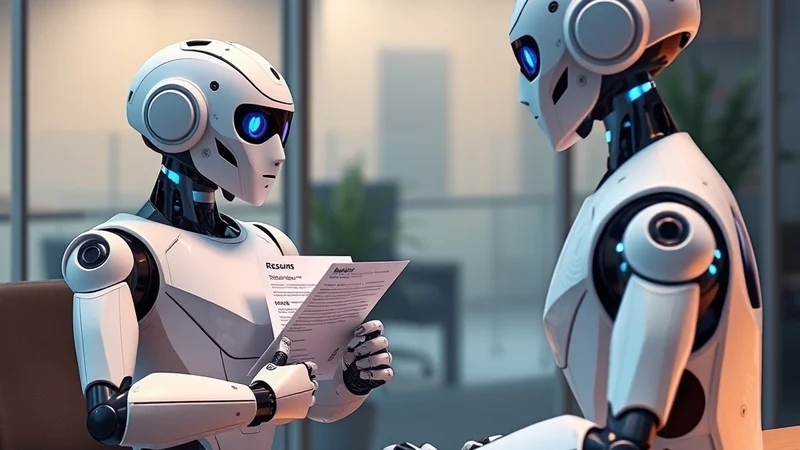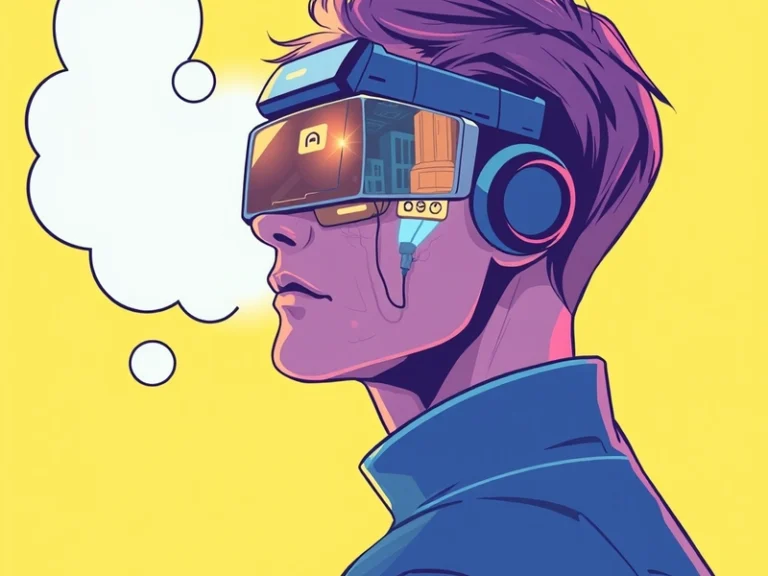
The landscape of personal technology is undergoing a significant transformation with the emergence of wearable AI cameras, devices designed to move beyond passive capture and intelligently interpret, summarize, and even creatively transform visual data, opening avenues like turning everyday photos into stylized outputs such as comic book panels. This new generation of wearables, exemplified by devices like the Humane AI Pin and the Rabbit R1, integrates advanced computer vision and generative AI models directly into a highly portable form factor, pushing the boundaries of what a camera can do.
Redefining Wearable Capture: More Than Just a Lens
Traditional wearable cameras, like action cams or older smart glasses, primarily focused on hands-free video and photo recording. The current wave of AI-powered wearables, however, leverages integrated cameras as a primary input sensor for sophisticated artificial intelligence systems. These devices are not merely recording; they are actively observing and processing the environment to provide context-aware assistance or perform user-initiated tasks.
Consider the **Humane AI Pin**, which features a camera capable of capturing photos and videos, but also acts as an “AI lens” for its operating system, Cosmos. This allows the device to recognize objects, text, and scenes, enabling features like real-time translation of text, identification of food items for nutritional information, or summarization of visual information. Similarly, the **Rabbit R1** integrates a camera as a key component of its “Large Action Model” (LAM), designed to understand user intent and interact with applications. While its primary focus is on task execution rather than content creation, its ability to perceive the environment visually lays the groundwork for more complex AI-driven interactions.
From Pixels to Panels: The AI Behind Visual Transformation
The leap from a raw photograph to a stylized comic panel is powered by advancements in two core areas of AI: computer vision and generative artificial intelligence.
*
Computer Vision for Scene Understanding
Before an AI can transform an image into a comic, it must first *understand* the content of the original image. This is where advanced computer vision models come into play. These models can identify objects, people, actions, and even the overall mood or context of a scene. Techniques include:
- Object Detection and Segmentation: Identifying distinct elements within an image (e.g., a person, a car, a tree) and separating them from the background.
- Pose Estimation: Understanding the posture and actions of individuals, crucial for dynamic comic book compositions.
- Scene Classification: Categorizing the environment (e.g., “urban street,” “forest path,” “indoor cafe”) to inform stylistic choices.
This foundational understanding allows the AI to preserve key narrative elements and character positions while applying a new artistic style.
*
Generative AI for Style Transfer and Transformation
Once the scene is understood, generative AI models, particularly diffusion models, take over. These models have revolutionized image-to-image translation and artistic style transfer. They can learn the distinct characteristics of various artistic styles (like different comic book aesthetics – superhero, manga, newspaper strip) and apply them to new content.
The process often involves:
- Feature Extraction: Identifying high-level features from the input image.
- Style Encoding: Understanding the stylistic properties of target comic art.
- Image Synthesis: Generating a new image that retains the content of the original but adopts the learned style.
This isn’t just a simple filter; it’s a deep transformation that can redraw elements, exaggerate features, add speech bubbles, and even adjust lighting and shading to fit the chosen comic aesthetic. Models like Stable Diffusion or Midjourney, while typically run on more powerful hardware, demonstrate the underlying capabilities that are now being optimized for more constrained, wearable environments, often offloading heavier computation to cloud services.
Enabling Technologies and Practical Considerations
The feasibility of these “photos to comics” capabilities on a wearable device hinges on several technological advancements and design choices:
*
Edge AI and Cloud Offloading
Performing complex generative AI tasks directly on a tiny wearable device is computationally intensive. Modern wearable AI cameras typically employ a hybrid approach:
- Edge AI: Lightweight computer vision tasks, initial scene analysis, and real-time interaction processing are handled directly on the device using specialized AI accelerators found in chipsets like Qualcomm’s Snapdragon platforms. This minimizes latency for immediate feedback.
- Cloud AI: More demanding generative tasks, such as high-resolution image-to-comic transformation, are often offloaded to powerful cloud servers. The wearable captures and pre-processes data, sends it to the cloud, and receives the transformed output. This balances processing power with battery life and device size.
*
User Interface and Interaction
Without a traditional screen, interacting with these devices to initiate a transformation requires intuitive methods. Voice commands are a primary interface for devices like the AI Pin and Rabbit R1. A user might say, “Take a photo and turn it into a superhero comic,” or “Capture this scene in a manga style.” Gestures and contextual awareness (e.g., detecting a specific event) could also trigger such features.
*
Privacy and Data Handling
The always-on, always-observing nature of wearable AI cameras raises significant privacy concerns. Companies developing these devices face the challenge of designing systems that respect user privacy while still being able to process ambient information. This involves clear data policies, on-device processing where possible, and transparent consent mechanisms.
Beyond Comics: A Glimpse into the Future
The “photos to comics” functionality, while compelling, is just one example of the creative potential unleashed by wearable AI cameras. The underlying technology could enable a host of other transformations and applications:
- Personalized Visual Summaries: Automatically generating visual diaries or highlights of a day’s events in a chosen artistic style.
- Augmented Reality Content Creation: Using real-world captures as a base for interactive AR experiences.
- Educational Tools: Transforming scientific diagrams or historical scenes into engaging, stylized visuals.
- Accessibility: Converting complex visual information into simpler, more digestible forms for individuals with specific needs.
As AI models become more efficient and hardware continues to miniaturize, the boundary between capturing reality and creatively reimagining it through wearable devices will continue to blur, ushering in a new era of personal visual storytelling.