AI-Powered Eyewear: Rokid’s AI Glasses Blend Fashion and Functionality
The intersection of fashion and technology has given birth to some of the most innovative products in recent years. Among these, AI-powered eyewear stands out as a groundbreaking innovation. Rokid, a pioneering company in the field of AI and robotics, has recently launched a pair of AI glasses that not only serve as prescription eyewear but also offer advanced AI functionalities. This article delves into the features and capabilities of Rokid’s AI glasses, exploring how they blend fashion with cutting-edge technology.
Features and Capabilities
Rokid’s AI glasses are designed to be both stylish and functional. They come with a range of features that cater to the needs of modern users. Here are some of the key features:
- Prescription Lenses: The glasses come with prescription lenses, making them suitable for users who need vision correction.
- Voice Assistant: The glasses are equipped with a voice assistant that can perform various tasks, such as setting reminders, sending messages, and providing weather updates.
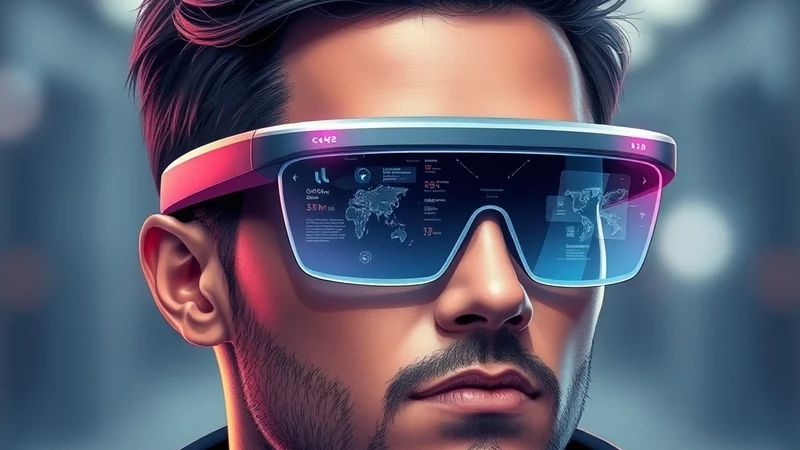
- Augmented Reality (AR) Display: The glasses feature an AR display that can overlay digital information onto the real world, enhancing the user’s perception and interaction with their environment.
- Gesture Control: Users can control the glasses using hand gestures, making it easy to navigate through different features without having to touch the device.
- Camera: The glasses come with a built-in camera that can capture photos and videos, providing users with a hands-free way to document their experiences.
- Health Monitoring: The glasses can monitor various health parameters, such as heart rate and steps taken, helping users keep track of their fitness and well-being.
Practical Insights
Rokid’s AI glasses offer a range of practical benefits for users. For instance, the voice assistant can help users stay organized and productive by managing their schedules and reminders. The AR display can enhance the user’s experience by providing real-time information about their surroundings, such as directions, points of interest, and more. The gesture control feature makes it easy to navigate through the glasses’ features, while the built-in camera allows users to capture moments without having to pull out their phones.
The health monitoring feature is particularly useful for fitness enthusiasts and health-conscious individuals. By tracking their heart rate and steps taken, users can gain insights into their fitness levels and make adjustments to their routines as needed. This feature can also be useful for individuals with health conditions that require regular monitoring.
Industry Implications
The launch of Rokid’s AI glasses has significant implications for the tech industry. It demonstrates the growing trend of integrating AI and AR technologies into everyday devices, making them more accessible and user-friendly. This trend is expected to continue, with more companies exploring the potential of AI-powered eyewear and other wearable devices.
The glasses also highlight the importance of design in tech products. By combining fashion with functionality, Rokid has created a product that appeals to a wide range of users, from tech enthusiasts to fashion-conscious individuals. This approach is likely to influence the design of future tech products, with companies placing a greater emphasis on aesthetics and user experience.
Future Possibilities
The future of AI-powered eyewear is bright, with many exciting possibilities on the horizon. As AI and AR technologies continue to advance, we can expect to see even more sophisticated features in future iterations of Rokid’s glasses and other similar devices. For instance, future versions of the glasses could incorporate advanced AI algorithms that can predict user behavior and provide personalized recommendations.
Another exciting possibility is the integration of AI-powered eyewear with other smart devices, such as smartphones and smart home systems. This could create a seamless ecosystem of devices that work together to enhance the user’s experience. For example, the glasses could be used to control smart home devices, such as lights and thermostats, or to receive notifications and alerts from the user’s smartphone.
Finally, AI-powered eyewear could play a significant role in various industries, such as healthcare, education, and entertainment. In healthcare, the glasses could be used to monitor patients’ health parameters and provide real-time feedback to healthcare providers. In education, they could be used to enhance learning experiences by providing interactive and immersive content. In entertainment, they could be used to create immersive gaming experiences or to provide personalized recommendations for movies, music, and other forms of entertainment.
Conclusion
Rokid’s AI glasses represent a significant step forward in the integration of AI and AR technologies into everyday devices. By combining fashion with functionality, they offer a range of features that cater to the needs of modern users. The glasses also have significant implications for the tech industry, highlighting the growing trend of AI-powered wearables and the importance of design in tech products. As AI and AR technologies continue to advance, we can expect to see even more sophisticated features in future iterations of Rokid’s glasses and other similar devices, opening up exciting possibilities for various industries.
As we look to the future, it’s clear that AI-powered eyewear will play an increasingly important role in our lives. Whether it’s enhancing our productivity, improving our health, or providing us with new ways to experience the world around us, these innovative devices have the potential to transform the way we live, work, and play.