Transforming Robotics: Atlas’s Farewell Demonstration
As the curtain falls on Boston Dynamics’ humanoid robot, Atlas, the tech community reflects on its remarkable evolution and the implications of its capabilities. The final showcase not only dazzled audiences with incredible feats of agility and coordination but also underscored the advancements in artificial intelligence, robotics, and human-robot interaction. In this article, we will explore the technological innovations presented during this farewell demonstration, their practical implications, and the future landscape of robotics.
The Evolution of Atlas
Since its inception, Atlas has undergone significant transformation. Originally developed for military applications, Atlas has shifted focus towards versatile uses in various industries such as logistics, healthcare, and disaster response. The farewell demonstration encapsulated years of research and development, spotlighting key advancements:
- Dynamic Balance: Atlas showcased its ability to maintain equilibrium while navigating uneven terrain, a critical skill for real-world applications.
- Advanced Perception: With enhanced sensors and AI-driven vision, Atlas could recognize and adapt to its environment in real-time.
- Improved Dexterity: The robot’s hands were equipped with more advanced gripping capabilities, allowing it to manipulate objects with precision.
Highlights of the Farewell Demonstration
The demonstration featured a series of choreographed tasks that highlighted Atlas’s impressive agility and problem-solving abilities. Some of the standout moments included:
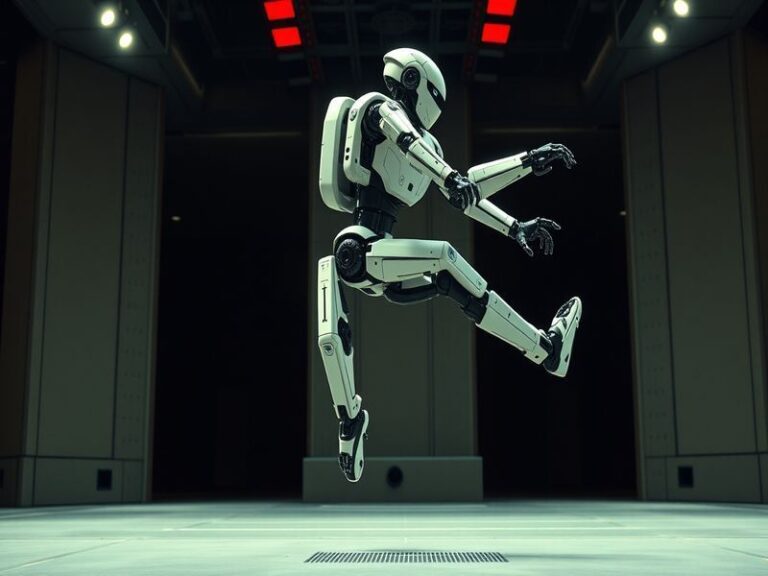
- Parkour Performance: Atlas executed a series of complex parkour movements, including jumping over obstacles and performing flips, showcasing its agility.
- Object Handling: The robot demonstrated its ability to pick up, carry, and stack boxes, simulating tasks typically performed in warehouses.
- Human Interaction: In a heartwarming twist, Atlas engaged in a dance routine with a human partner, emphasizing the potential for social interaction.
Each of these segments not only entertained but also served to demonstrate practical applications of the technology in various sectors, from logistics to entertainment.
Practical Insights and Industry Implications
The advancements showcased in the farewell demonstration of Atlas have profound implications across multiple industries:
- Logistics and Warehousing: The ability to navigate and manipulate objects efficiently positions Atlas as a potential asset in automating warehouse tasks, reducing operational costs, and increasing productivity.
- Healthcare Assistance: With its dexterity and perception, Atlas could assist in healthcare settings, aiding in patient care, and performing repetitive tasks such as lifting or transporting medical supplies.
- Emergency Response: In disaster scenarios, robots like Atlas can take on dangerous tasks, such as searching for survivors in complex environments, thereby ensuring human safety.
Future Possibilities in Robotics
The farewell of Atlas is not merely an end but a new beginning for humanoid robotics. As technology continues to advance, the future possibilities are exciting and expansive:
- Collaboration with AI: Future iterations of robots will integrate more sophisticated AI algorithms, allowing them to learn and adapt to new tasks autonomously.
- Enhanced Social Interaction: The development of social robots capable of emotional recognition and interaction could revolutionize sectors such as elder care and education.
- Global Accessibility: As production costs decrease, the accessibility of humanoid robots could increase, making them available for small businesses and developing regions.
Moreover, the lessons learned from Atlas will likely inform the design and functionality of next-generation robots. The focus on human-like capabilities will enhance their acceptance and integration into daily life.
Conclusion
Boston Dynamics’ farewell demonstration of Atlas marks a significant milestone in the journey of humanoid robotics. The advancements showcased not only highlight the technological prowess of the team but also set the stage for future innovations that could redefine human-robot interaction. As we bid farewell to Atlas, we look forward to the new horizons that the next generation of robots will explore, ultimately enhancing our capabilities and transforming industries across the globe.