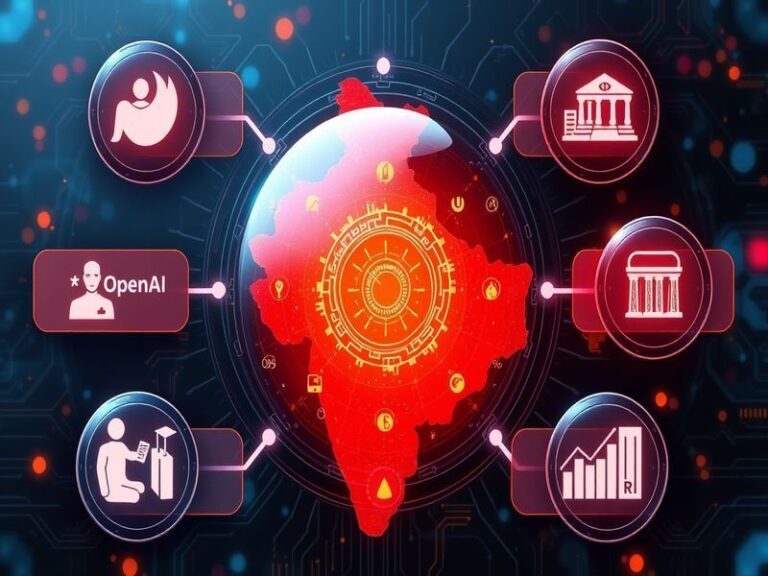
OpenAI’s Ambitious Expansion in India: Analyzing OpenAI’s Strategy to Tap into the Growing AI Market in India
As the world increasingly embraces artificial intelligence (AI) and machine learning (ML), India stands out as a significant player in the global AI landscape. With its vast pool of talent, burgeoning tech ecosystem, and a rapidly growing economy, the country offers a fertile ground for AI innovations. OpenAI, a leading entity in the AI sector, recognizes this potential and is strategically positioning itself to harness the opportunities presented by the Indian market.
The Indian AI Landscape
India’s AI market is projected to reach $7.8 billion by 2025, driven by advancements in technology, a surge in data availability, and increasing investments in AI research and development. The Indian government is also supportive of AI initiatives, with various policies aimed at promoting innovation and entrepreneurship.
- Government Support: Initiatives like the National AI Strategy aim to position India as a global leader in AI.
- Talent Pool: India boasts one of the largest pools of tech talent, with numerous institutions producing skilled AI professionals every year.
- Start-up Ecosystem: A vibrant startup ecosystem, particularly in cities like Bengaluru and Hyderabad, fuels innovation and attracts investments.
OpenAI’s Strategy for Expansion
OpenAI’s approach to entering the Indian market involves a multi-faceted strategy that includes partnerships, collaborations, and localized product offerings. Here are some key components of their strategy:
- Strategic Partnerships: OpenAI is likely to collaborate with local tech companies and educational institutions to leverage their networks and expertise.
- Research Collaborations: Partnering with universities and research organizations will help OpenAI tap into local talent and foster innovation.
- Localized AI Solutions: Developing AI products that cater to the unique needs of Indian businesses and consumers will enhance OpenAI’s relevance in the market.
Industry Implications
The expansion of OpenAI in India is expected to have significant implications for various sectors:
- Healthcare: AI can revolutionize healthcare delivery in India by enabling predictive analytics, personalized treatment plans, and efficient resource allocation.
- Education: AI-driven tools can enhance learning experiences through personalized education and improved access to quality resources.
- Finance: The integration of AI in financial services can streamline processes, enhance fraud detection, and enable better decision-making.
Challenges and Considerations
While the prospects for OpenAI in India are promising, several challenges must be addressed:
- Data Privacy: Navigating India’s complex data protection laws will be crucial for OpenAI’s operations.
- Infrastructure: Ensuring robust technological infrastructure to support AI applications is essential for widespread adoption.
- Competition: The burgeoning local AI startups and established tech giants pose significant competition.
Future Possibilities
The future of OpenAI in India looks bright, with numerous possibilities on the horizon:
- AI for Social Good: OpenAI can play a pivotal role in addressing social challenges, from poverty alleviation to disaster management.
- Innovation Hubs: Establishing innovation hubs in collaboration with local universities can drive research and development in AI.
- Global Collaborations: India can serve as a gateway for OpenAI to explore other emerging markets in Asia, leveraging its insights and innovations.
Conclusion
OpenAI’s expansion into India represents a strategic move to capitalize on the burgeoning AI market. By focusing on partnerships, local solutions, and addressing challenges, OpenAI is well-positioned to make a significant impact on the Indian tech landscape. As the AI revolution continues, the collaboration between global leaders like OpenAI and local innovators will shape the future of technology in India and beyond.