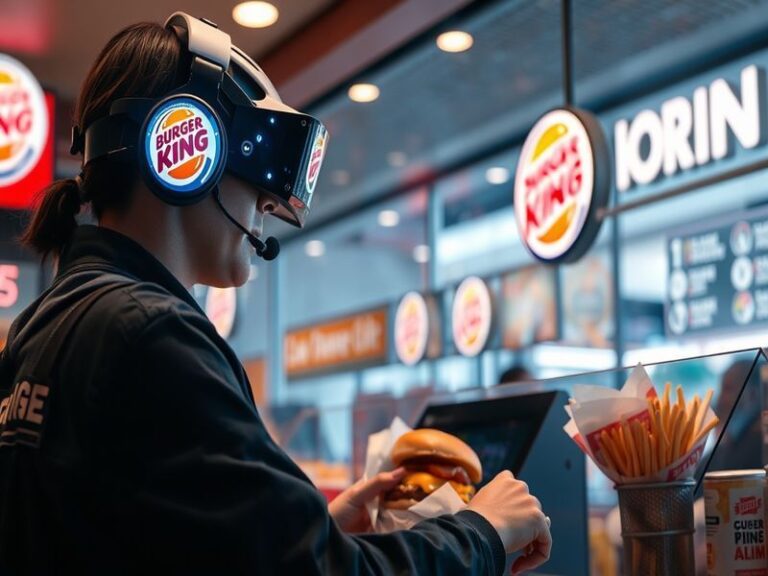
Burger King’s AI Headset Revolutionizes Customer Interaction
In a rapidly evolving technological landscape, fast-food chains are increasingly turning to artificial intelligence (AI) to enhance customer experience and operational efficiency. One notable example is Burger King, which has embraced AI-driven headsets to transform its interaction with customers and streamline employee performance. This innovative approach not only boosts satisfaction levels but also sets a new standard for the industry.
Enhancing Employee Performance
The introduction of AI headsets at Burger King marks a significant shift in how employees engage with customers. These sophisticated devices are designed to provide real-time assistance and data analytics, enabling staff to perform their roles more effectively. Here are some ways these headsets enhance employee performance:
- Real-Time Order Management: Employees can receive instant updates on order status, allowing them to manage customer expectations better and reduce wait times.
- Instant Access to Information: Staff can quickly access menu details, promotions, and nutritional information, which helps them answer customer queries more efficiently.
- Training and Support: New employees benefit from on-the-job training through guided prompts and instructions delivered directly to their headsets, improving onboarding processes.
- Performance Analytics: The headsets can track employee interactions and performance metrics, enabling management to identify areas for improvement and provide targeted feedback.
Revolutionizing Customer Interaction
Customer satisfaction is paramount in the fast-food industry, and Burger King’s AI headsets play a crucial role in enhancing the overall experience. By integrating AI into customer interactions, Burger King aims to create a more personalized and efficient service. Here are some key features:
- Personalized Service: AI algorithms analyze customer data to tailor recommendations, leading to a more customized dining experience.
- Efficient Order Taking: The headsets enable staff to take orders more accurately and quickly, minimizing human error and improving order accuracy.
- Feedback Collection: Customers can provide immediate feedback through the AI system, allowing Burger King to adapt and respond to customer needs in real-time.
- Enhanced Communication: The AI-driven headsets promote better communication between kitchen staff and front-line employees, ensuring that orders are prepared and delivered promptly.
Industry Implications
The implementation of AI headsets by Burger King signals a broader trend in the fast-food industry towards digital transformation. As more chains adopt similar technologies, several implications emerge:
- Increased Competition: Chains that successfully integrate AI will likely outperform those that do not, prompting an industry-wide shift towards technological adoption.
- Customer Expectations: As customers experience AI-enhanced interactions at Burger King, they will expect similar levels of service from other restaurants, raising the bar for customer service standards.
- Workforce Evolution: The role of fast-food employees may evolve, requiring a higher level of tech-savviness and adaptability as they work alongside AI systems.
- Data Privacy Concerns: With increased data collection, companies must navigate the complexities of customer privacy and data security to maintain trust.
Future Possibilities
The future of AI in fast-food chains like Burger King is filled with potential. As technology continues to advance, several exciting possibilities may emerge:
- Integration with Mobile Apps: AI headsets could sync with mobile applications, allowing customers to place orders remotely for even faster service.
- Voice Recognition Technology: Implementing voice-activated commands could streamline order taking further, creating a hands-free experience for employees.
- AI Chatbots: Integrating chatbots into the customer service framework could automate responses to common inquiries, freeing up staff for more complex tasks.
- Predictive Analytics: AI could analyze customer behavior patterns to predict busy times and optimize staffing levels accordingly.
In conclusion, Burger King’s innovative use of AI headsets is paving the way for a new era of customer interaction in the fast-food industry. By enhancing employee performance and prioritizing customer satisfaction, Burger King not only improves its service but also sets a precedent for future technological advancements in the sector. As more chains explore similar avenues, the implications for the industry could be profound, ushering in a new standard of efficiency and customer engagement.