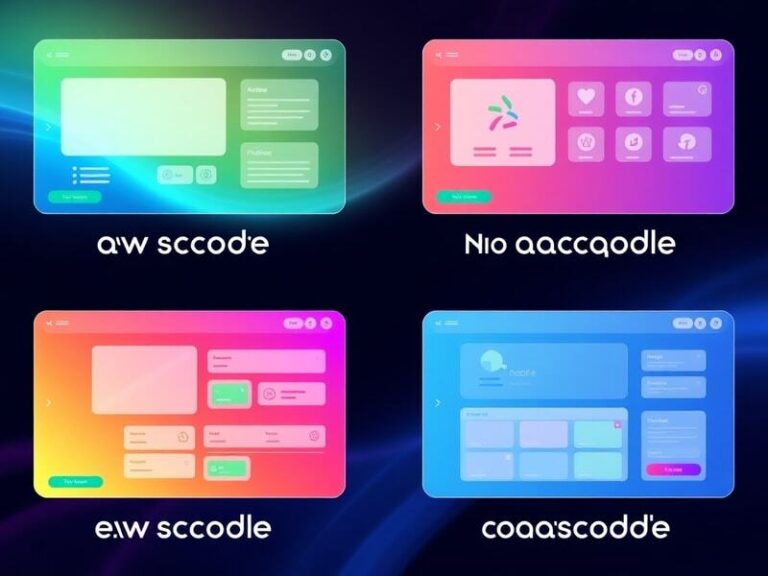
Why a Billionaire Says Coding is Dead: Examining the Claim that Low-Code and No-Code Platforms are Reshaping the Tech Landscape
In a world increasingly dominated by technology, the debate around the relevance of traditional coding skills has become more pronounced. A billionaire tech mogul recently stirred the pot by declaring that “coding is dead,” suggesting that low-code and no-code platforms are the future of software development. This assertion has reverberated throughout the tech community, prompting discussions about the implications for developers, businesses, and the industry as a whole.
The Rise of Low-Code and No-Code Platforms
Low-code and no-code platforms allow users to create applications with minimal or no programming knowledge. These tools are designed to be user-friendly, enabling non-developers to build software through graphical interfaces and pre-built templates. This democratization of software development has several key drivers:
- Accessibility: Low-code and no-code platforms lower the barrier to entry for individuals who may not have formal coding experience.
- Speed: Businesses can rapidly prototype and deploy applications without the lengthy development cycles traditionally associated with coding.
- Cost-Effectiveness: By reducing the need for specialized developers, organizations can save on labor costs and allocate resources more efficiently.
Practical Insights into the Shift
The shift toward low-code and no-code platforms is not merely a trend; it represents a fundamental change in how software is developed. Here are some practical insights into this evolution:
- Empowering Citizen Developers: Many organizations are embracing “citizen developers,” employees who leverage these platforms to create solutions tailored to their specific needs, thus driving innovation from within.
- Integration with AI: As artificial intelligence continues to evolve, low-code platforms are increasingly incorporating AI capabilities, enabling users to build smarter applications without deep technical knowledge.
- Collaboration: Low-code and no-code tools foster collaboration between IT and business units, bridging the gap between technical and non-technical teams.
Industry Implications
The implications of this shift are profound and multi-faceted:
- Changing Workforce Dynamics: As the demand for traditional coding skills may decrease, the workforce will need to adapt. Upskilling in low-code and no-code tools will become essential for developers to stay relevant.
- Redefining Roles: The role of software developers may shift from writing code to overseeing and managing the development process, focusing on strategy and architecture rather than implementation.
- Innovation Acceleration: Businesses that adopt low-code and no-code solutions can innovate more rapidly, responding to market changes and customer needs with agility.
Future Possibilities
Looking ahead, the future of coding versus low-code and no-code platforms presents several possibilities:
- Hybrid Models: The most successful companies may adopt hybrid models that combine traditional coding with low-code/no-code solutions, leveraging the strengths of both approaches.
- Increased Focus on Design: As coding becomes less central, there will likely be a greater emphasis on user experience (UX) and design thinking, ensuring that applications are not just functional but also user-friendly.
- AI-Driven Development: AI tools will play a significant role in enhancing low-code and no-code platforms, enabling advanced features such as automated testing, predictive analytics, and intelligent decision-making.
Ultimately, while coding may not be “dead,” its role is certainly evolving. The rise of low-code and no-code platforms signifies a shift toward a more inclusive and efficient approach to software development. As we embrace this change, the tech landscape will continue to transform, driven by innovation and the need for speed in an ever-changing market.