Creative AI Agents: The Future of Content Creation
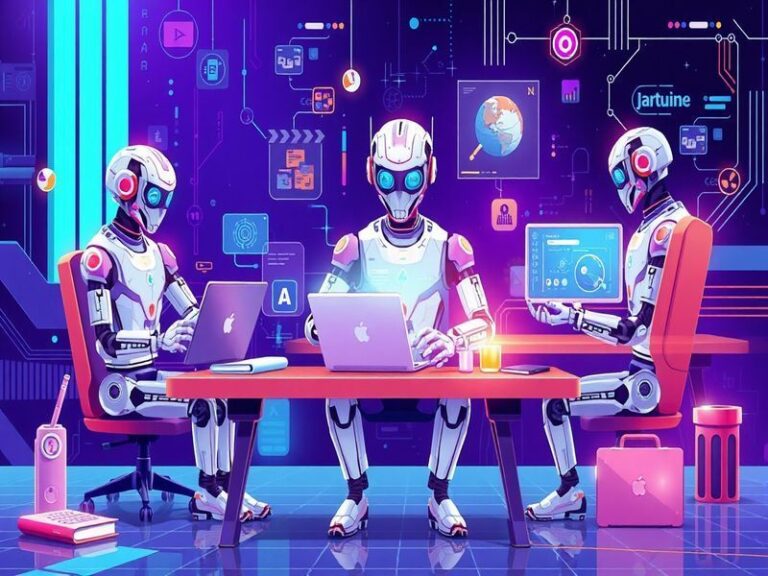
In the rapidly evolving landscape of artificial intelligence, the emergence of Creative AI Agents represents a significant leap forward in how content is produced and curated. Luma, a trailblazer in this field, has introduced innovative agents capable of handling end-to-end creative tasks, leveraging advanced AI technologies. This article explores the implications of these developments, practical insights for industries, and the future possibilities that Creative AI Agents offer.
The Rise of Creative AI Agents
Creative AI Agents are designed to assist with various aspects of content creation, from ideation to final production. These agents employ machine learning, natural language processing (NLP), and computer vision to generate creative outputs that are not only efficient but also increasingly sophisticated.
Key features of Creative AI Agents include:
- Content Generation: They can create articles, social media posts, and marketing materials based on user-defined parameters.
- Visual Design: Capable of generating graphics and layouts that align with current design trends.
- Personalization: Tailoring content to specific audiences by analyzing user data and preferences.
- Feedback Integration: Learning from interactions to improve future outputs and adapt to changing creative demands.
Practical Insights for Industries
The introduction of Creative AI Agents like those developed by Luma has profound implications across various sectors:
- Marketing and Advertising: Brands can use AI agents to generate compelling ad copy and visuals, streamlining the creative process and reducing the time spent on revisions.
- Entertainment: In the film and gaming industries, Creative AI Agents can assist in scriptwriting, storyboarding, and even composing music, enhancing the creative workflow.
- Publishing: Publishers can leverage these agents to automate content creation, allowing for faster publication cycles and more diverse content offerings.
- Education: AI agents can create customized learning materials that cater to different learning styles and needs, making education more accessible and engaging.
By integrating Creative AI Agents into their workflows, organizations can not only enhance productivity but also foster innovation by allowing human creators to focus on higher-level strategic tasks.
Industry Implications
The rise of Creative AI Agents prompts several important considerations for industries:
- Quality vs. Quantity: While these agents can produce content at an unprecedented scale, questions about the quality and authenticity of AI-generated content arise. Brands will need to maintain a balance between leveraging AI efficiency and ensuring creative integrity.
- Job Displacement: As AI takes on more creative tasks, there are concerns about potential job displacement in creative fields. However, it is essential to recognize that these agents are tools designed to augment, rather than replace, human creativity.
- Ethical Considerations: The use of AI in content generation raises ethical questions regarding copyright, originality, and the potential for misinformation. Establishing clear guidelines and frameworks will be crucial.
Future Possibilities
The future of Creative AI Agents is bright, with several exciting possibilities on the horizon:
- Enhanced Collaboration: Future iterations of AI agents may facilitate real-time collaboration between human creators and AI, leading to innovative hybrid creations.
- Advanced Personalization: As algorithms become more sophisticated, AI agents could offer even more personalized content experiences, tailoring outputs to individual user preferences and behaviors.
- Cross-Disciplinary Applications: The potential for Creative AI Agents to cross boundaries between industries—such as combining fashion design with technology—could lead to entirely new fields of creative expression.
- AI as a Creative Partner: Rather than simply being a tool, future Creative AI Agents could evolve into creative partners, providing insights, suggestions, and inspiration based on vast datasets and trends.
Conclusion
Creative AI Agents, exemplified by Luma’s innovative solutions, are set to redefine the content creation landscape. By automating routine tasks and offering advanced creative capabilities, these agents not only enhance productivity but also open doors to new forms of expression and collaboration. As we navigate the implications of this technology, it becomes increasingly important to foster a dialogue around ethics, quality, and the evolving role of human creativity in an AI-driven world.