Google’s Innovative ‘Vibe Design’ Tool: Exploring How AI is Set to Reshape User Interface Design with Natural Language Input
As technology advances, the intersection of artificial intelligence (AI) and user interface (UI) design becomes increasingly prominent. One of the most exciting developments in this realm is Google’s recently unveiled ‘Vibe Design’ tool. This innovative solution harnesses the power of AI to facilitate design processes through natural language input. This article delves into the implications of this technology for designers and businesses alike, exploring its functionalities, practical insights, industry implications, and future possibilities.
Understanding Vibe Design
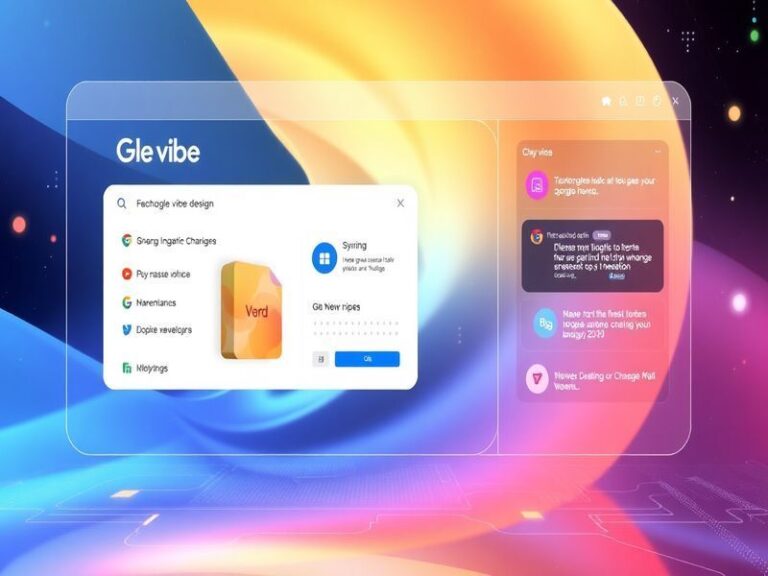
The Vibe Design tool is a cutting-edge interface that allows users to create and modify UI elements simply by describing them in natural language. This means that designers can articulate their ideas in plain English, and the tool will generate corresponding design elements automatically. This significant shift in how design tools operate is poised to change the landscape of UI design dramatically.
Some key features of Vibe Design include:
- Natural Language Processing (NLP): Vibe Design leverages advanced NLP algorithms to understand user input and generate design suggestions accordingly.
- Instant Prototyping: Users can quickly create prototypes without the need for extensive technical knowledge, making design more accessible to a broader audience.
- Iterative Feedback: The tool allows for real-time feedback, enabling designers to refine their ideas on the fly.
Practical Insights for Designers
For designers, the implications of Vibe Design are profound. Here are several practical insights into how this tool can enhance design workflows:
- Reduced Time Investment: By eliminating the need for extensive coding or software navigation, designers can spend more time focusing on creativity and innovation.
- Greater Accessibility: Designers at all skill levels can engage with UI design, democratizing the field and allowing fresh perspectives to emerge.
- Enhanced Collaboration: Teams can easily share ideas and visual concepts, fostering a more collaborative design environment.
Industry Implications
The introduction of Vibe Design signals a shift in the UI design industry, with several implications for businesses and design professionals:
- Innovation in Design Processes: Traditional tools often require specialized skills. Vibe Design can inspire new workflows and design methodologies that prioritize creativity over technical proficiency.
- Cost Efficiency: Businesses can save on resources typically allocated for hiring specialized UI/UX designers by empowering existing teams to contribute to design initiatives.
- Increased User-Centric Design: By streamlining the design process, teams can focus on user feedback and preferences, ultimately leading to more user-friendly products.
Future Possibilities
The future of Vibe Design and similar AI-driven tools is bright and full of potential. Here are some possibilities worth considering:
- Integration with Other AI Technologies: As AI continues to evolve, Vibe Design could integrate with additional technologies, such as augmented reality (AR) and virtual reality (VR), to create immersive design experiences.
- Personalization: Future iterations of the tool could leverage machine learning algorithms to learn user preferences and automatically suggest designs tailored to individual styles.
- Broader Applications: Beyond UI, the principles behind Vibe Design could be applied to other fields, such as graphic design, marketing, and even product development.
Conclusion
Google’s Vibe Design tool is a groundbreaking development in the world of UI design, showcasing how AI is reshaping the creative landscape. By allowing designers to articulate their ideas through natural language input, Vibe Design democratizes the design process and fosters innovation. As this technology evolves, it will likely lead to more user-friendly, accessible, and efficient design solutions, paving the way for a new era in digital creativity.