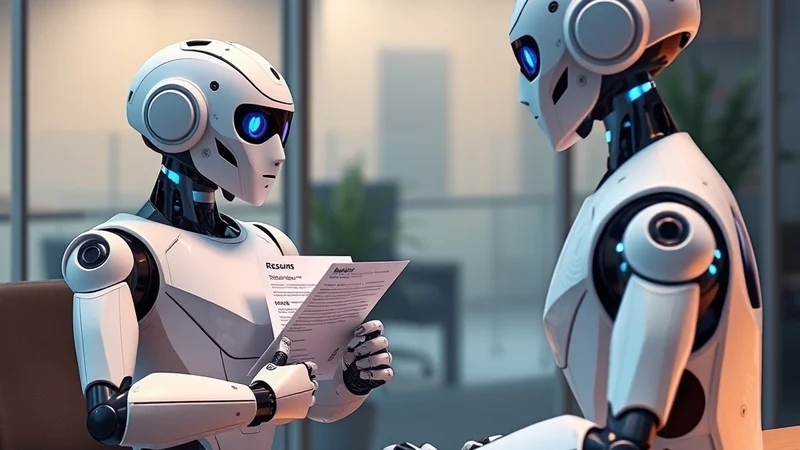
The Future of Knowledge Work: A 2-Year Countdown
As we approach the latter half of 2026, the rapid advancements in artificial intelligence (AI) and machine learning are poised to reshape the landscape of knowledge work. Predictions suggest that a significant proportion of screen-based jobs may be replaced by AI technologies. This article delves into the implications of these predictions, exploring the potential economic impact, practical insights, and future possibilities in the realm of work.
Understanding Knowledge Work
Knowledge work encompasses a wide range of roles that primarily involve information processing and management. This includes professions such as:
- Data analysts
- Content creators
- Software developers
- Financial analysts
- Customer service representatives
With the rise of AI, particularly in natural language processing (NLP) and automation, the capabilities of machines to perform these tasks are rapidly evolving. By late 2026, we may witness a significant shift in how knowledge work is defined and executed.
Predictions of Job Replacement
Several studies and expert opinions have hinted at a future where AI could take over many screen-based jobs. Key factors driving this prediction include:
- Improvement in AI capabilities: With models like GPT-4 and beyond, AI is becoming increasingly proficient at understanding and generating human-like text.
- Cost efficiency: Companies are incentivized to adopt AI solutions to reduce labor costs and enhance productivity.
- Changing work dynamics: The COVID-19 pandemic has accelerated the adoption of remote work and digital tools, paving the way for AI integration.
These factors suggest that by 2026, many roles that were once deemed secure may be subject to automation.
Economic Impact of AI on Knowledge Work
The potential economic impact of AI replacing screen-based jobs is multi-faceted. Here are some key considerations:
- Job Displacement: While AI may lead to the elimination of certain roles, it could also create new job categories focused on AI management and oversight.
- Increased Productivity: Businesses could experience significant gains in efficiency as AI performs repetitive tasks, allowing human workers to focus on strategic functions.
- Wage Polarization: There may be a widening gap between high-skill workers who can leverage AI tools and low-skill workers whose jobs could be automated.
- Economic Inequality: If not managed correctly, the rise of AI could exacerbate economic disparities, leading to wider societal implications.
- Innovation Stimulus: The shift towards AI could foster innovation, leading to new business models and markets that we have yet to conceive.
Industry Implications
The implications of AI on various industries are profound:
- Healthcare: AI could streamline administrative tasks, allowing healthcare professionals to focus more on patient care.
- Finance: Automated trading algorithms could replace traditional financial analysts, but new roles in AI ethics and compliance may emerge.
- Education: AI-driven personalized learning platforms could revolutionize teaching methodologies and administrative processes.
- Marketing: Customer data analysis through AI tools could enhance targeted marketing strategies, reducing the need for extensive marketing teams.
Practical Insights for Professionals
As we brace for the changes that AI may bring to knowledge work, professionals can take proactive steps to adapt:
- Upskill and Reskill: Continuous learning is essential. Focus on developing skills that complement AI, such as data interpretation, critical thinking, and emotional intelligence.
- Embrace AI Tools: Utilize AI tools to enhance productivity and efficiency in your current role.
- Nurture Creativity: Cultivate creative skills that machines cannot easily replicate, such as problem-solving and innovative thinking.
- Stay Informed: Keep abreast of developments in AI and how they may impact your industry.
Future Possibilities
The future of work in the age of AI presents both challenges and opportunities. As we move closer to the predicted AI integration in knowledge work by 2026, several possibilities arise:
- Human-AI Collaboration: The ideal future may involve collaboration where AI augments human capabilities rather than wholly replacing them.
- New Job Roles: Just as the internet created new job categories, AI may lead to the emergence of roles focused on AI ethics, training, and maintenance.
- Enhanced Work-Life Balance: By automating mundane tasks, workers may achieve a better work-life balance, leading to increased overall job satisfaction.
In conclusion, the countdown to 2026 presents a pivotal moment for knowledge work. While the potential for AI to replace certain jobs is real, it also offers opportunities for transformation and growth. By adapting to these changes, professionals can position themselves for success in an AI-driven future.