ChatGPT Integrates with Graphing Calculators: A Look into the Innovative Merging of Traditional Tools with Advanced AI
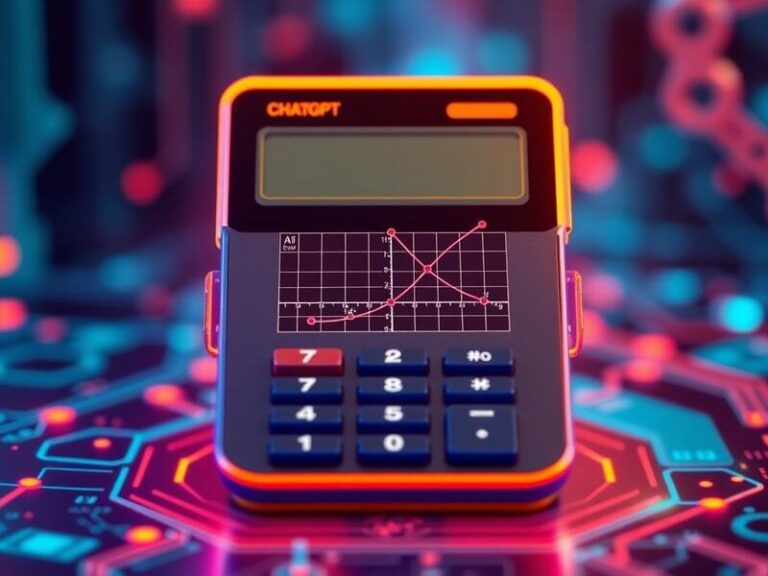
As education continues to evolve, the integration of artificial intelligence (AI) into traditional learning tools has become increasingly prevalent. One of the most exciting developments is the integration of ChatGPT with graphing calculators. This innovative merging not only enhances the utility of graphing calculators but also revolutionizes the way students and professionals approach problem-solving in mathematics and related fields.
The Evolution of Graphing Calculators
Graphing calculators have long been indispensable tools in mathematics education, providing students with the capability to visualize functions, analyze data, and solve complex equations. Traditionally, these devices have been limited by their hardware and software capabilities, often requiring manual input and a deep understanding of mathematical concepts to operate effectively. However, with the advent of AI technologies like ChatGPT, the potential for graphing calculators has dramatically expanded.
How ChatGPT Enhances Graphing Calculators
Integrating ChatGPT into graphing calculators introduces a multitude of advantages:
- Natural Language Processing: Users can interact with the calculator using everyday language. This allows for a more intuitive experience, where students can ask questions or give commands in a conversational manner.
- Real-Time Assistance: ChatGPT can provide instant feedback and explanations for mathematical concepts, guiding users through problem-solving steps and clarifying misunderstandings.
- Adaptive Learning: The AI can tailor its responses based on the user’s skill level, offering personalized assistance that evolves as the user becomes more proficient.
- Complex Problem Solving: By leveraging ChatGPT’s capabilities, users can tackle more intricate mathematical problems that would typically require a tutor’s assistance.
Practical Insights: A Day in the Life of an AI-Enhanced Graphing Calculator
Imagine a student preparing for a calculus exam. With a ChatGPT-integrated graphing calculator, the student can:
- Ask, “How do I find the derivative of this function?”
- Receive a step-by-step explanation, complete with visual graphs that illustrate the concept.
- Experiment with different functions by simply typing them in natural language, such as “Graph the function x^2 – 4x + 4.”
- Seek clarification on any mistakes by saying, “What did I do wrong here?” and obtain a constructive breakdown of the error.
This seamless interaction not only enhances learning but also empowers students to take ownership of their education, fostering a deeper understanding of mathematical principles.
Industry Implications
The merging of AI with traditional educational tools like graphing calculators holds significant implications for the education industry:
- Accessibility: Students from diverse backgrounds, particularly those lacking access to tutors, can benefit from AI-driven support, leveling the playing field.
- Instructors’ Roles: Teachers may shift from traditional lecturing to more facilitative roles, leveraging AI to support student learning in real-time.
- Curriculum Development: Educational institutions may need to adapt their curricula to incorporate AI tools, focusing on how to effectively use technology in problem-solving.
- Assessment Methods: Traditional assessment methods may be challenged, as AI assistance can significantly influence the outcomes of problem-solving tasks.
Future Possibilities
The future of AI-integrated graphing calculators is brimming with potential. Here are a few possibilities:
- Collaborative Learning: Imagine a classroom where multiple students can interact with a single AI-powered device, fostering collaborative problem-solving and discussion.
- Advanced Features: Future iterations may include features like voice commands, augmented reality (AR) graphing capabilities, and even integration with other educational tools.
- Global Learning Communities: AI could connect users from around the world, allowing them to share insights, solutions, and teaching methods, enriching the educational experience.
- Continuous Improvement: With machine learning capabilities, these devices could continuously learn from user interactions, improving their responses and educational effectiveness over time.
Conclusion
The integration of ChatGPT with graphing calculators marks a significant step forward in the evolution of educational technology. By enhancing the functionality of traditional tools with advanced AI, we open up new avenues for personalized learning, accessibility, and collaborative education. As we continue to explore the boundaries of AI in education, the possibilities appear limitless, promising a future where learning becomes more engaging and effective for everyone.