The AI Job Wipeout Skipped Radiology: Exploring the Resilience of Radiology Professionals in the Face of Automation
The rapid advancement of artificial intelligence (AI) and machine learning (ML) technologies has transformed numerous industries, raising concerns about job displacement and the future of work. Among these fields, radiology has often been highlighted as a domain ripe for automation, with algorithms capable of analyzing medical images and providing diagnostic insights. However, contrary to expectations, the introduction of AI in radiology has not resulted in widespread job losses. Instead, it has encouraged a partnership between technology and radiologists, enhancing their roles rather than replacing them.
The Role of AI in Radiology
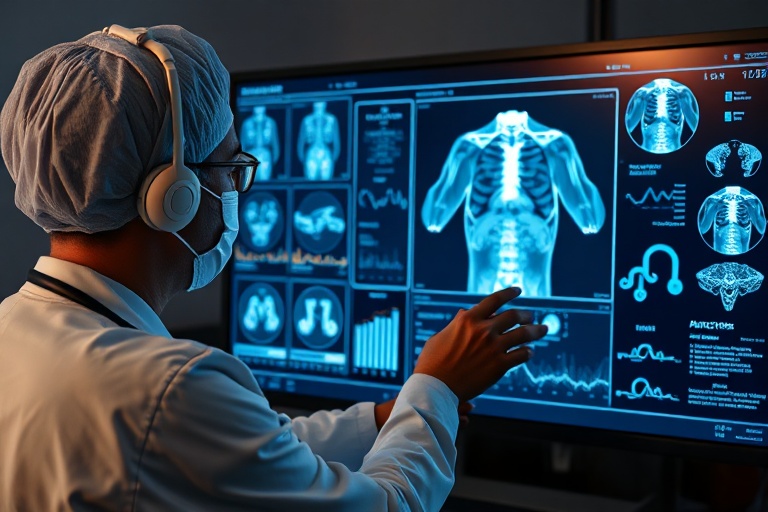
AI systems in radiology primarily focus on the interpretation of medical images, such as X-rays, CT scans, and MRIs. These systems utilize deep learning algorithms trained on vast datasets to identify patterns that may indicate the presence of diseases, thereby assisting radiologists in making more accurate diagnoses.
- Improved Accuracy: AI has shown promise in reducing diagnostic errors by highlighting anomalies that may be missed by human eyes.
- Increased Efficiency: AI can process images faster than a human radiologist, allowing for quicker turnaround times on critical diagnoses.
- Enhanced Workflow: Automation of mundane tasks frees up radiologists to focus on complex cases and patient interactions.
Despite these advancements, the role of radiologists remains crucial. While AI can assist in diagnosis, it lacks the nuanced understanding of clinical context that a trained medical professional provides. Radiologists are essential not only for interpreting images but also for integrating findings into patient care plans.
Why Radiology Professionals Are Resilient
The resilience of radiology professionals in the face of increasing automation can be attributed to several factors:
- Complex Decision-Making: AI excels at pattern recognition but struggles with the complexities of clinical decision-making that involves patient history, physical exams, and treatment options.
- Human Interaction: Radiologists play a key role in communicating findings and collaborating with other healthcare providers, ensuring that patient care is holistic.
- Continuous Learning: Radiologists are trained to adapt to new technologies, and many are actively involved in the development and validation of AI tools, fostering a collaborative environment.
Industry Implications
The integration of AI into radiology is reshaping the healthcare landscape, leading to both challenges and opportunities:
- Job Transformation: Rather than eliminating jobs, AI is transforming the responsibilities of radiologists. Professionals are now expected to work alongside AI tools, interpreting results and providing insights that machines cannot.
- Skill Enhancement: Radiologists must develop new skills to understand and leverage AI technologies effectively. This includes training in data interpretation, machine learning principles, and software operation.
- Regulatory Considerations: As AI tools become more prevalent, regulatory bodies will need to establish guidelines on the use of AI in clinical settings, ensuring patient safety and data privacy.
Future Possibilities
The future of radiology in the age of AI holds exciting possibilities. As technology continues to evolve, we can anticipate several trends:
- Personalized Medicine: AI can analyze not just images but also a patient’s genetic data, leading to more tailored treatment protocols.
- Remote Diagnostics: AI-powered tools can facilitate telemedicine, enabling radiologists to interpret images from anywhere, thus improving access to care in underserved areas.
- Integration with Other Technologies: Future advancements may see AI in radiology integrated with augmented reality (AR) and virtual reality (VR) for enhanced training and surgical planning.
As radiologists embrace AI, they must also advocate for responsible technology implementation, ensuring that patient welfare remains the primary focus. Collaboration between technologists, healthcare providers, and regulatory bodies will be essential to navigate the complexities of this evolving landscape.
In conclusion, while AI has the potential to transform radiology, it is not an outright replacement for radiologists. The partnership between AI and human expertise is a hallmark of the future, where technology augments the capabilities of healthcare professionals rather than diminishing their roles. This resilience underscores the importance of human judgment in medicine, ensuring that AI serves as a tool for better patient outcomes.