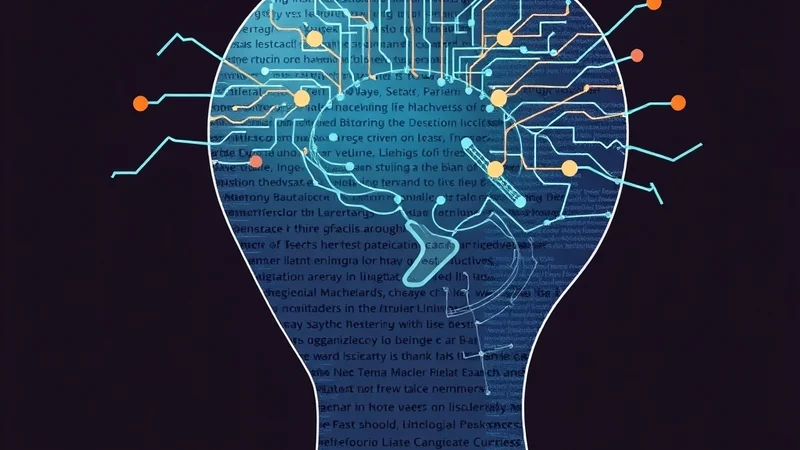
Artificial intelligence is increasingly being deployed to decipher the complex communication systems of various animal species, offering unprecedented insights into their social structures, behaviors, and cognitive abilities. Researchers are leveraging advanced machine learning techniques, particularly in bioacoustics, to move beyond simple call identification towards interpreting patterns and potential meanings within animal vocalizations.
One of the most ambitious projects in this field is the Cetacean Translation Initiative (CETI), which focuses on understanding the communication of sperm whales. Led by a multidisciplinary team of scientists, including marine biologists, roboticists, and AI experts, CETI aims to apply principles from natural language processing (NLP) to the analysis of sperm whale vocalizations, known as codas. Sperm whales communicate through distinct sequences of clicks, and the project postulates these sequences might possess grammatical structures similar to human language.
The methodology employed by CETI involves several sophisticated AI components:
- Vast Data Collection: Utilizing autonomous underwater vehicles (AUVs) and fixed hydrophone arrays to record hundreds of thousands of hours of sperm whale vocalizations in their natural habitat.
- Deep Learning for Pattern Recognition: Employing deep neural networks, including convolutional neural networks (CNNs) for feature extraction from audio spectrograms and recurrent neural networks (RNNs) for analyzing temporal sequences of clicks. These models are trained to identify recurring patterns, motifs, and variations within the codas.
- Contextual Analysis: Correlating specific click sequences with observed behaviors and environmental conditions, such as hunting, socializing, or warning signals. This step is crucial for establishing potential “ground truth” for interpretations.
- Generative AI for Hypothesis Testing: Exploring the use of generative models to predict what a sperm whale might “say” in a given context, which can then be tested against observed reality.
While a full “translation” remains a distant goal, CETI’s work represents a significant leap from traditional bioacoustics. By treating whale vocalizations not just as isolated sounds but as potential sequences with underlying rules, the project pushes the boundaries of AI’s application in interspecies communication.
Decoding Elephant Rumbles and Dolphin Whistles
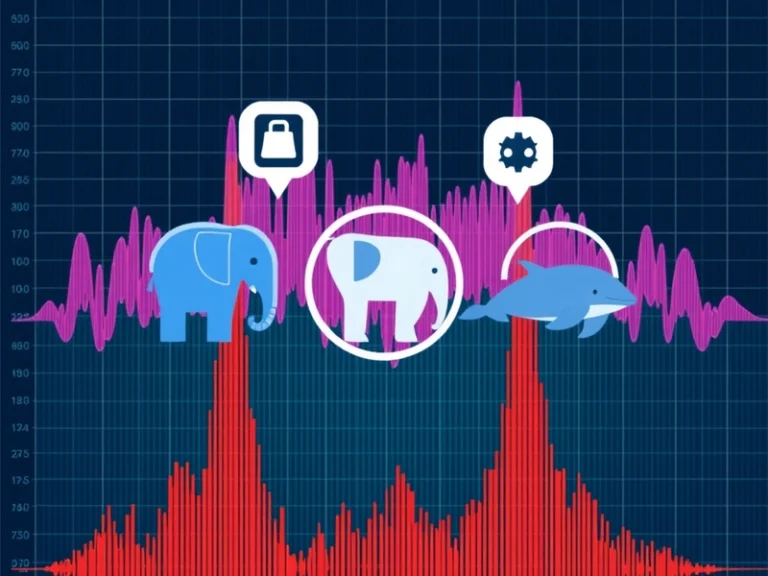
Beyond cetaceans, AI is shedding light on the intricate soundscapes of other species. Elephants, for instance, communicate over long distances using infrasound – low-frequency sounds undetectable to the human ear. Researchers are deploying AI models to analyze these complex rumbles, identifying distinct calls that may signify warnings, greetings, or reproductive status. By using algorithms to filter out environmental noise and categorize specific vocalizations, scientists can better understand elephant social dynamics and movement patterns, which is critical for conservation efforts in areas facing habitat loss and human-wildlife conflict.
Similarly, AI is being applied to the whistles and clicks of dolphins. While Project CETI focuses on sperm whales, other research groups are using machine learning to analyze the signature whistles of bottlenose dolphins, which act as individual identifiers. AI models can track these whistles over time, revealing social networks and group cohesion. The challenge here, as with other species, is moving from identifying unique sounds to understanding their semantic content – what specific information is being conveyed beyond identity.
Common AI Techniques in Bioacoustics
The success across these diverse species stems from a shared set of AI and computational techniques:
- Spectrogram Analysis: Converting audio waveforms into visual representations (spectrograms) that display frequency, time, and amplitude. These images are then fed into deep learning models, much like image recognition tasks.
- Pattern Recognition and Clustering: Unsupervised learning algorithms are used to identify recurring sound units or sequences without prior labeling, helping researchers discover novel communication elements.
- Supervised Classification: Once patterns are identified and associated with specific behaviors through observational data, supervised learning models can be trained to classify new vocalizations into known categories.
- Source Separation: Advanced signal processing combined with AI helps isolate individual animal vocalizations from background noise and the sounds of other animals in complex acoustic environments.
- Sequence Modeling (NLP-inspired): Techniques like hidden Markov models (HMMs) or transformer networks, commonly used in human language processing, are being adapted to analyze the sequential nature of animal vocalizations, looking for syntax-like structures.
Challenges and Future Directions
Despite the remarkable progress, significant challenges remain. The “ground truth” problem is paramount: accurately correlating specific vocalizations with their precise meaning or intent often requires extensive, long-term behavioral observation, which is labor-intensive and complex. The sheer volume of data required for robust AI training, coupled with the difficulty of deploying sensing equipment in remote or deep-sea environments, also presents logistical hurdles.
Furthermore, ethical considerations are emerging. As our ability to interpret animal communication improves, questions arise about the implications for human interaction with wildlife, potential interventions, and the animals’ right to privacy within their own communication systems. Researchers are mindful of these concerns, emphasizing that the primary goal is scientific understanding and conservation, not exploitation or manipulation.
The integration of AI into bioacoustics is transforming our understanding of the natural world. While we are still far from truly “talking” to animals, these AI models are providing an unprecedented window into their complex minds and societies, paving the way for new discoveries in ethology, evolutionary biology, and conservation science.