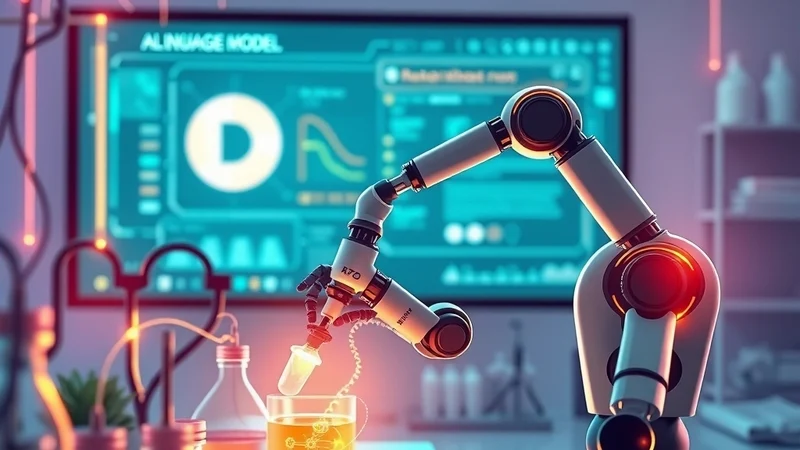
The integration of artificial intelligence into the scientific research pipeline is rapidly accelerating, with companies like OpenAI developing foundational models that increasingly empower human researchers. This evolving landscape brings to the fore the concept of an “Automated Research Intern” – an AI-powered assistant capable of tackling complex tasks, freeing human intellect for higher-level strategic thinking and critical analysis.
While OpenAI has not announced a specific product bearing the name “Automated Research Intern,” the capabilities envisioned by such a concept are increasingly realized through its existing large language models (LLMs) and other AI tools. These technologies are beginning to demonstrate significant potential in augmenting human research efforts across various disciplines, from life sciences to social sciences and engineering.
The Scope of AI Assistance in Research
An “Automated Research Intern,” as conceptualized through current AI advancements, would perform a range of tasks typically assigned to junior researchers or support staff, but at an unprecedented scale and speed. These capabilities are largely powered by sophisticated models like OpenAI’s GPT series, which excel at understanding, generating, and synthesizing information.
- Literature Review and Synthesis: One of the most time-consuming initial phases of any research project is the comprehensive review of existing literature. AI models can process vast databases of academic papers, identify key findings, summarize complex articles, and even pinpoint gaps in current knowledge. For instance, an AI could quickly sift through thousands of papers on a specific gene or chemical compound, extracting relevant experimental results or methodologies.
- Hypothesis Generation: By analyzing patterns and connections across diverse datasets and research domains, AI can assist in formulating novel hypotheses. While human intuition remains paramount for groundbreaking insights, an AI can suggest unexpected correlations or avenues of inquiry that might otherwise be overlooked, potentially accelerating the discovery process.
- Experimental Design Assistance: AI can contribute to the design phase by suggesting optimal experimental parameters, identifying potential confounding variables, or recommending statistical approaches based on the research question. Tools like ChatGPT’s Advanced Data Analysis (formerly Code Interpreter) can even generate simple code for simulations or data processing, streamlining preparatory steps.
- Data Analysis and Interpretation Support: While deep statistical expertise remains a human domain, AI can assist with preliminary data exploration, identifying trends, flagging anomalies, and providing initial interpretations. It can help researchers understand the implications of their findings in the context of existing literature, though critical validation by human experts is essential.
- Drafting and Editing Research Outputs: From initial drafts of methodology sections to refining the language of a discussion, AI can significantly reduce the time spent on writing. It can help ensure clarity, conciseness, and adherence to specific academic styles, allowing researchers to focus on the intellectual content.
OpenAI’s Role in Enabling These Capabilities
OpenAI’s contributions to large language models have been pivotal in making these “intern-like” capabilities feasible. Models such as GPT-4 possess a broad general knowledge base, sophisticated reasoning abilities, and an advanced capacity for natural language understanding and generation. These traits are fundamental to performing the tasks outlined above.
The ability of these models to engage in complex dialogues, follow instructions, and synthesize information from various sources makes them powerful tools for research. Their training on vast datasets encompassing scientific papers, books, and web content equips them with an extensive understanding of scientific concepts, terminology, and methodologies.
Benefits and Challenges of AI in Research
The promise of an “Automated Research Intern” lies in its potential to significantly enhance productivity and accelerate the pace of scientific discovery. By automating repetitive and time-consuming tasks, human researchers can dedicate more time to critical thinking, experimental execution, and innovative problem-solving. This could lead to breakthroughs that were previously hampered by the sheer volume of information or the manual effort required to process it.
However, the integration of AI into research is not without its challenges. The primary concern remains the potential for AI models to “hallucinate” or generate factually incorrect information. This necessitates constant human oversight and verification of all AI-generated content. Furthermore, biases present in training data can be perpetuated or amplified by AI, leading to skewed results or interpretations if not carefully managed.
Ethical considerations also loom large, including questions of intellectual property when AI assists in generating novel ideas, the accountability for errors in AI-assisted research, and the potential impact on research employment. The role of AI is best viewed as an augmentation tool, not a replacement for human intellect, creativity, and critical judgment. The “intern” metaphor aptly describes this supportive, rather than primary, role.
The Future of Human-AI Collaboration
The concept of an “Automated Research Intern” underscores a broader shift towards collaborative intelligence, where humans and AI work in concert. OpenAI, through its continued development of increasingly capable and accessible AI models, is playing a significant part in shaping this future. The goal is not to automate research entirely, but to create a symbiotic relationship where AI handles the computational heavy lifting, allowing human researchers to focus on the truly innovative and strategic aspects of discovery.
As AI technology continues to advance, we can anticipate more specialized AI tools tailored to specific research domains, offering even deeper and more nuanced assistance. The challenge for the research community will be to effectively integrate these tools while maintaining rigorous scientific standards and ethical practices.