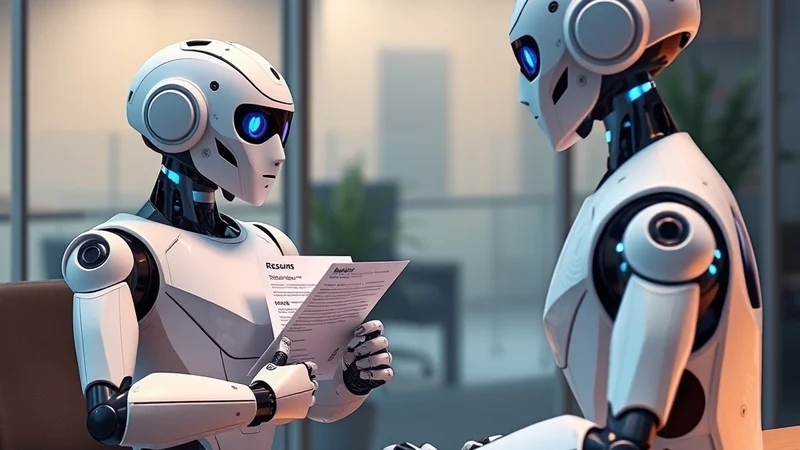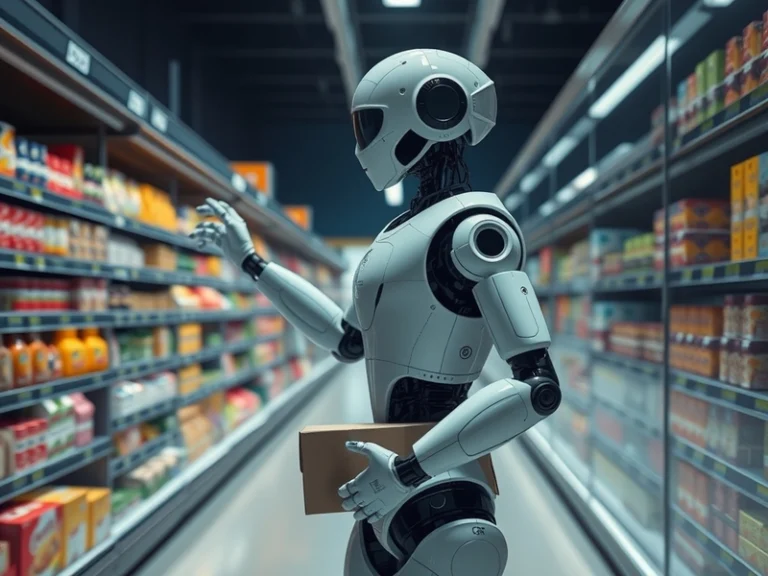
Humanoid robots are increasingly being integrated into grocery store operations, with a particular focus on optimizing overnight restocking procedures. This strategic deployment aims to leverage the unique capabilities of bipedal robots to address labor challenges, enhance operational efficiency, and streamline the complex logistics of inventory management within retail environments.
The overnight shift in grocery stores presents a unique set of challenges and opportunities for automation. Tasks typically involve unloading delivery trucks, breaking down pallets, transporting goods to their respective aisles, and meticulously placing products on shelves. These operations are often repetitive, physically demanding, and subject to labor fluctuations. Humanoid robots, designed to navigate and operate within human-centric spaces, are emerging as a promising solution.
The Case for Humanoids in Retail Logistics
Unlike traditional automated guided vehicles (AGVs) or autonomous mobile robots (AMRs) that typically operate on factory floors or in warehouse backrooms with predefined routes, humanoids are built to interact with environments designed for people. This means they can potentially:
- Navigate Existing Store Layouts: Walk through aisles, open doors, and use elevators without requiring significant infrastructure modifications.
- Handle Diverse Products: With advanced manipulators and sophisticated perception systems, they can identify, grasp, and place a wide variety of product shapes, sizes, and weights onto shelves.
- Perform Complex Dexterous Tasks: Go beyond simple pick-and-place to potentially organize items, face products, and manage spills or minor disruptions.
- Work During Off-Hours: Operate when stores are closed to the public, minimizing interaction with customers and allowing for unimpeded movement and focus on tasks.
The ability to operate in environments designed for humans is a critical differentiator. Grocery stores are dense with shelving, varying floor surfaces, and obstacles that can be challenging for wheeled robots. A bipedal form factor allows for greater adaptability.
Pioneering Robotics Companies and Their Contributions
Several leading robotics companies are developing the humanoid platforms that could facilitate this shift. While specific widespread deployments in grocery stores are still nascent, the capabilities demonstrated by these robots highlight their potential:
- Agility Robotics’ Digit: Known for its bipedal locomotion and ability to carry and move boxes, Digit is designed for logistics tasks, including last-mile delivery and warehouse operations. Its focus on moving goods in human environments makes it a strong candidate for retail backrooms and potentially store aisles.
- Figure AI’s Figure 01: This general-purpose humanoid has showcased impressive dexterity and learning capabilities, including handling objects and interacting with tools. Its partnership with BMW to deploy humanoids in manufacturing facilities demonstrates a move towards practical industrial applications.
- Sanctuary AI’s Phoenix: With a focus on “synthetic general intelligence,” Sanctuary AI aims to create humanoids capable of performing a wide range of tasks with human-like intelligence and dexterity, making them adaptable to varied retail demands.
- Tesla Bot (Optimus): Tesla’s humanoid robot, Optimus, is envisioned as a general-purpose worker capable of performing dangerous, repetitive, or boring tasks. While still in active development, its stated goal is to be mass-produced for real-world applications.
These robots leverage advancements in AI, machine learning, computer vision, and haptic feedback to perceive their surroundings, understand tasks, and execute actions with increasing precision and autonomy.
Challenges and the Road Ahead
Despite the immense potential, the full-scale integration of humanoids into grocery store restocking operations faces several hurdles:
- Cost and Scalability: The initial investment in humanoid robots remains substantial. For widespread adoption, costs will need to decrease, and the robots’ reliability and return on investment must be clearly demonstrated.
- Dexterity and Perception: While impressive, current robotic dexterity still struggles with the variability of retail products—from fragile produce to awkwardly shaped packaging—and the precise placement required on crowded shelves.
- Integration with Existing Systems: Seamlessly connecting robots with a store’s inventory management systems, stock levels, and planograms is crucial for efficient operation.
- Safety and Human Interaction: Even during overnight shifts, robots will interact with human staff. Robust safety protocols and intuitive human-robot interaction designs are paramount.
- Maintenance and Support: Deploying and maintaining a fleet of complex robots will require new skill sets and support infrastructure within retail organizations.
The move to integrate humanoids into grocery store restocking is part of a broader trend towards automation in retail, driven by the need for greater efficiency and resilience in supply chains. As the technology matures and costs become more accessible, these bipedal workers could become a common sight, transforming the logistics of retail operations one shelf at a time.