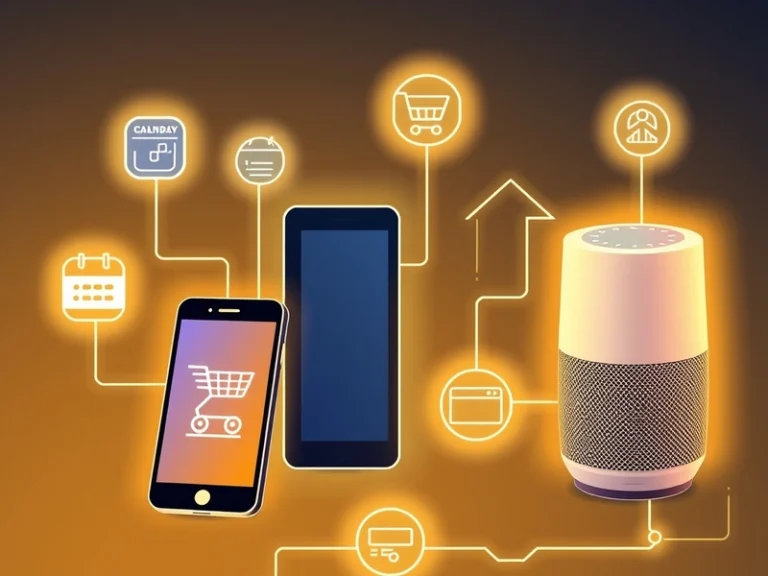
The increasing integration of artificial intelligence into consumer applications is now extending to tools designed for family coordination, offering new ways to streamline household management and communication. As modern life grows more complex, juggling work schedules, school activities, appointments, and household chores for multiple family members presents a significant organizational challenge. This complexity often leads to missed appointments, communication breakdowns, and increased stress, making the need for efficient coordination tools more apparent than ever.
Enter AI-driven solutions, which promise to move beyond static calendars and to-do lists by introducing intelligence, personalization, and proactive assistance. These tools aim to anticipate needs, automate routine tasks, and facilitate seamless information exchange, effectively acting as a digital family assistant. By leveraging machine learning, natural language processing, and predictive analytics, AI is transforming how families manage their daily lives.
Smart Scheduling and Calendar Optimization
One of the most immediate benefits of AI in family coordination is its ability to optimize complex schedules. Traditional calendar applications require manual entry and conflict resolution, but AI can analyze the availability of multiple family members, learn their routines, and suggest optimal times for shared activities, appointments, or even individual tasks. For instance, features like Google Calendar’s ‘Goals’ already demonstrate a nascent form of this intelligence, automatically finding slots for personal objectives based on existing entries. Future iterations, enhanced by deeper AI integration, could proactively identify potential conflicts, suggest alternative arrangements, and even factor in travel time or preparation needs.
This extends beyond simple scheduling. AI can learn which family members are involved in specific activities, automatically send relevant reminders to participants, and even adjust schedules dynamically based on real-time changes, such as traffic conditions or unexpected delays. The goal is to minimize manual input and maximize the likelihood of everyone being where they need to be, when they need to be there.
Enhanced Communication and Proactive Reminders
Communication within families can be fragmented across various channels: text messages, emails, notes on the fridge, and verbal reminders. AI-powered tools centralize this by acting as a single hub for important information. Beyond basic notifications, AI can provide context-aware and proactive reminders. For example, an AI system might remind a parent about an upcoming school event not just an hour before, but when they are already near the school during their commute, suggesting an opportune moment for pickup or drop-off arrangements. Similarly, it could detect patterns in grocery shopping habits and suggest items to add to a list based on typical consumption and upcoming meal plans.
Intelligent Task and Chore Management
Assigning and tracking household chores can be a source of friction. AI offers a more equitable and efficient approach. By understanding each family member’s availability, age, and typical responsibilities, AI can suggest fair task distribution and even rotate duties. It can track completion status, send gentle reminders, and integrate with rewards systems if desired. For example, an AI could learn that one child prefers emptying the dishwasher while another prefers taking out the trash, and then intelligently assign tasks accordingly to minimize resistance and maximize efficiency.
Personalized Household Management
Beyond scheduling and tasks, AI can significantly streamline other aspects of household management:
- Meal Planning: AI can learn dietary preferences, allergies, and favorite recipes, then generate weekly meal plans. It can also suggest new recipes based on available ingredients or seasonal produce, reducing food waste and grocery costs.
- Grocery List Generation: Based on meal plans and pantry inventory (potentially integrated through smart home devices), AI can automatically compile comprehensive grocery lists, organized by store aisle for efficiency.
- Information Retrieval: Instead of searching through old messages or asking multiple times, family members can query the AI for information like “What time is soccer practice?” or “What’s for dinner tonight?”, receiving immediate, accurate answers.
Voice Assistants as Central Family Hubs
Platforms like Amazon Alexa and Google Assistant are already demonstrating the power of AI in family coordination. Devices such as the Amazon Echo and Google Nest Hub act as central interfaces for families. Users can verbally add items to shared shopping lists, set reminders for specific family members, broadcast announcements to all devices in the home, or inquire about calendar events. These voice-activated AI systems eliminate the need to constantly check phones or type entries, making coordination more natural and accessible, especially for younger children or those who are busy with other tasks.
The continuous improvement in natural language understanding means these assistants are becoming more adept at interpreting complex requests and managing multi-person schedules, further solidifying their role as integral components of the AI-driven smart home, centralizing family life management.
Considerations and the Path Forward
While the benefits are clear, the adoption of AI-driven family coordination tools also brings important considerations. Data privacy and security are paramount, as these systems handle sensitive personal information about family routines and locations. Users must trust that their data is protected and used ethically. Furthermore, the balance between helpful automation and potential over-reliance on technology needs to be carefully managed to ensure these tools enhance, rather than diminish, genuine human interaction and responsibility.
As AI capabilities advance, we can expect these tools to become even more sophisticated, offering deeper personalization, more predictive insights, and seamless integration across various smart home devices and services. The trajectory points towards an ecosystem where AI acts as an invisible, intelligent layer, simplifying the complexities of family life and allowing more time for connection.