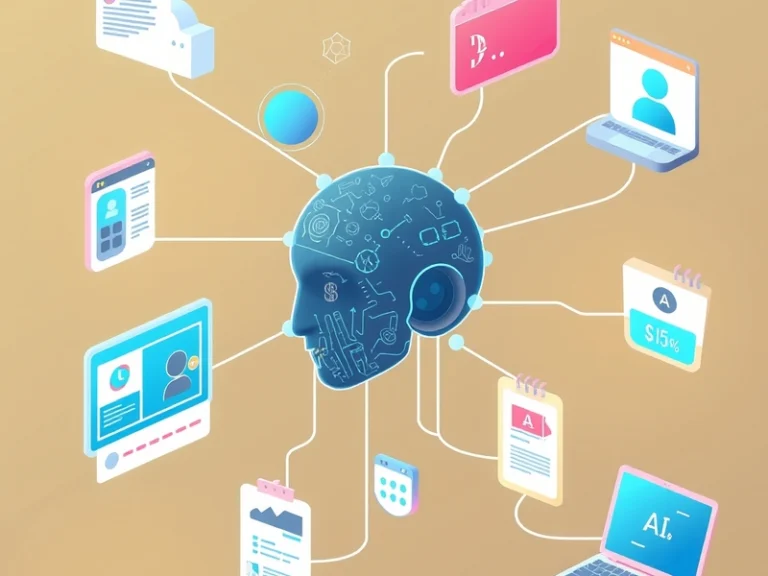
As the operational costs for sophisticated AI models continue to escalate, sustaining free-tier AI applications has become a pressing challenge for developers and companies alike. In response, AI-powered advertising is emerging as a critical, innovative monetization strategy, offering a pathway to maintain accessibility without compromising user experience or privacy.
The economics of running advanced AI applications are far from trivial. Models like large language models (LLMs) and generative AI platforms demand significant computational resources for inference, data storage, and ongoing training. Providing these services for free, even with limited usage, incurs substantial expenses that traditional venture capital funding or a small percentage of premium subscribers often cannot fully cover. This financial pressure necessitates alternative revenue streams that can scale with user growth and model complexity.
Traditional advertising models, often characterized by intrusive banner ads or irrelevant pop-ups, frequently detract from the user experience, particularly within applications designed for focused creative or analytical tasks. Users engaging with AI tools expect efficiency and relevance; generic advertising campaigns often fail to deliver on this, leading to ad fatigue and potential abandonment of the free service.
AI’s Role in Next-Generation Advertising
The promise of AI-powered advertising within AI applications lies in its ability to leverage the very intelligence of the platform to deliver highly relevant, context-sensitive advertisements. This goes beyond simple demographic targeting, aiming for a deeper understanding of immediate user intent and ongoing project needs.
- Contextual Relevance and Intent Prediction: By analyzing a user’s current query, task, or content being generated, AI systems can infer immediate needs. For instance, an AI writing assistant helping a user draft marketing copy might suggest tools for graphic design, SEO analytics platforms, or stock photography services. An AI image generator user working on architectural visualizations could be shown ads for 3D modeling software or specialized texture packs. The key is to present an advertisement not as an interruption, but as a potentially helpful suggestion directly related to the user’s workflow.
- Personalization Without Overt PII: While robust personalization often relies on personally identifiable information (PII), AI-powered ad systems can achieve high relevance through contextual signals and aggregated, anonymized behavioral patterns. The AI within the application observes interaction patterns, frequently used features, and the nature of queries to build a dynamic profile of user interests *within the application’s domain*, without necessarily collecting or transmitting sensitive personal data to third-party ad networks. This approach aligns with growing privacy concerns and regulations like GDPR and CCPA.
- Dynamic and Integrated Ad Experiences: Rather than static banners, AI can facilitate more dynamic and less disruptive ad formats. This could include sponsored results within a list of AI-generated suggestions, subtle recommendations integrated into the UI, or even interactive ad experiences that complement the application’s functionality. For example, an AI code assistant might recommend a specific IDE plugin or cloud service when a user encounters a particular coding challenge.
Practical Implementations Across AI Sectors
This model holds significant potential across various categories of free AI applications:
- Generative AI Platforms: Free tiers of AI art generators or music composition tools could monetize by suggesting premium asset packs, offering discounts on professional print services for generated images, or advertising complementary software for post-processing.
- AI Writing and Productivity Tools: Applications providing free grammar checking, summarization, or initial draft generation could partner with professional editing services, project management software, or advanced research databases. The ad would appear when the context makes it most relevant, such as after a user generates a long document.
- Conversational AI Interfaces: Free AI chatbots offering general assistance could integrate sponsored links for specific products or services when a user asks for recommendations related to shopping, travel, or technical support. The AI’s natural language understanding ensures the suggestion is contextually appropriate.
Benefits and Challenges
The adoption of AI-powered advertising offers mutual benefits. For users, it means continued access to valuable AI tools without a direct monetary cost, potentially encountering ads that are genuinely useful rather than distracting. For developers, it provides a crucial, scalable revenue stream that can offset the high operational costs of AI models, fostering innovation and broader accessibility. Advertisers, in turn, benefit from highly targeted placements and increased conversion rates due to the relevance of their messages.
However, significant challenges remain. Balancing monetization with user experience is paramount; overly aggressive or poorly integrated ads, even if relevant, can still lead to user dissatisfaction. Ensuring transparency around data usage and maintaining user privacy are also critical, demanding robust ethical guidelines and technical safeguards. The complexity of integrating sophisticated AI ad systems, training them effectively, and navigating the evolving regulatory landscape adds further layers of difficulty.
Ultimately, AI-powered advertising represents a sophisticated approach to sustaining the vibrant ecosystem of free AI applications. By leveraging the very intelligence that defines these tools, it offers a path to economic viability that respects user context and, when implemented thoughtfully, can enhance rather than detract from the overall user experience.