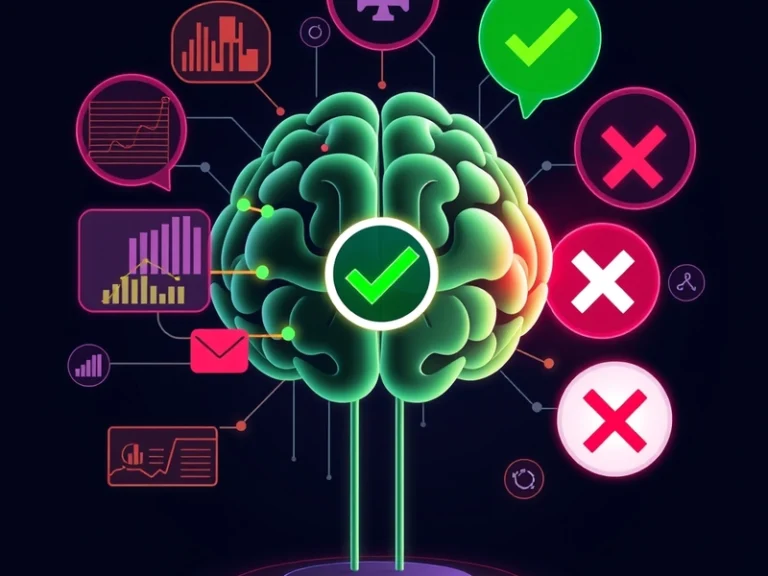
A new AI-powered application has been introduced, aiming to transform the initial stages of product development by assessing the viability of ideas before significant resources are committed. This tool represents a growing trend towards leveraging artificial intelligence to de-risk and accelerate the innovation lifecycle, particularly in the complex and capital-intensive field of AI development itself.
The challenge of evaluating novel product concepts, especially those relying on cutting-edge AI, is substantial. Development costs for AI models, infrastructure, and specialized talent can be considerable. Furthermore, the rapid pace of technological advancement means that an idea’s technical feasibility or market relevance can shift quickly. Traditional methods of idea validation, such as extensive market research, competitor analysis, and pilot programs, are often time-consuming and expensive. Companies and startups frequently invest heavily in a concept only to discover late in the development cycle that it lacks a viable market, faces insurmountable technical hurdles, or carries unforeseen ethical baggage.
The Promise of AI-Driven Assessment
The core proposition of this new class of AI tools is to provide an early, data-driven filter for ideas. By analyzing an idea’s description against vast repositories of information, these applications aim to offer insights into its potential for success or failure. Conceptually, such a system would leverage several advanced AI capabilities:
- Natural Language Processing (NLP): To understand the nuances of a user’s idea description, extracting key features, target audiences, proposed functionalities, and underlying assumptions.
- Machine Learning (ML) Models: Trained on extensive datasets encompassing market research reports, patent databases, academic papers, news articles on technological breakthroughs, existing product databases, and even historical startup success/failure data.
- Knowledge Graphs: To connect disparate pieces of information, identifying relationships between technologies, market needs, and regulatory landscapes.
Core Evaluation Criteria
An effective AI idea assessment tool would typically evaluate concepts across several critical dimensions, providing a multi-faceted viability score or detailed feedback report. These criteria commonly include:
- Technical Feasibility: Assessing whether the proposed AI capabilities are currently achievable with existing models, data availability, and computational resources. This involves referencing the state-of-the-art in machine learning research and practical deployments.
- Market Potential: Analyzing the potential demand for the product, identifying target demographics, assessing the size of the addressable market, and pinpointing unmet needs that the idea aims to fulfill. This often involves scanning for market trends and consumer sentiment.
- Competitive Landscape: Identifying existing solutions, direct and indirect competitors, and analyzing their strengths, weaknesses, and market share. The AI would look for unique selling propositions or defensible advantages in the proposed idea.
- Ethical and Societal Implications: Evaluating potential biases in data or algorithms, privacy concerns, risks of misuse, and alignment with responsible AI principles. This proactive assessment can help mitigate future reputational and regulatory challenges.
- Resource Estimation: Providing a high-level estimation of the data requirements, computational power, and specialized expertise likely needed for development, based on similar projects or technologies.
Benefits for Innovators
For individuals, startups, and established enterprises, integrating such an AI assessment tool into their innovation pipeline offers several compelling advantages:
- Early Risk Mitigation: Identifying fundamental flaws or insurmountable challenges at the conceptual stage, before significant financial and human capital is expended.
- Resource Optimization: Directing development efforts towards ideas with higher validated potential, preventing the misallocation of resources on unviable projects.
- Faster Iteration: Providing rapid feedback that allows innovators to quickly refine, pivot, or discard ideas, accelerating the overall innovation cycle.
- Data-Driven Insights: Offering objective, data-backed perspectives that complement human intuition, helping to overcome confirmation bias or limited individual knowledge.
Inherent Limitations and Nuance
While powerful, an AI-powered idea assessor is not a panacea. Its effectiveness is inherently tied to the quality and breadth of its training data and the sophistication of its underlying models. Such tools may struggle with truly novel, disruptive ideas that lack direct historical precedents in the training data. Breakthrough innovations often defy existing market categories and may not register as “viable” by models trained on past trends. The subtle nuances of human creativity, strategic foresight, and the serendipitous nature of some discoveries remain beyond the current grasp of even the most advanced AI.
Ultimately, these AI-driven assessment tools serve as intelligent assistants, augmenting human decision-making rather than replacing it. They provide a valuable preliminary filter and a structured analytical framework, allowing innovators to approach the complex journey from concept to product with greater clarity and a reduced risk profile.