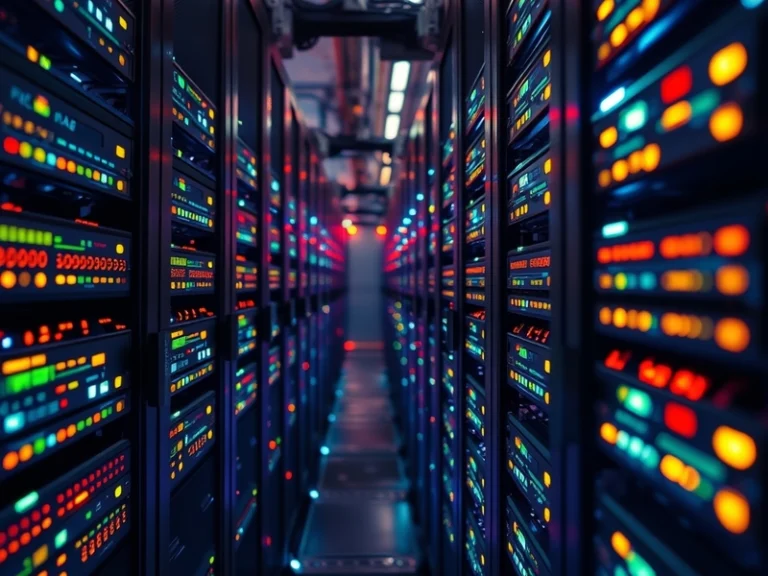
The hypothetical appearance of a $60 million AI supercomputer on eBay, while a fascinating thought experiment, serves as a potent lens through which to examine the current state of AI hardware, its market dynamics, and the immense capital expenditure involved in pushing the boundaries of artificial intelligence.
To unpack what such an auction would signify, one must first understand the scale of a system valued at $60 million. This isn’t merely a collection of high-end GPUs; it represents a meticulously engineered, massive-scale compute cluster. Imagine hundreds, if not thousands, of top-tier accelerators like NVIDIA H100s or AMD Instinct MI300X GPUs, interconnected by high-bandwidth fabrics like NVIDIA’s NVLink or InfiniBand, all housed in multiple racks with sophisticated power delivery, advanced liquid cooling systems, and a robust networking backbone. Building such a system requires not only significant hardware investment but also specialized engineering expertise for integration, software stack optimization, and ongoing maintenance.
The Capital Intensity of AI Compute
The staggering price tag underscores the primary barrier to entry for cutting-edge AI research and development: capital. Training foundation models or conducting large-scale scientific simulations demands compute resources that often exceed the budgets of all but the largest tech giants, well-funded startups, or national research labs. This creates a significant divide, concentrating advanced AI capabilities in fewer hands.
The lifecycle of such hardware is also a critical factor. While a $60 million system represents peak performance at its inception, the pace of innovation in AI accelerators is relentless. New generations of GPUs and specialized AI chips emerge every 18-24 months, offering substantial performance improvements per watt and per dollar. A system that is state-of-the-art today might be outmatched by newer, more efficient architectures in just a few years, leading to a rapid depreciation of its value, especially on the secondary market.
Why a Supercomputer on the Secondary Market?
The reasons a system of this magnitude might find its way to an auction site are varied, each reflecting a different facet of the AI industry’s current landscape:
- Startup Failure or Pivot: A well-funded AI startup might have invested heavily in on-premise compute only to face unforeseen challenges, run out of funding, or pivot away from compute-intensive applications, necessitating the liquidation of assets.
- Strategic Shift by Larger Entities: Even established companies might re-evaluate their compute strategy, opting to divest their on-premises infrastructure in favor of cloud-based solutions from providers like AWS, Microsoft Azure, or Google Cloud Platform, which offer greater flexibility, scalability, and managed services.
- Technological Obsolescence: As newer, more powerful, and more energy-efficient accelerators become available, a previous generation system, even if still functional, might no longer offer the competitive edge required for leading-edge research, prompting an upgrade and subsequent sale.
- Miscalculation of Needs: A company might have over-provisioned its compute resources, finding that its actual usage doesn’t justify the operational overhead of such a large, dedicated system.
The Buyer’s Dilemma: More Than Just a Price Tag
For a prospective buyer, acquiring a $60 million supercomputer, even at a steep discount, presents a formidable set of challenges far beyond the initial purchase price:
- Logistics and Installation: Moving and installing a multi-rack supercomputer requires specialized transportation, significant data center space, and professional installation services. This isn’t a plug-and-play operation.
- Power and Cooling Infrastructure: Such systems consume immense amounts of power, often in the megawatts, and generate substantial heat. A buyer would need access to a data center with industrial-grade power delivery and advanced cooling solutions, frequently involving liquid cooling loops.
- Software and Integration: The system would require a robust software stack, including operating systems, GPU drivers (e.g., NVIDIA CUDA), distributed training frameworks, and orchestration tools, all configured and optimized for large-scale parallel processing.
- Operational Costs: Beyond electricity, ongoing costs include maintenance, replacement parts, and the salaries of specialized engineers and technicians required to operate and troubleshoot such a complex system.
- Warranty and Support: A secondary market purchase typically comes with no manufacturer warranty or support, placing the full burden of maintenance and repair on the buyer.
Therefore, while the initial “bargain” might seem enticing, the total cost of ownership (TCO) for a secondary market supercomputer can quickly escalate, making it a viable option primarily for entities that already possess significant data center infrastructure and expertise, or those with very specific, long-term compute needs that justify the upfront and ongoing investment.
Broader Market Signals
This hypothetical scenario highlights a crucial tension in the AI hardware market: the trade-off between the flexibility and managed services of cloud AI infrastructure versus the potential cost savings and dedicated control of on-premise compute. As AI models continue to grow in size and complexity, the demand for powerful accelerators will only intensify. However, the operational complexities and rapid obsolescence cycles of these systems mean that the decision to build or buy, and whether to host on-premises or in the cloud, will remain a strategic cornerstone for any organization serious about AI. The secondary market, even for systems of this scale, will likely continue to grow as companies navigate these choices, offering opportunities for those equipped to handle the unique demands of high-performance AI infrastructure.