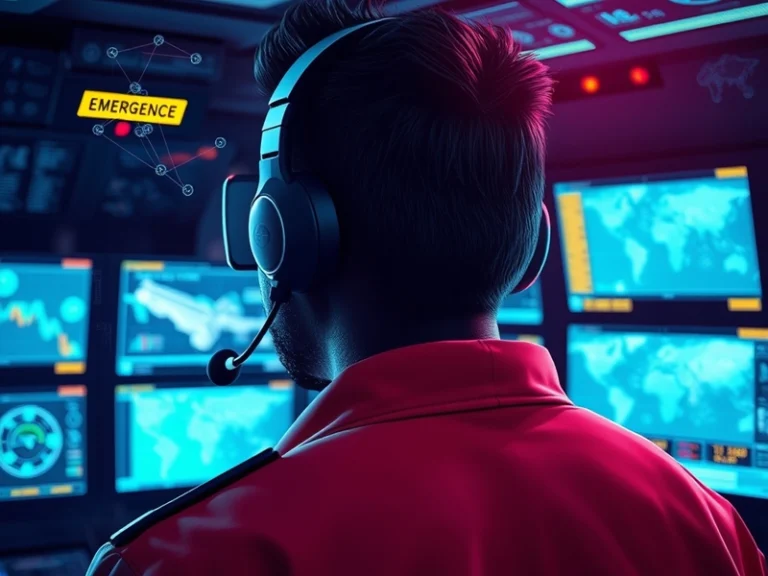
Artificial intelligence is increasingly being integrated into emergency services, particularly 911 dispatch centers, to enhance response times and optimize resource allocation.
The urgency to modernize emergency call infrastructure stems from several persistent challenges. Dispatch centers often grapple with overwhelming call volumes, leading to potential delays, dispatcher burnout, and the critical need to quickly distinguish genuine emergencies from non-emergency inquiries. The traditional methods, while foundational, face limitations in rapidly processing complex information, overcoming language barriers, and pinpointing exact locations, especially in dynamic urban environments or remote areas.
How AI is Transforming Emergency Dispatch
AI’s role in 911 operations is multifaceted, primarily focusing on automating repetitive tasks, enhancing data analysis, and providing real-time decision support for human dispatchers. These technologies are not designed to replace human operators but to augment their capabilities, allowing them to focus on critical decision-making and empathetic communication.
Key AI Applications in 911
- Real-time Call Transcription and Analysis: Natural Language Processing (NLP) is at the forefront, converting spoken emergency calls into text in real-time. This allows AI systems to immediately scan for keywords, phrases, and even sentiment, flagging critical information such as “fire,” “gunshot,” “chest pain,” or signs of extreme distress. Such analysis can help prioritize calls and categorize incidents more rapidly than manual intake alone.
- Automated Triage and Prioritization: Based on the NLP analysis, AI can assist in automatically triaging calls, suggesting the appropriate emergency service (police, fire, EMS) and assigning a preliminary priority level. This accelerates the initial assessment phase, ensuring that the most critical incidents receive immediate attention.
- Enhanced Location Accuracy: While not purely AI, advanced location technologies are crucial for AI-driven dispatch. Platforms like RapidSOS integrate precise location data from smartphones (GPS, Wi-Fi), connected vehicles, and smart home devices directly into 911 systems. AI can then process this granular location information, along with incident details, to determine the optimal dispatch route and closest available resources.
- Predictive Analytics for Resource Allocation: AI models can analyze vast datasets, including historical call volumes, crime statistics, traffic patterns, weather forecasts, and local event schedules. By identifying potential hotspots or predicting surges in specific types of emergencies, these systems can recommend proactive staging of emergency vehicles and personnel, improving response readiness.
- Non-Emergency Call Diversion: AI-powered chatbots or automated systems can handle routine inquiries or non-emergency calls, freeing up human dispatchers to focus on critical incidents. This can include providing information on local services, reporting minor issues, or directing callers to appropriate mental health resources.
Benefits and Challenges
The integration of AI promises significant benefits for emergency services, primarily centered around speed, accuracy, and efficiency.
Anticipated Benefits
- Faster Response Times: By automating initial call processing and triage, AI can shave crucial seconds or minutes off dispatch times, potentially saving lives.
- Improved Resource Allocation: AI’s ability to analyze real-time data and predict needs allows for more precise matching of available resources to specific incidents, reducing wasted travel time and ensuring the right personnel arrive at the scene.
- Reduced Dispatcher Burnout: By offloading repetitive tasks and providing decision support, AI can alleviate some of the immense pressure on human dispatchers, allowing them to manage their workload more effectively.
- Enhanced Data for Post-Incident Analysis: Comprehensive AI-generated transcripts and analytical reports provide invaluable data for training, operational reviews, and continuous improvement of emergency protocols.
Critical Challenges and Ethical Considerations
Despite the promise, deploying AI in such a high-stakes environment presents significant hurdles that must be meticulously addressed.
- Accuracy and Reliability: In emergency situations, there is zero tolerance for error. AI systems must demonstrate near-perfect accuracy in understanding diverse accents, interpreting garbled speech, and distinguishing between genuine threats and false alarms. Misinterpretation could have catastrophic consequences.
- Bias in AI Models: AI models are only as unbiased as the data they are trained on. If training data reflects historical biases in policing or emergency response, the AI could perpetuate or even amplify these inequities, leading to disproportionate outcomes for certain demographics. Rigorous testing and continuous auditing are essential.
- Human Oversight and Accountability: AI is intended as a tool, not a replacement. Human dispatchers must retain ultimate authority and the ability to override AI recommendations. Clear lines of accountability are crucial when AI is involved in life-or-death decisions.
- Data Privacy and Security: Emergency calls contain highly sensitive personal information. Robust cybersecurity measures and strict adherence to privacy regulations are paramount to protect caller data from breaches or misuse.
- Integration with Legacy Systems: Many 911 dispatch centers operate on decades-old infrastructure. Integrating advanced AI solutions requires significant investment and careful planning to ensure compatibility and seamless operation without disrupting existing critical services.
The future of 911 dispatch envisions a symbiotic relationship between human expertise and artificial intelligence. Dispatchers will evolve into supervisors of sophisticated AI tools, leveraging their empathy, critical thinking, and nuanced judgment for complex scenarios, while AI handles the rapid processing of information and routine tasks. This evolution aims to create a more resilient, responsive, and effective emergency communication system for communities worldwide.