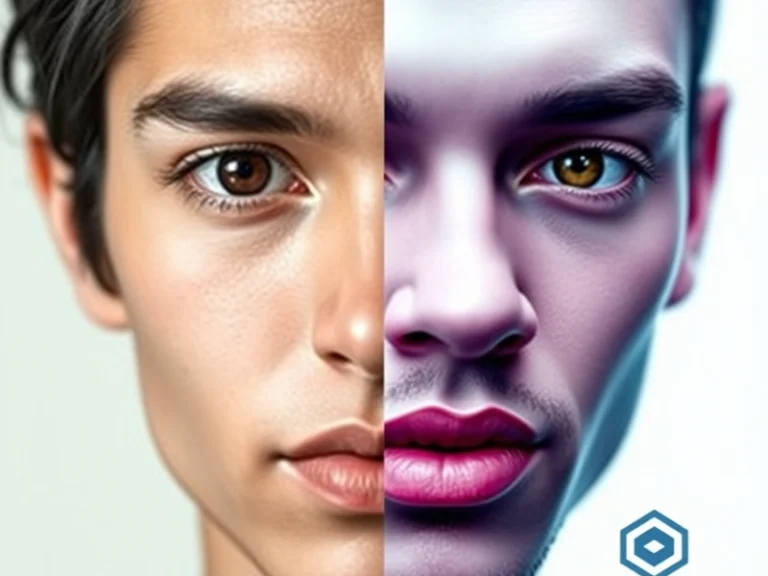
The growing interest in leveraging advanced multimodal AI models like Google’s Gemini for creative image manipulation, particularly for restyling photos while preserving specific elements like a user’s face, underscores a significant evolution in generative AI applications. This capability allows individuals to transform the aesthetic of their photographs, from subtle enhancements to dramatic artistic reinterpretations, without compromising the core identity of the subject.
Multimodal AI for Image Transformation
Gemini, as a multimodal AI, is designed to understand and process various types of information simultaneously, including text, images, audio, and video. This inherent capability is crucial for sophisticated image restyling. Unlike earlier generative models that primarily worked from text prompts to create images from scratch, multimodal models can take an existing image as an input, understand its content, and then modify it according to textual instructions. This process moves beyond simple filters, enabling a deeper, context-aware transformation.
When a user provides an image to Gemini along with a prompt, the model analyzes the visual data—identifying objects, subjects, lighting conditions, and overall composition—and then applies the textual instructions. For instance, a prompt might ask to change the background of a portrait, alter the subject’s attire, or apply a specific artistic style, all while referencing the original image’s elements.
The Challenge of Face Preservation
One of the persistent challenges in generative AI image editing has been maintaining the fidelity and identity of human faces during significant transformations. Earlier or less controlled models often produced distorted, generic, or entirely new faces when attempting to alter an image, failing to preserve the unique characteristics of the original subject. This issue is particularly critical for personal photos where facial recognition is paramount.
To address this, advanced AI techniques and careful prompt engineering are employed. Models like Gemini can be guided to treat specific regions of an image, such as a face, with higher preservation priority. This often involves:
- Inpainting/Outpainting Guidance: While the AI might generate new elements around the face (e.g., a new hairstyle or background), it can be instructed to “inpainting” or “outpainting” around a masked-off face to ensure that portion remains largely untouched or minimally altered, maintaining its original features.
- Identity Consistency: Prompts can emphasize the importance of maintaining facial identity, using phrases like “keep the subject’s face identical,” “preserve facial features,” or “maintain the original facial structure.”
- Reference Images: In some advanced applications, the model might implicitly or explicitly use the input image’s face as a direct reference for consistency, ensuring that any new elements blend seamlessly without altering the core facial identity.
Crafting Effective Prompts for Restyling and Preservation
The effectiveness of image restyling with face preservation heavily relies on well-constructed prompts. Users need to be specific about both the desired artistic changes and the elements they wish to keep consistent. Here are strategies for crafting such prompts:
- Describe the Desired Style: Be explicit about the artistic direction. Instead of “make it pretty,” try “restyle the image in the vibrant, impressionistic manner of Vincent van Gogh, with swirling brushstrokes and bold colors, particularly in the background and surrounding elements.”
- Specify Elements to Preserve: Clearly state what should remain unchanged. For example: “Apply a cyberpunk aesthetic to the scene, adding neon lights and futuristic cityscapes, but strictly preserve the subject’s face and original expression.”
- Directly Address Facial Features: If the face is central, reinforce its importance: “Transform this portrait into a medieval tapestry style, with rich textures and subdued lighting, ensuring the subject’s unique facial features and skin tone are maintained without alteration.”
- Use Negative Prompts (where available): While not always directly exposed in all interfaces, conceptually, avoiding certain outcomes is crucial. For instance, one might implicitly aim to avoid “distorted face, blurry features, unnatural skin texture.”
- Iterative Refinement: The process is often iterative. Start with a broader prompt, then refine it based on the initial output. If the face isn’t preserved well, adjust the prompt to be more emphatic about facial consistency in the next iteration.
- Contextual Detail: Provide context about the original image if it helps the AI understand what elements are important. “This is a photograph of a woman smiling outdoors. Restyle the background to a serene Japanese garden at dusk, maintaining her joyful expression and the intricate details of her face.”
Applications and Future Potential
The ability to creatively restyle images while preserving facial identity has broad applications. For social media users, it means generating unique profile pictures or sharing artistic interpretations of personal moments without losing their likeness. For artists and designers, it offers a powerful tool for concept exploration, allowing them to experiment with different styles on a consistent subject. In marketing, it could enable the creation of diverse visual campaigns featuring the same model in various thematic settings.
As multimodal AI models like Gemini continue to advance, we can expect even greater control and nuance in image manipulation. The integration of more sophisticated masking tools, finer-grained control over specific image regions through natural language, and enhanced understanding of human aesthetics will likely lead to more intuitive and powerful creative workflows, making advanced image restyling accessible to a wider audience. This ongoing development represents a significant step towards AI tools that augment human creativity rather than merely automate it.